What is the primary observational hurdle for detecting objects within the spherical Oort Cloud?
Answer
Objects are spread out in all directions forming a vast sphere, making them near-invisible
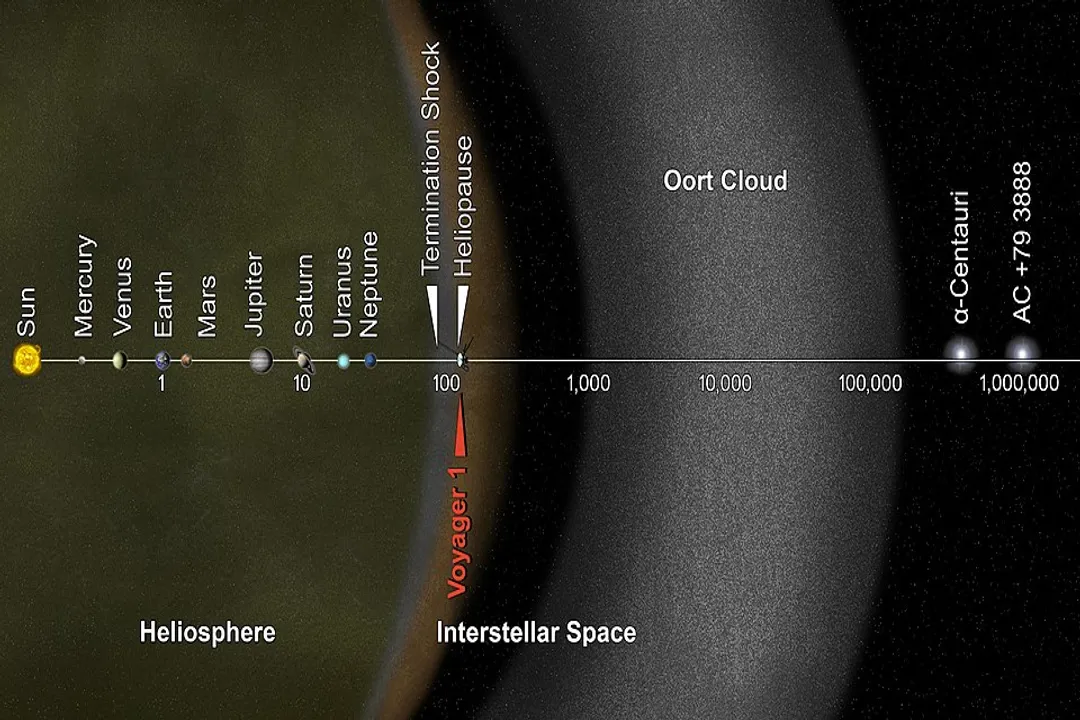
Detecting objects in the Oort Cloud presents far greater difficulties than those in the Kuiper Belt. While KBOs orbit somewhat predictably within a relatively thin plane (the ecliptic), Oort Cloud objects are distributed throughout a vast, three-dimensional spherical volume surrounding the entire solar system. Furthermore, they are extremely distant and move slowly relative to background stars, requiring extended observation times with highly sensitive telescopes to distinguish a faint, moving object from a fixed star, making direct observation practically impossible currently.
#Videos
Kuiper Belt And Oort Cloud Explained - YouTube
Related Questions
How is the theoretical structure of the Oort Cloud primarily described in contrast to the Kuiper Belt's shape?What type of comets originate in the Kuiper Belt and have orbital periods less than 200 years?What are the approximate outer limits of the Oort Cloud compared to the distance of Neptune's orbit (30 AU)?What materials primarily constitute the icy bodies known as Kuiper Belt Objects (KBOs)?Which giant planets are credited with flinging planetesimals outward to form the distant Oort Cloud population?What is the primary observational hurdle for detecting objects within the spherical Oort Cloud?Where is the Kuiper Belt geographically situated relative to Neptune's orbit and what is its general structure?Which structure is responsible for generating long-period comets that take hundreds or millions of years to orbit the Sun?Why are Oort Cloud objects more susceptible to disruption by external forces than Kuiper Belt objects?Which dwarf planet is specifically mentioned as residing within the Kuiper Belt population?