What does the Giant Impact Hypothesis suggest about the environment of solar systems?
Answer
Solar systems are violent and dynamic environments
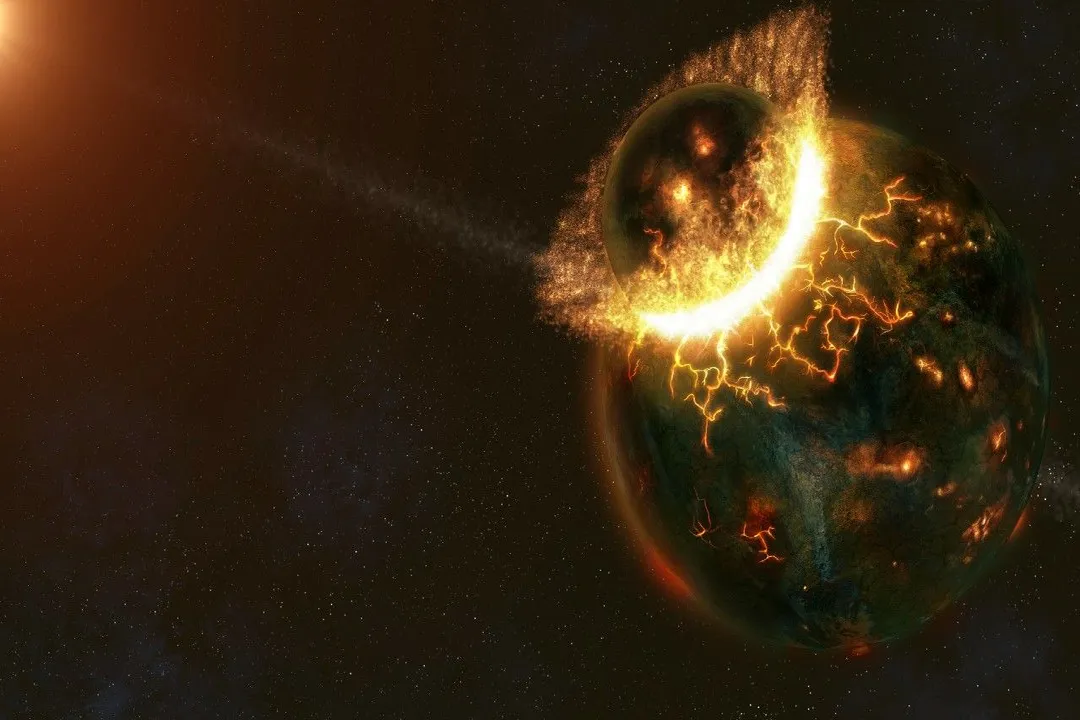
The understanding of planetary formation has evolved to recognize that solar systems are not merely quiet, orderly collections of worlds. Instead, they are often violent, dynamic environments characterized by chaotic interactions and major collisions. The existence of the Moon serves as a primary example of this, showing that current planets are frequently survivors of a much more crowded and dangerous past where large impacts were a fundamental part of the process that shaped the final configurations we see today.
#Videos
What was Theia like? - YouTube
Theia: When the Earth Destroyed its Sibling Planet | Netflix - YouTube
Related Questions
What is the primary scientific theory regarding the formation of the Moon?What was the approximate size of the rogue planet Theia compared to Earth?Why did scientists choose the name Theia for the impactor?What is the shared compositional characteristic between Earth and Theia?Why is the impact of Theia described as a Goldilocks scenario?What critical role does the Moon play in maintaining conditions on Earth?What resulted from the energy released during the collision with Theia?How quickly did the Moon form after the debris disk was established?What evidence addresses the long-standing puzzle regarding Moon and Earth isotope similarities?What does the Giant Impact Hypothesis suggest about the environment of solar systems?