What are the two common names describing Venus based on its orbital position relative to the Sun and Earth?
Answer
Morning Star or Evening Star
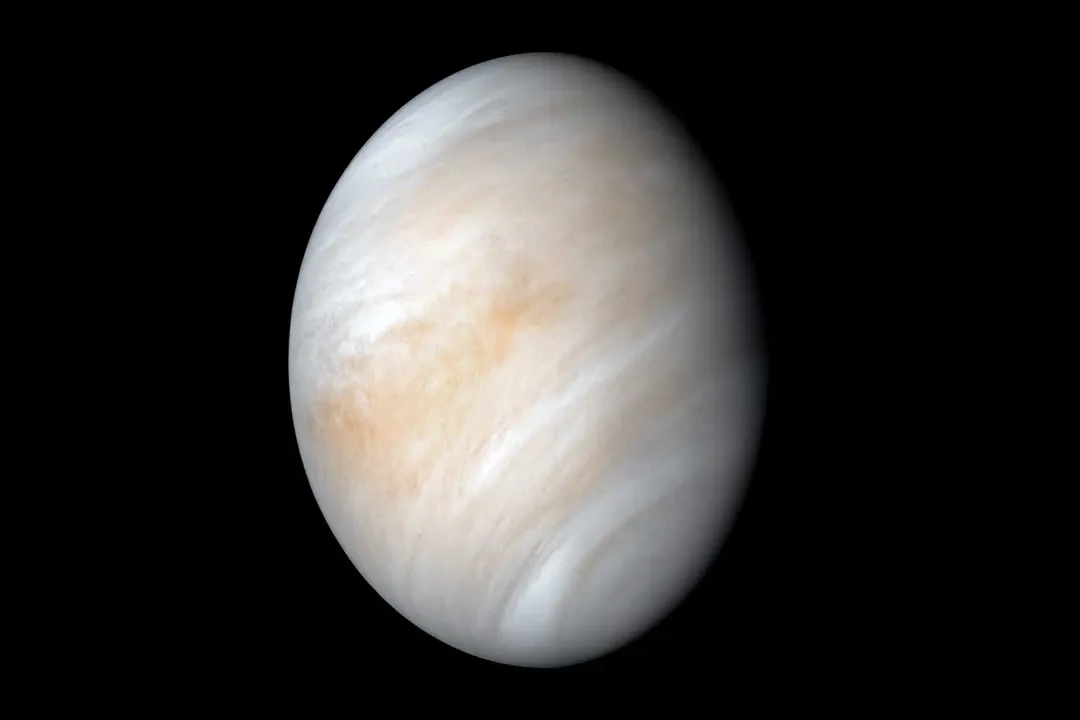
Venus is frequently referred to by two distinct names depending on when it is observed relative to local sunrise or sunset. When Venus is visible in the western sky shortly after the Sun has set, it is known as the Evening Star. Conversely, when it is visible in the eastern sky shortly before the Sun rises, it earns the designation of the Morning Star. These names reflect its visibility window caused by its inner orbit, meaning it never appears high overhead in the dark of midnight.
#Videos
What's That Bright Star Visible After Sunset? - YouTube
Related Questions
What natural object reliably ranks as the third brightest in the sky after the Sun and the Moon?What highly reflective component of Venus's atmosphere causes it to reflect about 70 percent of incident sunlight?In the astronomical magnitude scale used to compare celestial brightness, what meaning does a lower or more negative number convey?Why is the planet Venus never seen high overhead in the midnight sky from an Earth-bound observation point?When Venus is at its brightest visual magnitude of approximately -4.9, how much brighter is it compared to the star Sirius at -1.46?What are the two common names describing Venus based on its orbital position relative to the Sun and Earth?What steady visual characteristic distinguishes Venus when observed from Earth compared to the twinkling behavior of stars?What is the primary observational difference in visual quality between a brilliant Venus and Jupiter, the fourth brightest object?What orbital milestone does Venus reach when it appears farthest from the Sun in the sky, maximizing visibility?What critical safety instruction must be followed when planning to view the dazzling Venus near the horizon using binoculars or a telescope?