If a magnetar's magnetic field decays before mass limits are reached, what does it become?
Answer
A standard, though still incredibly dense, neutron star
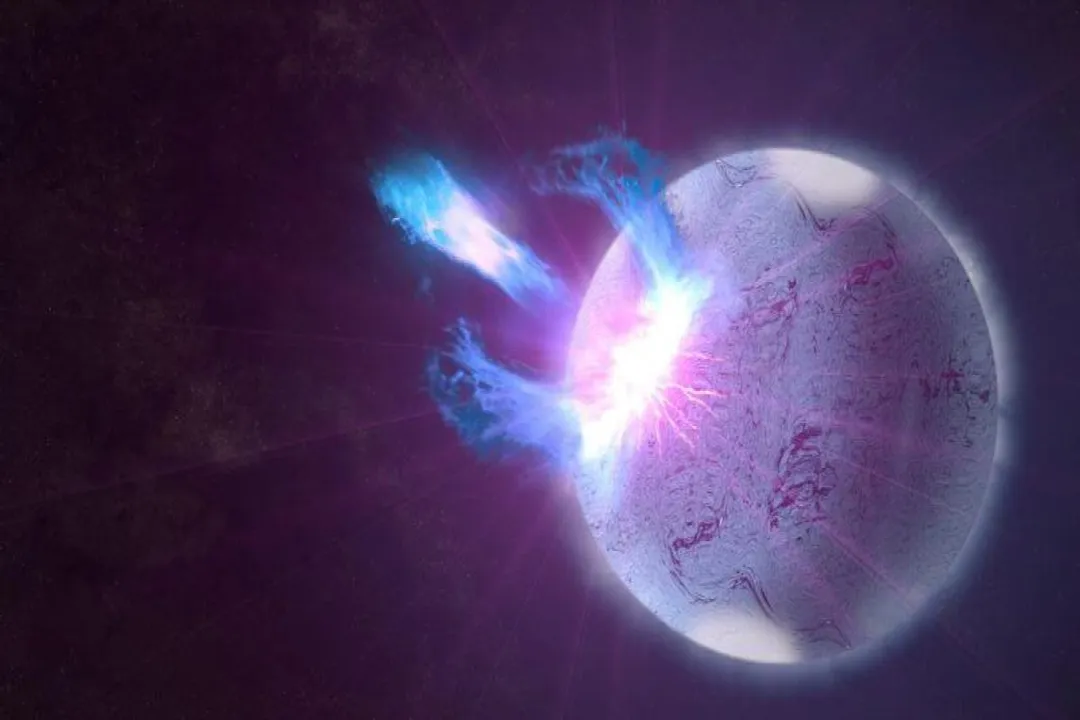
The long-term fate of a magnetar is determined by a race between two physical processes: the dissipation of its powerful magnetic field and the proximity of its total mass to the gravitational collapse threshold. If the magnetic field weakens sufficiently over time due to natural decay processes, the object loses the distinctive attribute that defined it as a magnetar. Consequently, it reverts to being classified as a standard neutron star. Although it sheds its Giga-Tesla-strength field, it retains the extreme density inherited from the core collapse of the original massive star.
#Videos
What If a Magnetar Collided With a Black Hole? - YouTube
What if a Magnetar Came Close to Earth? - YouTube
Related Questions
What intensity in Gauss defines the upper range of a magnetar's magnetic field?What process is responsible for generating a magnetar's phenomenal magnetic field strength?What high-energy radiation bursts are caused by stresses on a magnetar's crust?If a magnetar's magnetic field decays before mass limits are reached, what does it become?What theoretical limit governs the maximum stable mass for a neutron star like a magnetar?How does the magnetic pressure in a magnetar potentially affect the application of the TOV limit?What is the stated final destiny for the magnetar's magnetic field after crossing the event horizon?Which observational signal is primarily anticipated from the final gravitational collapse of a massive magnetar?How do the observational signatures of a magnetar's birth via collision differ from its death via collapse?What happens to the initial mass estimate of a magnetar if its magnetic field acts as a temporary support beam?