How do the observational signatures of a magnetar's birth via collision differ from its death via collapse?
Birth is heralded by both gravitational waves and a kilonova explosion, whereas collapse yields gravitational waves with truncated electromagnetic output
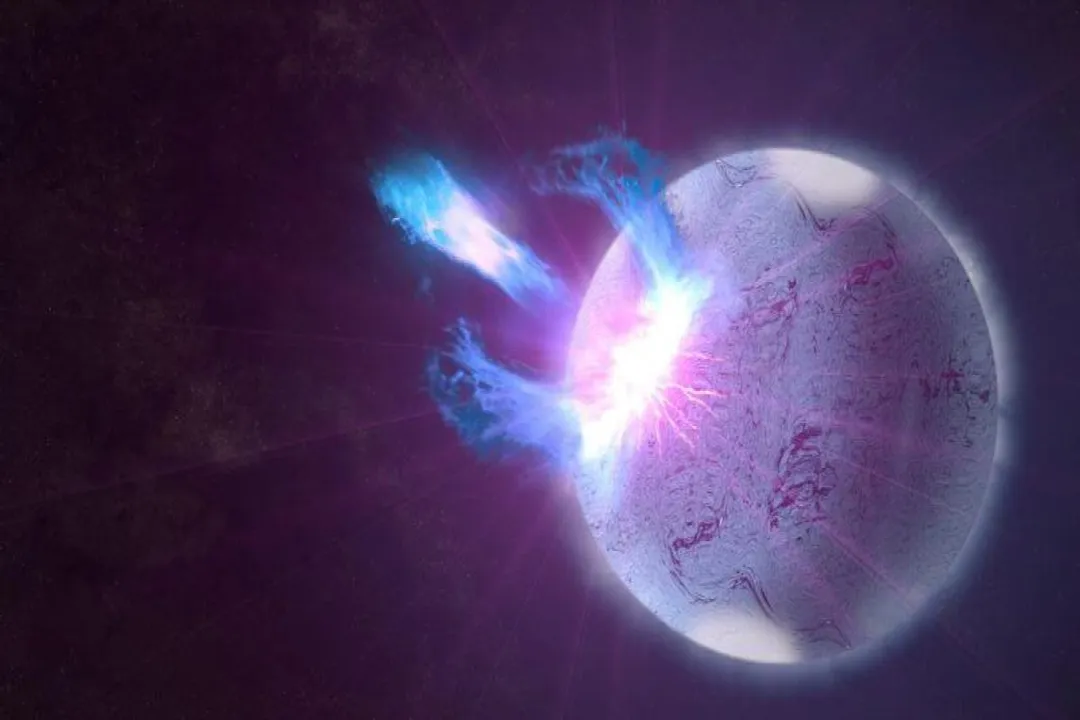
The astrophysics describing the formation (birth) versus the destruction (collapse) of ultra-dense objects present distinct observational echoes. When two neutron stars collide, forming a new object (sometimes theorized to be a magnetar), the event is characterized by intense energy release across multiple spectra, specifically involving a massive electromagnetic event called a kilonova explosion accompanying the burst of gravitational waves. In contrast, the final gravitational collapse of an existing magnetar involves the horizon cutting off electromagnetic radiation almost immediately. Therefore, the collapse scenario is predicted to yield a significant gravitational wave burst but a largely silent electromagnetic counterpart, allowing astronomers to differentiate the two violent events.
#Videos
What If a Magnetar Collided With a Black Hole? - YouTube
What if a Magnetar Came Close to Earth? - YouTube