How does the size of a star impact its overall lifespan and fuel consumption?
Answer
Large stars burn fuel faster and die younger
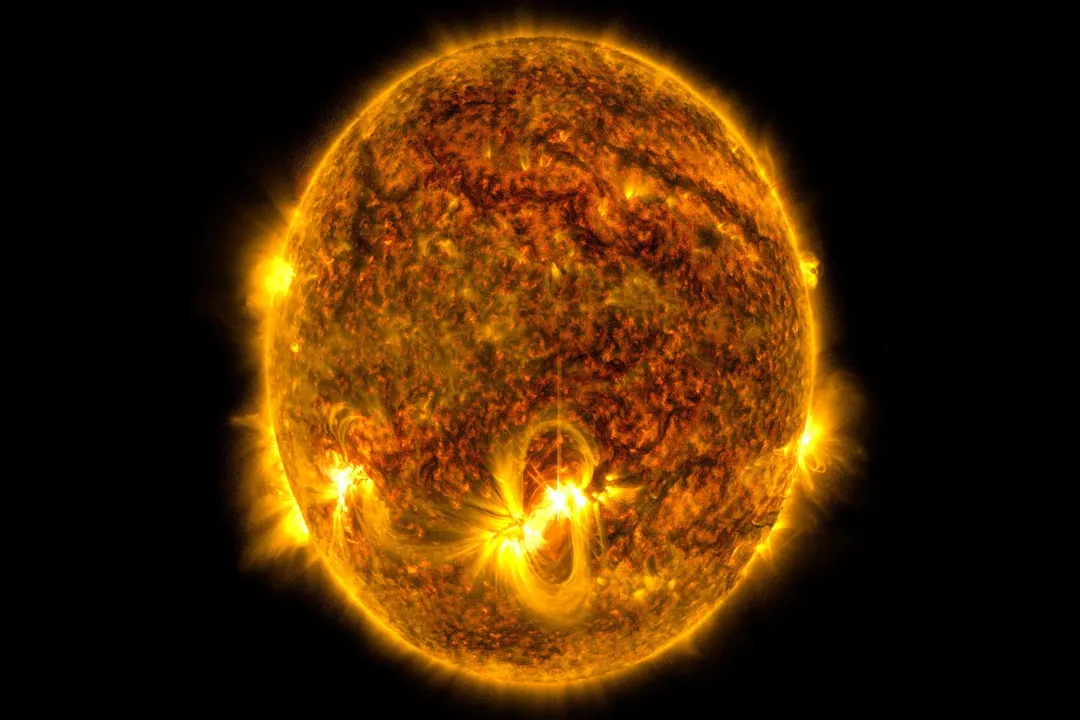
There is an inverse relationship between a star's mass and its lifespan, governed by the rate at which it consumes its fuel. The most massive stars burn through their nuclear fuel supply at a furious pace to support their immense size and brightness, leading to a relatively short lifespan of only a few million years. Conversely, smaller stars, like the Sun, consume their fuel at a much more conservative rate, allowing them to remain stable and active for billions of years.
#Videos
What Are Stars? - YouTube
All About Stars for Kids: Astronomy and Space for Children - YouTube
Stars in the Solar System | Science for Kids - YouTube
Related Questions
What specific process involves hydrogen atoms smashing together to form helium in a star's core?Which color of star represents the hottest temperature according to the observed light spectrum?Which two opposing forces work against each other to keep a star stable and spherical?What is the giant cloud of dust and gas where the life cycle of a star begins?What causes stars to appear to flicker or twinkle when viewed from the surface of Earth?What unit of measurement represents the distance light travels in one single year?How does the size of a star impact its overall lifespan and fuel consumption?What type of star is the Sun classified as in terms of size and color?What dense object is left behind when a smaller star gently puffs off its outer layers?What are the two primary gases that make up the composition of stars?