How does the primary light mechanism of an emission nebula contrast with that of a reflection nebula?
Answer
Emission nebulae absorb UV energy and re-emit it at specific visible wavelengths
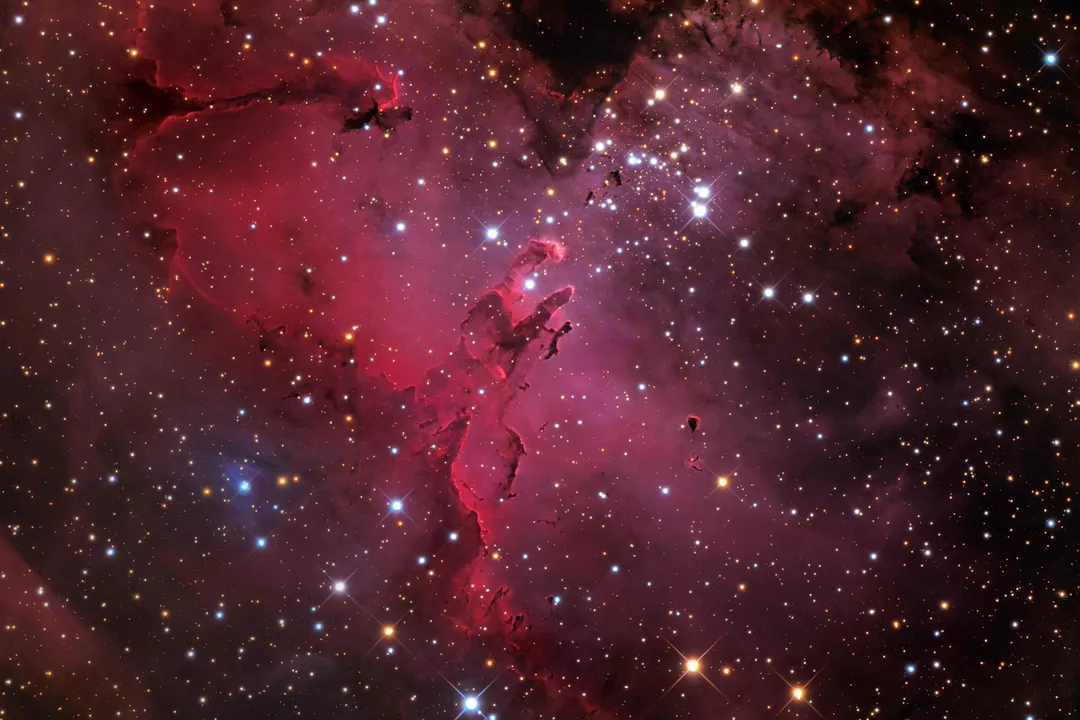
Emission nebulae utilize ionization and recombination (fluorescence) to produce light, whereas reflection nebulae shine because fine dust particles scatter existing stellar visible light, typically resulting in a blue appearance.
#Videos
How Does Ionization Cause Emission Nebulae To Glow? - YouTube
Related Questions
What is the dominant gas component making up the bulk of an emission nebula's cloud?What process drives the characteristic glow observed in an emission nebula?What specific type of high-energy radiation is necessary to initiate the glow process in an emission nebula?What is the term for the initial process where intense UV radiation strips electrons away from gas atoms?Once gas is ionized, what process leads to the emission of visible photons?What is the most prominent visual color observed in classic emission nebulae?Which specific atomic transition in hydrogen is responsible for the nebula's dominant red glow?What wavelength corresponds to the Hydrogen-alpha ($ ext{H} extalpha$) emission line?What characteristic defines the type of stars necessary to power an emission nebula?How does the primary light mechanism of an emission nebula contrast with that of a reflection nebula?