For an object with a density similar to water (1 g/cm^3), where is the theoretical equilibrium point reached?
Answer
Roughly halfway through the Sun’s radius
The theoretical location where an object would achieve neutral buoyancy—where the outward push of buoyancy equals the inward pull of gravity—depends on the object's own density relative to the material it displaces. For an object possessing a density comparable to water, estimated at about 1 gram per cubic centimeter, the surrounding plasma is expected to reach that equivalent density level at a location situated approximately halfway through the total radius of the Sun. Below this point, the plasma becomes denser than the object, causing an upward float toward the equilibrium level.
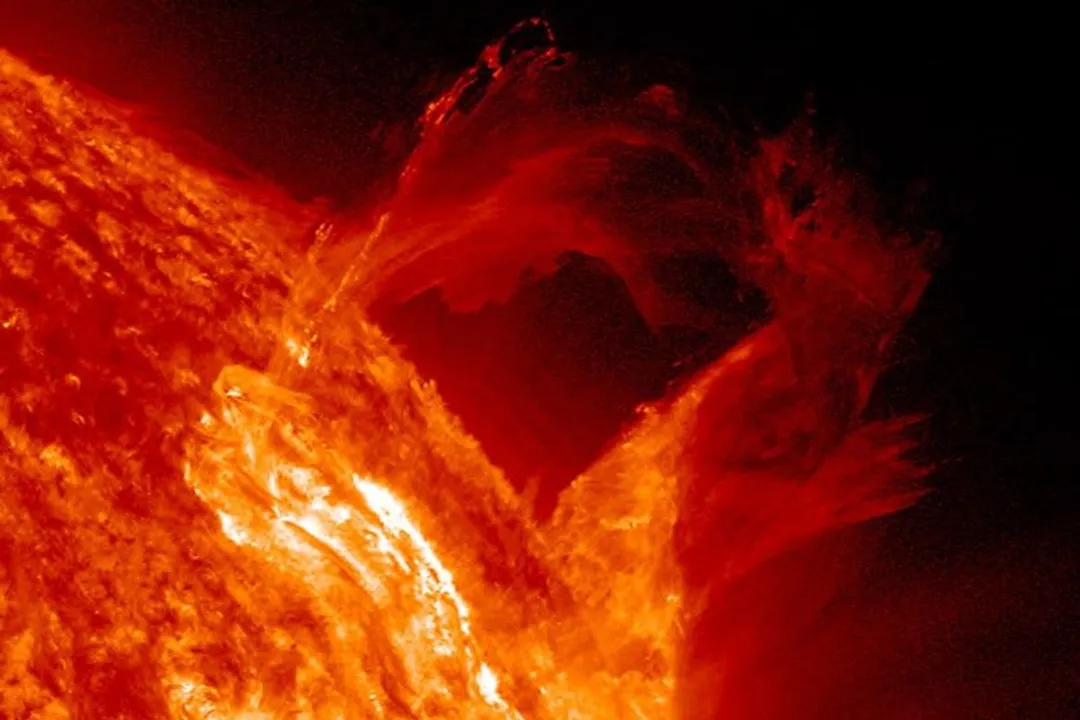
#Videos
NASA's Parker Solar Probe Touches The Sun For The First Time
Related Questions
What substance primarily composes the Sun, making solid land impossible?What approximate temperature does the Sun's visible layer, the photosphere, maintain?How is the boundary known as the photosphere accurately described?Compared to the Sun's 865,000-mile diameter, how thick is the photosphere layer?Which layer exists immediately above the photosphere before reaching the corona?What is the surprising temperature range reached by the Sun's outer layer, the corona?What is the gravitational acceleration on the Sun's visible surface relative to Earth's?In a hypothetical descent into the Sun, what stops an object from hitting a hard bottom?For an object with a density similar to water (1 g/cm^3), where is the theoretical equilibrium point reached?Which NASA probe successfully flew through the Sun's upper atmosphere, the corona?