What will be the next full moon?
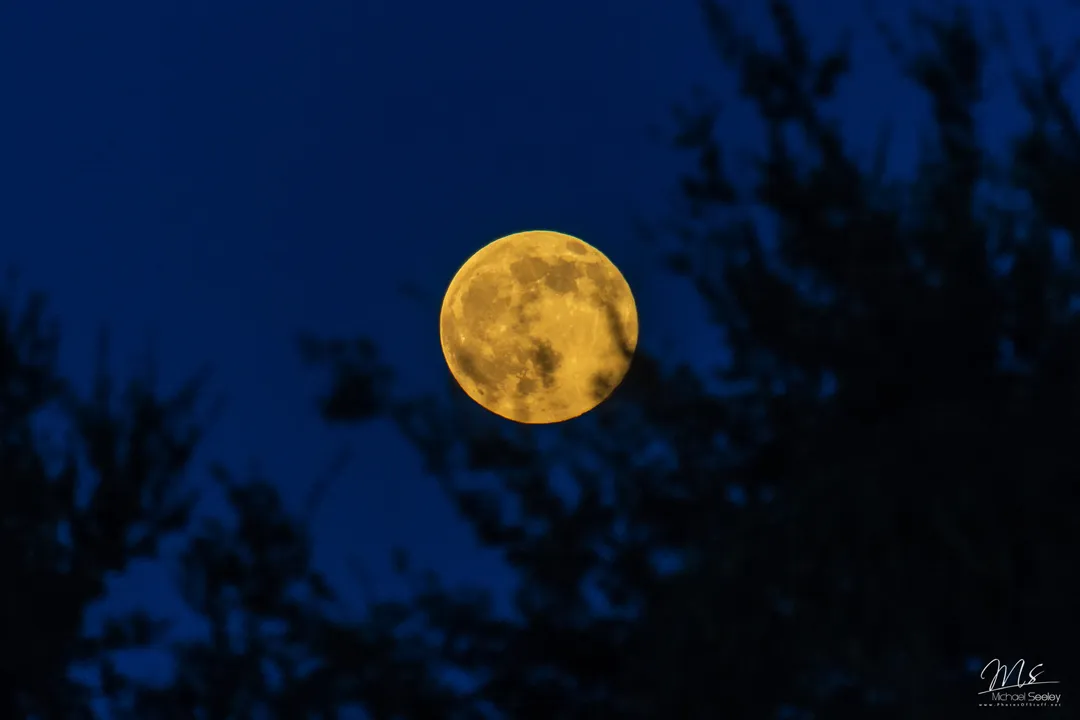
Looking up at the night sky reveals a rhythmic celestial dance that humans have tracked for millennia. If you missed the bright, silvery light of the April full moon, which peaked on April 2, 2026, you are likely looking ahead to the next installment of this lunar cycle. [1][6] Keeping track of these dates is surprisingly simple, yet it rewards the observer with a consistent connection to the natural world. [3]
The next full moon is the Flower Moon, which will reach its peak illumination on May 1, 2026. [6][10] This timing is consistent with the lunar orbit, which takes approximately 29.5 days to move from one full moon to the next. [2][7] As the moon transitions through its phases, starting from a slim crescent and waxing toward fullness, it offers a distinct visual experience every evening throughout the month. [7]
# Lunar Mechanics
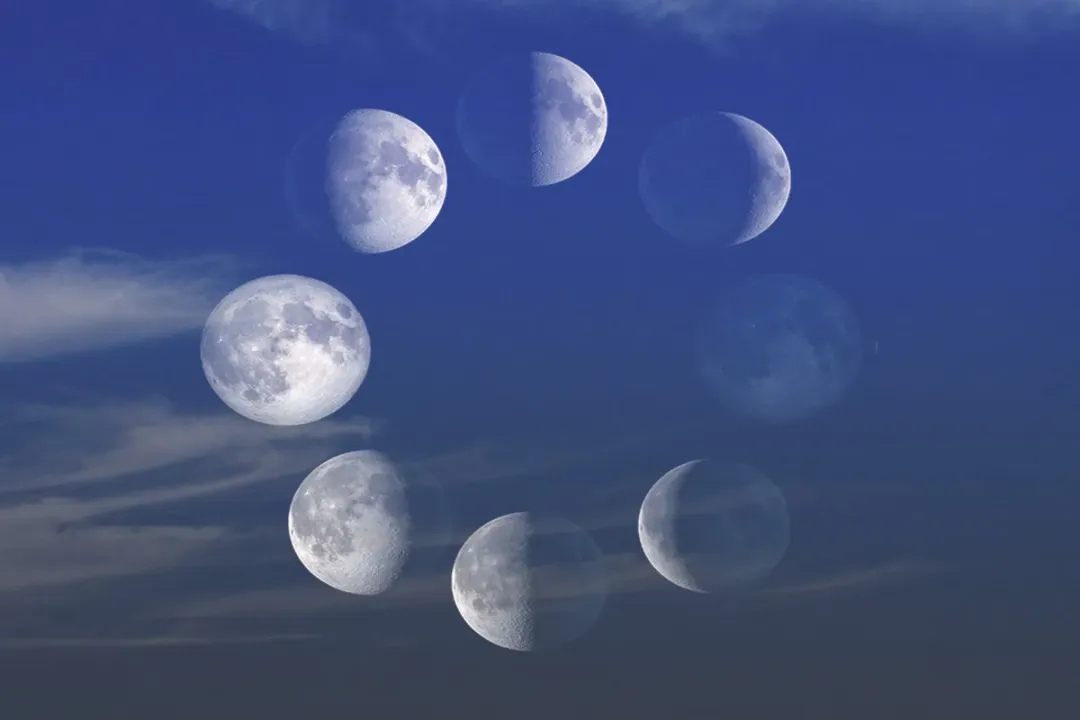
Many people assume the full moon is a state that lasts for a full twenty-four hours, but that is a common misconception. In reality, the "full" moon is an instantaneous event. [4] It occurs precisely when the moon is located directly opposite the Sun from our perspective on Earth. [7] At this exact moment, the lunar face is completely illuminated by the Sun, creating the brilliant disk we recognize.
Because this event is a specific moment in time, the moon can appear full for two or three nights to the casual observer. [1][2] The difference in illumination between the actual peak and the night before or after is often imperceptible to the naked eye. If you find yourself checking the sky on the evening of April 30 or May 2, the moon will still look essentially full, even if the peak technically occurred on May 1. [3][6]
The cycle is governed by the moon’s orbit around Earth. As it travels along its path, the angle between the Earth, the Moon, and the Sun changes constantly. [4] When the moon is between the Earth and the Sun, we see the dark side, resulting in a new moon. When the Earth is between the Sun and the moon, the face of the moon we see is fully lit. [7]
# Naming Traditions
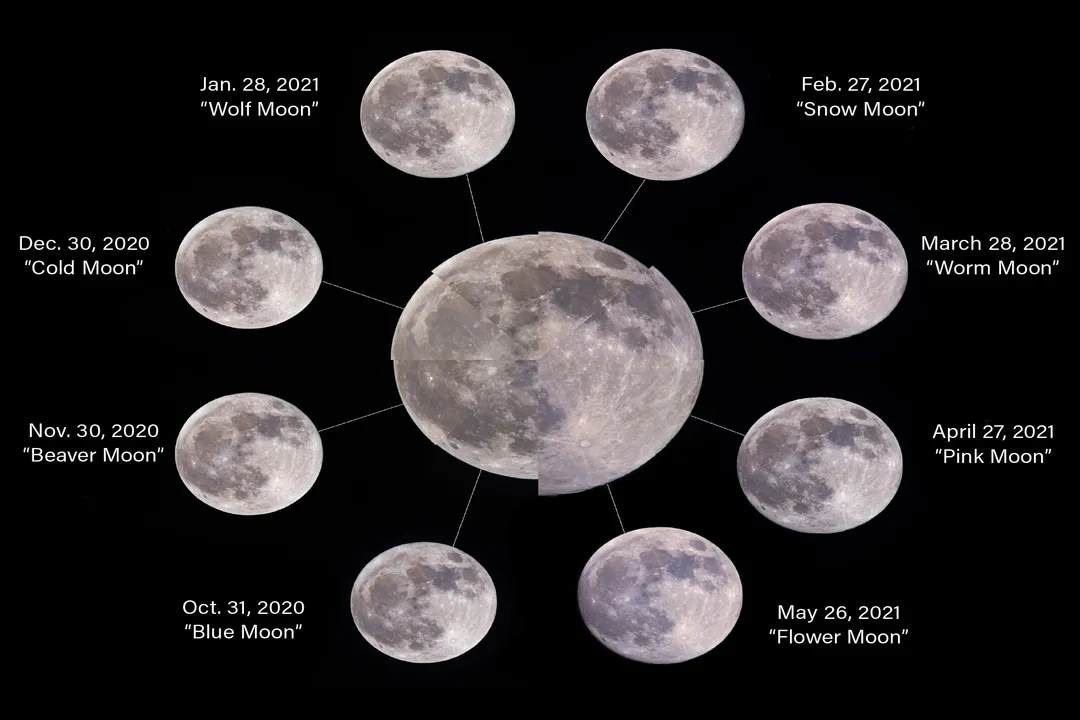
The names assigned to full moons are deeply rooted in tradition, often blending Indigenous North American, Colonial American, and European folklore. [5] These names served as calendars for seasonal tasks, such as planting crops, hunting, or harvesting. [1] The names do not have official astronomical status, but they are widely used because they help track the seasons effectively.
The May full moon, known as the Flower Moon, earned its title because of the abundant blooms appearing across North America as spring settles in. [5] By the time this moon rises, the landscape in many temperate regions has shifted from the dormant grays of winter to the vibrant greens and colorful petals of mid-spring.
These names create a sense of continuity. While they might vary slightly depending on the culture, the Flower Moon remains a consistent identifier for the lunar event that occurs when the earth is fully awake and productive. [5]
# Observation Tips
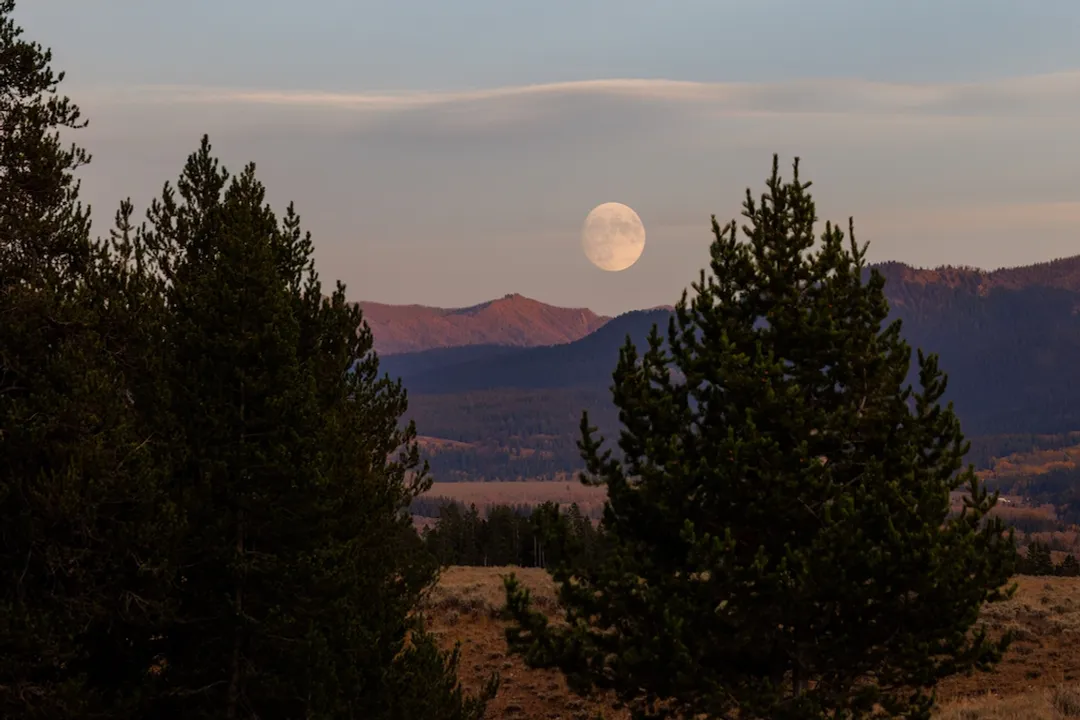
Watching the full moon does not require expensive equipment. The human eye is well-equipped to appreciate the craters and maria—the dark plains formed by ancient volcanic eruptions—that make up the lunar surface. However, a few adjustments to your routine can improve the experience. [1][3]
First, consider the timing of moonrise. The moon is often most spectacular when it is low on the horizon, just as it begins to rise. This creates the "Moon Illusion," a phenomenon where the brain perceives the moon as much larger than it actually is because of the surrounding foreground objects like trees, buildings, or hills. [2][4] As the moon climbs higher into the sky, it will appear to shrink back to its normal size, though its actual physical size remains constant throughout the night. [7]
Second, avoid using a telescope if you want to see the moon's overall brilliance. Telescopes focus too much light when the moon is full, which can be harsh on the eyes and wash out the intricate details of the surface. Instead, try using a pair of standard binoculars. They offer a wider field of view and allow you to see the moon in the context of the surrounding stars and sky, providing a more balanced view of its terrain. [1]
Third, find a dark location away from heavy light pollution. While the full moon is bright enough to be seen in the middle of a city, the viewing quality improves significantly if you get away from streetlights. [2] A darker sky makes the contrast between the lunar surface and the surrounding night sky much sharper, enhancing the visual impact.
# 2026 Calendar
To help you plan your observations for the remainder of the year, the following table lists the dates for the upcoming full moons in 2026. Keep in mind that these dates are based on Coordinated Universal Time (UTC), so your local experience may shift by a day depending on your time zone. [3][6]
| Month | Full Moon Name | Date (2026) |
|---|---|---|
| May | Flower Moon | May 1 |
| June | Strawberry Moon | May 31 |
| July | Buck Moon | June 29 |
| August | Sturgeon Moon | July 29 |
| September | Corn Moon | August 27 |
| October | Harvest Moon | September 26 |
| November | Beaver Moon | October 25 |
| December | Cold Moon | November 24 |
Note: December 2026 will feature an additional full moon on December 23 due to the cycle length occasionally allowing for two full moons in one month, often called a Blue Moon.
# Lunar Photography
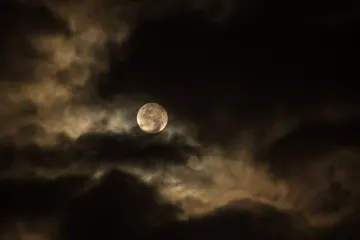
If you enjoy photography, capturing the full moon requires a change in mindset from standard night photography. Many beginners make the mistake of using long exposures, which is appropriate for capturing faint stars but will result in a blown-out, white blob when applied to the moon. [2]
The moon is incredibly bright. When shooting, use a faster shutter speed than you might expect. Start with a low ISO to keep noise down and use a high shutter speed—often 1/250 or faster—to compensate for the moon's brightness. A tripod is still recommended, but the goal is to freeze the motion and manage the light, rather than gathering as much of it as possible. [1]
If you are using a smartphone, tap the moon on your screen and drag the exposure slider down. This manual adjustment prevents the camera from overexposing the scene. By lowering the exposure manually, you can actually capture the texture and craters of the moon even with a modest camera setup.
# The Cycle Continues
The lunar cycle remains one of the most reliable phenomena in our sky. Watching the moon wax and wane serves as a gentle reminder of the passage of time. [7] While the Flower Moon on May 1 is the next milestone, the beauty of the moon is that it changes every night, regardless of whether it is fully illuminated or just a sliver of light.
Take a moment during the next cycle to step outside. Weather permitting, the night sky provides a perspective that is difficult to find in our daily routines. Whether you are observing with the naked eye, binoculars, or a camera, the moon is a constant, quiet companion that invites us to pause and look up. [3][7]
Related Questions
#Citations
2026 Full Moon calendar: When to see the Full Moon and phases
Full moon calendar 2026: When to see the next full moon | Space
Moon Phases 2026 – Lunar Calendar - Time and Date
Moon Phases Calendar - Catalina Sky Survey
When Is the Next Full Moon? Full Moon Dates for 2026
When Is The Next full Moon? Full Moon Calendar 2026
Moon Phases - NASA Science
There are several full moons happening in 2026 - YouTube
Full Moon Dates for 2026 Mark your calendar — 2026 ... - Facebook
Next Full Moon - TheSkyLive