What qualifies a planet according to NASA?

The classification of a celestial body as a "planet" is a surprisingly deep question that touches on astronomy, history, and planetary science itself. While we might intuitively recognize worlds like Earth, Mars, and Jupiter, pinning down the exact criteria that elevate a world to planet status—especially when dealing with worlds orbiting other stars or those near the edge of our own solar system—has required formal definitions from authoritative bodies like the International Astronomical Union (IAU). [1][2] NASA, as a leading space agency, generally operates under the framework established by the IAU for Solar System bodies, though scientists within the agency continue to debate and propose refinements, particularly when considering the vast catalog of exoplanets. [2][6]
# Solar System Criteria
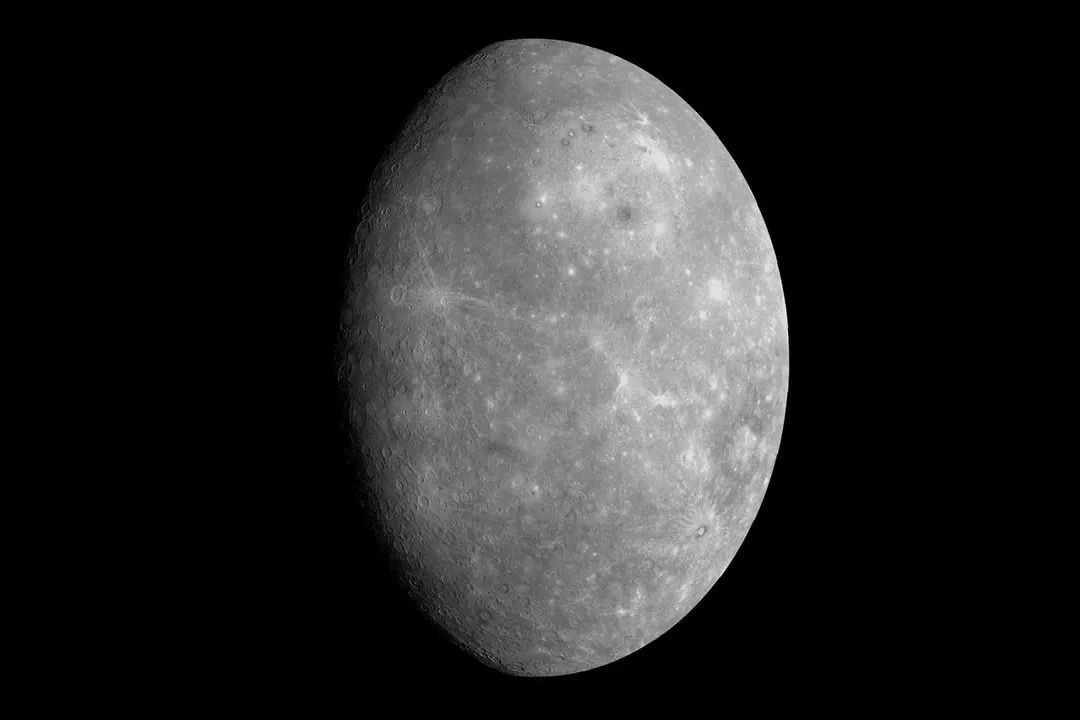
The current working definition for what constitutes a planet within our Solar System was established by the IAU in 2006. [1][4] This definition outlines three specific hurdles a celestial object must clear to earn the title of a full planet. [1][4] These rules were put forward partly in response to the discovery of numerous large objects in the outer Solar System, most notably Eris, which forced astronomers to address objects similar in size to Pluto. [8]
# Orbiting The Sun
The first criterion is orbital mechanics: a planet must be in orbit around the Sun. [1][4] This requirement immediately distinguishes planets from moons, which orbit other planets or smaller bodies. [4] For Solar System objects, the central anchor is our star, the Sun. When discussing exoplanets—worlds outside our solar neighborhood—this criterion is adapted to mean the object must be in orbit around a star, though the formal IAU definition primarily concerns our own system. [2]
# Near Round Shape
The second test concerns physical shape, specifically whether the body has achieved hydrostatic equilibrium. [1][4] In simpler terms, the object must have enough mass that its own gravity has pulled it into a nearly round or spherical shape. [4] This condition suggests a minimum level of internal thermal and structural processing driven by gravity. [7] Smaller bodies, like most asteroids, have irregular, lumpy shapes because their gravity is too weak to mold them into spheres. [4] Pluto, for example, easily meets this criterion, as do all the recognized dwarf planets. [8]
# Clearing The Neighborhood
This third requirement is the most significant differentiator and the source of considerable debate over the years. [1][6] To be classified as a planet, the object must have "cleared the neighborhood" around its orbit. [1][4] This means that through its gravitational dominance, the planet has either accreted or ejected most of the other small objects in its orbital path. [4]
The concept implies that the planet is gravitationally the king of its orbital zone. For example, Earth’s mass is vastly larger than the combined mass of all other objects orbiting near it, excluding the Moon. [7] Jupiter is the most successful at this, having swept up or flung away the vast majority of material that would otherwise share its path. [4]
# The Pluto Precedent
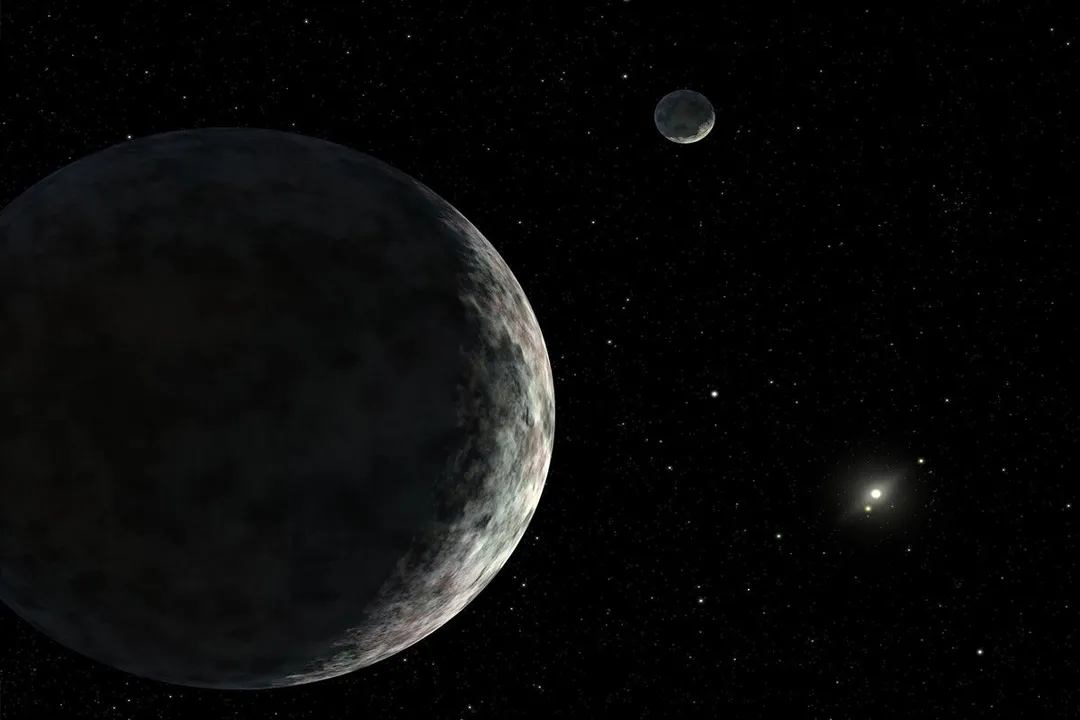
When the IAU created the three-part definition, it was Pluto that failed the third test. [8] Pluto, while orbiting the Sun and being nearly round, shares its orbital space—the Kuiper Belt—with many other significant, icy bodies. [8] Because Pluto has not gravitationally dominated this region, it could not retain its planetary status under the 2006 ruling. [1]
This demotion led to the creation of a new category: the dwarf planet. [8] A dwarf planet meets the first two criteria—it orbits the Sun and is nearly round—but it has not cleared its orbital neighborhood. [8] Other examples of dwarf planets include Ceres, Eris, Makemake, and Haumea. [8] While the public often associates the term "dwarf planet" with being significantly smaller, the key distinction is purely dynamical: it's about orbital dominance, not just physical size. [8]
It is interesting to consider the sheer scale difference. If we look at the relative masses, Jupiter, Saturn, Uranus, and Neptune possess masses hundreds of thousands of times greater than their respective orbital debris populations. [4] Earth is about 1.7 million times more massive than the rest of the material in its orbital zone. [4] Pluto, conversely, has a mass that is only about 0.07 times the mass of the other objects in its region of space, confirming its failure to meet the clearing requirement. [4]
# Exoplanet Classification

The question of what qualifies as a planet becomes more complex when we look outward at the thousands of exoplanets discovered orbiting distant stars. [2] The IAU definition was primarily tailored for our Solar System's context. When astronomers search for planets light-years away, they primarily rely on detecting objects that orbit a star and are large enough to be inferred as having achieved hydrostatic equilibrium—the "roundness" test. [2]
The third test, clearing the neighborhood, becomes effectively impossible to verify with current observational technology for most exoplanets. We simply cannot map out the debris fields around a star system millions of light-years distant with the precision needed to confirm orbital clearance. [2] Therefore, the classification for exoplanets often leans heavily on the first two criteria and sometimes includes a mass limit to distinguish them from brown dwarfs (failed stars). [2] This situation highlights a significant gap where the definition, while clean for our local neighborhood, is insufficient for the discoveries being made elsewhere.
# Proposed Geophysical Definition
The ongoing scientific conversation demonstrates that the IAU definition is not universally accepted as the only scientifically useful one, especially given the challenges in applying the third rule universally. [6] Some NASA scientists have put forward an alternative definition based purely on the geophysics of the body, rather than its location or orbital dynamics. [6]
This proposed alternative suggests that a body should be called a planet if it is massive enough to be rounded by its own gravity (meeting criterion two) but not massive enough to initiate core nuclear fusion (thus separating it from a true star). [6] In this geophysical view, the object's environment—whether it clears its orbit or orbits a star—is secondary to its intrinsic physical state. [6] Under this model, bodies like Pluto would automatically qualify as planets because they are definitively round and not stars, regardless of their orbital neighbors. [6]
For instance, if a large, round, icy object formed far out in the Oort cloud, far from any significant debris field, the IAU definition might still classify it as a dwarf planet because it hasn't cleared a region, whereas the geophysical definition would instantly label it a planet based on its shape and lack of fusion capability. [6] This comparison makes it clear that the debate isn't just about Pluto; it's about which characteristic—orbital behavior or physical state—is more fundamental to the identity of a planet. [6]
# Contextualizing Planet Definitions
When thinking about which definition to apply, it helps to see the process as a classification exercise with different goals. The IAU definition prioritizes the dynamics of the Solar System architecture, aiming to distinguish the eight large, dominant bodies from the smaller populations like asteroids and Kuiper Belt Objects. [4]
If we were to adopt the geophysical definition universally, it would likely result in a massive expansion of the number of recognized planets. [6] Consider the potential implications for our own system: if a large moon—say, Titan or Ganymede—were somehow placed in its own orbit around the Sun, it would instantly qualify as a planet under the geophysical rule, even though it formed as a satellite. This is a key difference: the geophysical test focuses on what the object is, while the IAU test focuses on what the object does within its system. [4][6]
A helpful way to visualize the current standing is to map out the three criteria:
| Criterion | IAU Planet Requirement | Dwarf Planet Status | Exoplanet Status Note |
|---|---|---|---|
| Orbiting the Sun | Yes | Yes | Must orbit a star [2] |
| Nearly Round | Yes | Yes | Assumed if large enough [2] |
| Cleared Orbit | Yes | No | Generally untestable [2] |
| [1][4][8] |
This table clearly shows that the third point is the gatekeeper separating the main eight planets from the dwarf planets within our Solar System. [8]
# The Importance of Expertise
Understanding these nuances requires expertise from planetary scientists who study these worlds in depth. The ability to determine hydrostatic equilibrium requires detailed data on mass and size, often gathered through multiple observations or missions like those sent to the outer system. [4] The very concept of "clearing the neighborhood" is an exercise in dynamical modeling, calculating the mass ratios within orbital zones. [4]
When we look at a body like Ceres, the largest object in the asteroid belt, it satisfies the first two criteria: it orbits the Sun and is round. [8] However, the asteroid belt contains millions of other significant objects, meaning Ceres does not dominate its path. [8] In contrast, the gap between Mars and Jupiter, where the asteroid belt resides, is dynamically not the neighborhood cleared by a planet; the material there is spread out enough that no single body has achieved gravitational supremacy. [4]
It is worth noting that even the concept of "clearing the neighborhood" can lead to interesting thought experiments. If Earth were instantaneously moved to the orbit of Neptune, it would likely not clear Neptune's neighborhood because the region is already dominated by a much more massive object. Similarly, if Neptune were moved to Earth’s orbit, it would certainly sweep up everything in that region quickly. This illustrates that the current state of orbital cleanliness, based on billions of years of history, is what matters, not just the object's inherent mass or shape. [4]
# Moving Forward
For the moment, the IAU definition remains the official standard NASA adheres to when discussing the eight recognized planets of our Solar System: Mercury, Venus, Earth, Mars, Jupiter, Saturn, Uranus, and Neptune. [3] However, the scientific community’s active discussion—evidenced by the proposal of geophysical alternatives and the continued study of exoplanets—shows that the definition of "planet" is a living scientific concept. [6] As technology allows us to characterize distant worlds better, particularly those around other stars, the need for a definition that scales beyond the architecture of our own stellar backyard will only increase.
The ongoing exploration of worlds like those in the Kuiper Belt, or the analysis of data from missions studying the moons of Jupiter and Saturn (many of which are large enough to be dwarf planets themselves if they orbited the Sun), continues to inform the debate. While the public prefers a clean, easy label, the reality of planetary science reveals a spectrum of bodies, each fascinating in its own right, defined by a balance of gravity, environment, and orbital history. [7]
#Videos
What is a Planet? - Science at NASA - YouTube
Related Questions
#Citations
What is a Planet? - NASA Science
[PDF] What Is a Planet?
What is a Planet? - Science at NASA - YouTube
NASA Scientists Have Proposed a New Definition of Planets, And ...
[PDF] What Is a Planet? | NASA
What Is a Dwarf Planet? | NASA Planetary Sciences
Planet - Wikipedia