How does NASA classify planets?
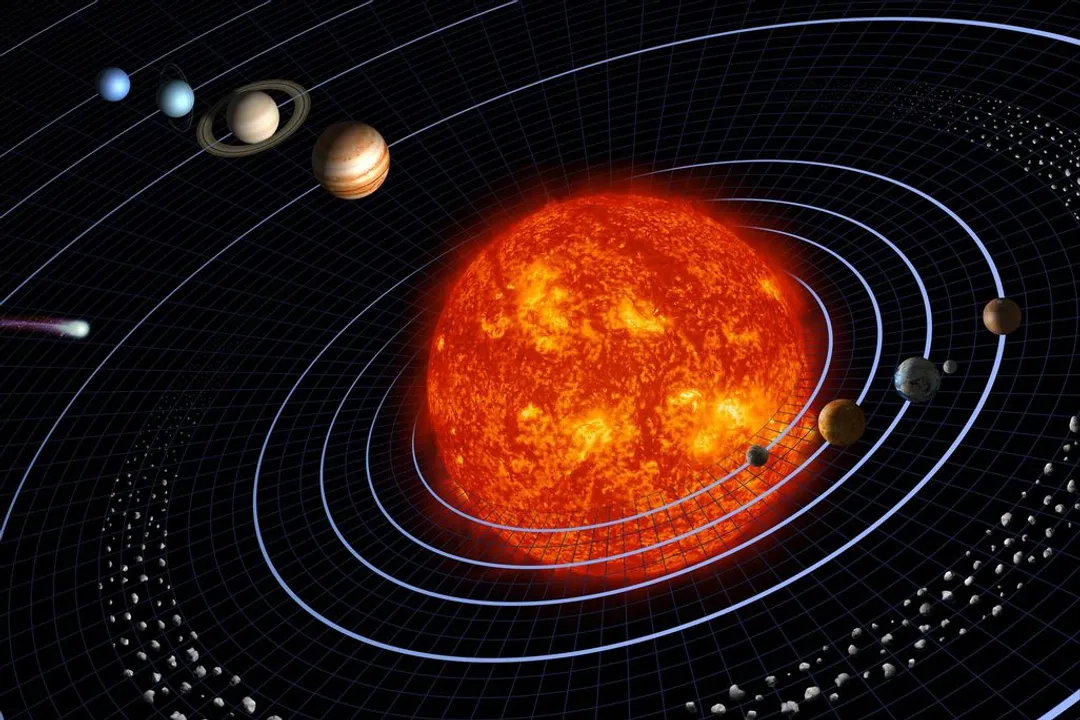
The standard for classifying a planet within our Solar System is a specific set of rules established by the International Astronomical Union (IAU) in 2006, which NASA adheres to when discussing our local celestial bodies. [1][2] For an object orbiting the Sun to earn the title of a planet, it must successfully meet three distinct criteria. [2] First, it absolutely must be in orbit around the Sun—this immediately excludes moons and other objects orbiting planets. [2] Second, the body must have sufficient mass for its own gravity to overcome rigid body forces so that it assumes a hydrostatic equilibrium (nearly round) shape. [2] Finally, and perhaps most famously, the object must have "cleared the neighborhood" around its orbit, meaning it is the gravitationally dominant object in its orbital path. [2]
# Object Groupings
Once an object meets these requirements in our Solar System, it generally falls into one of two primary classification groups based on its composition and location. [1] The first group consists of the Terrestrial Planets: Mercury, Venus, Earth, and Mars. [1] These are the four inner worlds, characterized by being relatively small, dense, and primarily composed of rock and metal. [1] On the other end of the spectrum are the outer, massive worlds, often called Giant Planets. [1] These include Jupiter, Saturn, Uranus, and Neptune. [1] Jupiter and Saturn are classified as Gas Giants, largely made up of hydrogen and helium, while Uranus and Neptune are Ice Giants, containing more volatile substances like water, ammonia, and methane ice. [1] This fundamental division helps us understand the formation history and internal structure of the worlds closest to us. [1]
# Beyond Definition
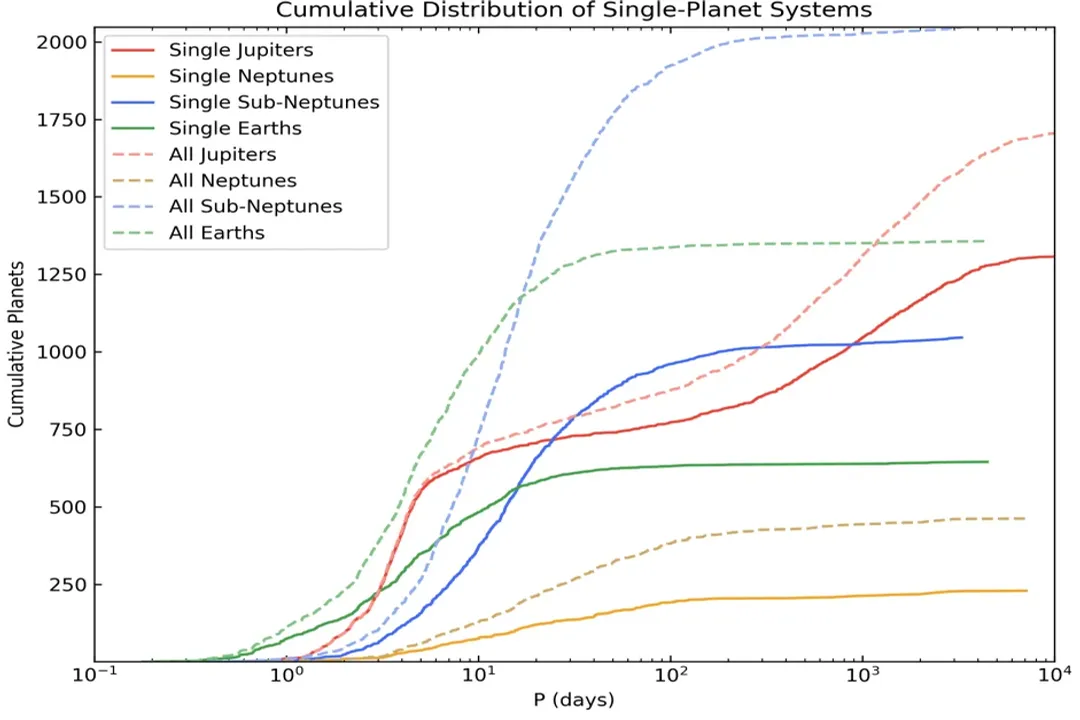
The classification challenge changes dramatically when we look outside our Sun’s gravitational sphere of influence to worlds orbiting other stars—the exoplanets. [3] Here, the IAU's three-part definition designed for our system becomes difficult to apply universally. [8] For instance, it is often impossible to determine if a distant exoplanet has "cleared its orbital neighborhood" due to the immense distances involved and the limitations of current observational techniques. [8] Therefore, NASA and the astronomical community rely on a combination of other measurable factors to characterize these distant worlds. [3] Planetary systems in general are understood as collections of objects, including planets, orbiting a star, and the architecture of these systems—how close or far the planets orbit—is another classification metric. [4][7]
# Classification Debates
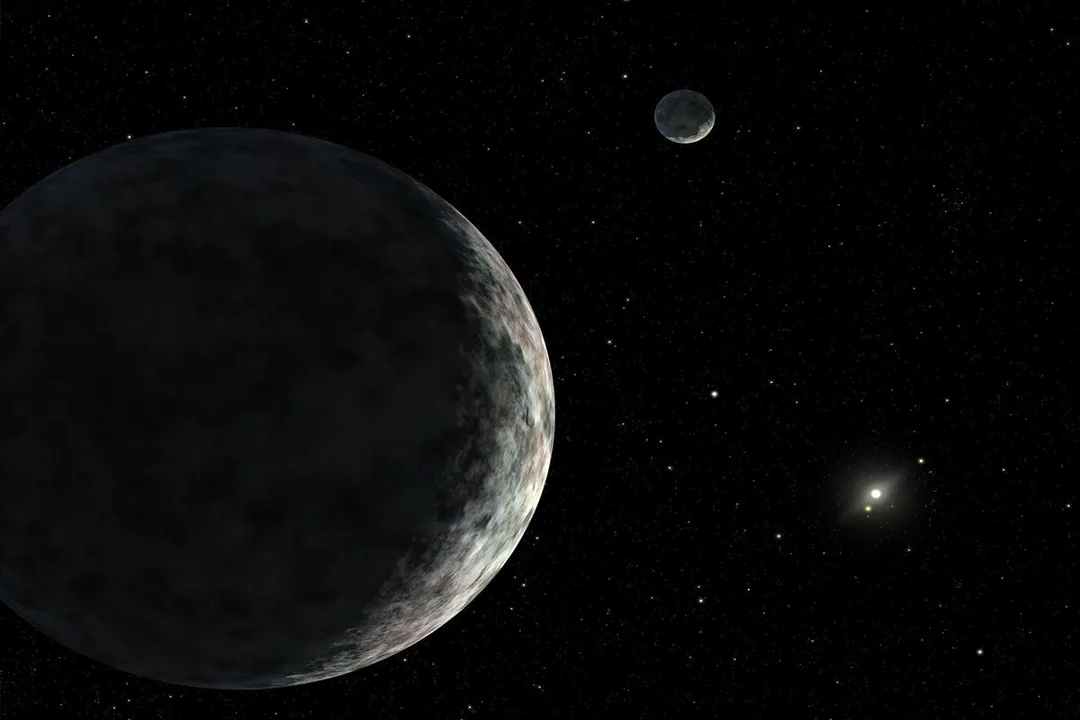
The strictness of the 2006 ruling regarding "clearing the neighborhood" is exactly what led to the reclassification of Pluto as a dwarf planet, a point of ongoing discussion among scientists. [8] While some astronomers might prefer criteria based purely on physical characteristics, such as size or atmospheric composition, the current official framework requires gravitational dominance within the orbital zone. [6] Because of this, proposals for new classification schemes often surface, sometimes suggesting new categories for objects like Pluto or for planets that orbit outside the traditional star-centric definition. [8] The debate highlights that classification is a human construct attempting to organize a complex reality, and as new data emerges, the definitions must sometimes be refined or expanded. [6]
# Exoplanet Organization
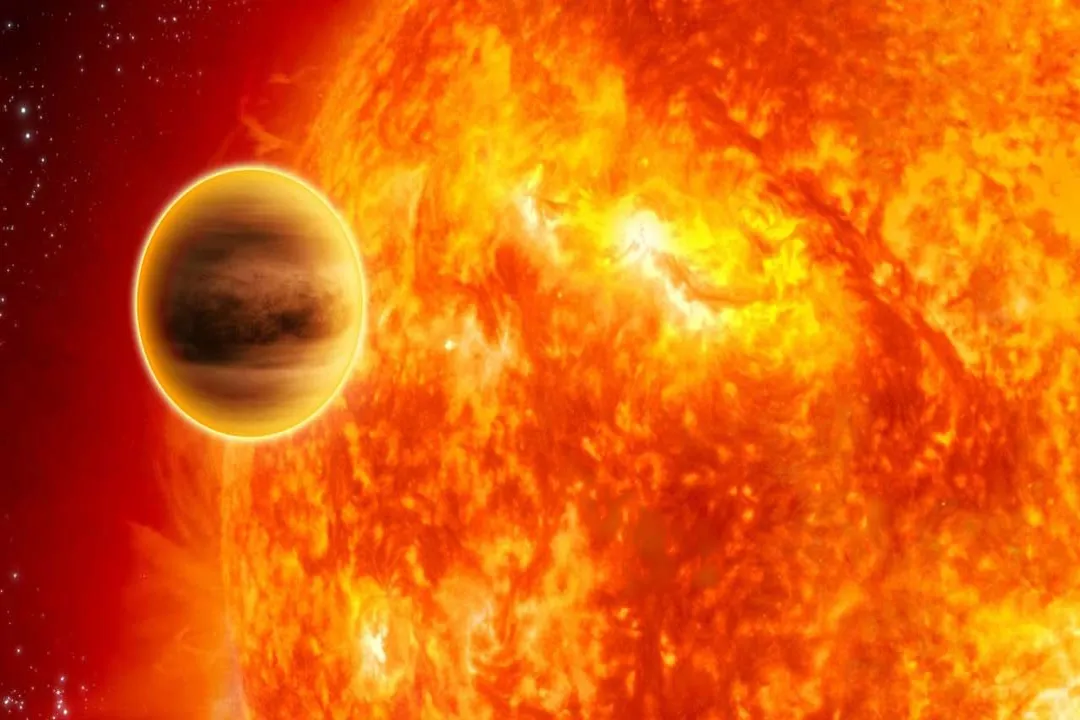
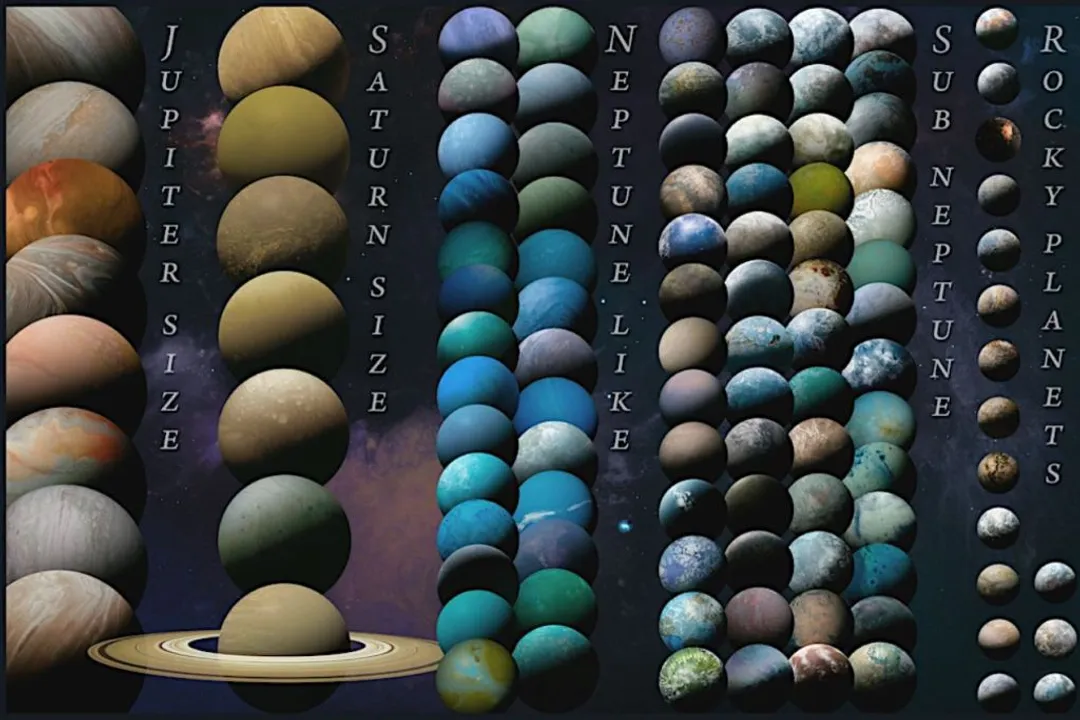
When cataloging exoplanets, scientists often rely on observable properties like size, mass, and orbital period to group them, which leads to descriptive categories like "Super-Earths" (rocky planets larger than Earth but smaller than Neptune) or "Hot Jupiters" (gas giants orbiting extremely close to their host stars). [3] Naming conventions also follow an organizational structure, typically starting with a letter that designates the planet's order of discovery around a specific star, such as Kepler-186f, where f indicates it is the sixth planet found orbiting the star Kepler-186. [9] Furthermore, some researchers suggest that classification should focus more on the system architecture itself rather than just individual planets. [7] For instance, a system could be classified based on whether it contains planets in stable, co-planar orbits similar to our own, or if it is dynamically chaotic. [7]
Considering the sheer diversity encountered, one useful way to view the current state of planetary classification is to recognize a practical dichotomy: the classification of Solar System Bodies is definitional and local, while the classification of Exoplanets is descriptive and comparative. [2][3] For the eight recognized planets, the criteria are binary—you either meet all three IAU requirements or you do not. For exoplanets, however, the classification is more of a spectrum based on inferred properties. We assign classifications like "Gas Giant" or "Super-Earth" based on the best data we can collect, knowing full well that an object we label a "Super-Earth" might, upon closer inspection, be revealed to have an atmosphere and bulk properties closer to a mini-Neptune. [3] This distinction is vital because the descriptive tags heavily influence which follow-up observations are prioritized. [3]
Another interesting layer is how the method of detection implicitly classifies the target. [3] For example, the Transit Method, which looks for dips in starlight, is excellent at determining a planet's size relative to its star, heavily biasing our current catalog toward larger planets that cause a more significant light blockage. [3] Conversely, the Radial Velocity method is better at finding massive planets close to their stars. [3] Therefore, while we speak of "classification," much of what we observe for exoplanets is actually a classification of what our current detection technology is capable of finding. [3] This is a key difference from the ancient, purely physical criteria applied to our home system's worlds. For example, we can definitively state that Jupiter has cleared its orbit, but for many exoplanets, the best we can do is state that its measured mass is significantly greater than any other body sharing its orbital zone based on current measurement uncertainty. [5] This necessary reliance on current technological limits means that future discoveries will likely necessitate adjustments to the descriptive categories we use today.
Related Questions
#Citations
About the Planets - NASA Science
Exoplanet Classification and Yield Estimates for Direct Imaging ...
Classification of Planets? - Astronomy Stack Exchange
It's Time to Start Classifying Exoplanetary Systems - Universe Today
Astronomers Propose New Criteria to Classify Planets, but Pluto Still ...