What is cosmic radiation for kids?
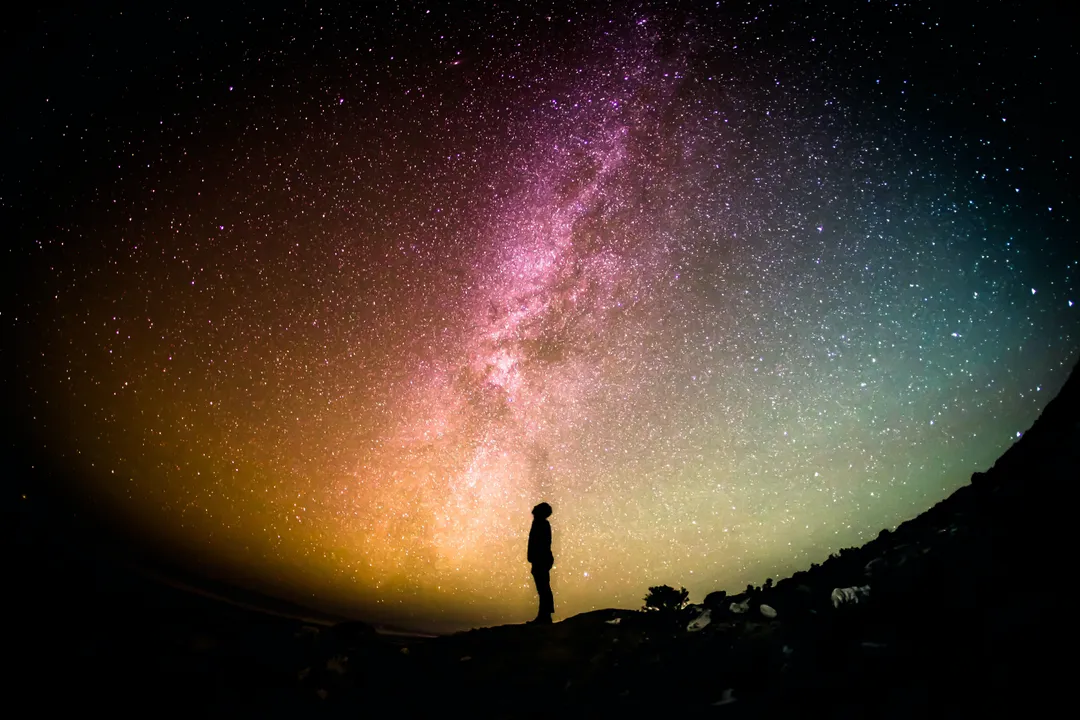
Imagine throwing a tiny, incredibly fast pebble that has traveled for millions of years across the galaxy before hitting a target—except the "pebbles" aren't made of rock, and the target is all around us. That gives you a basic picture of cosmic radiation. It sounds mysterious, but it’s simply high-energy particles that come zooming in from space. [1][8] Even though we call them "rays," most of them aren't rays in the way sunlight or radio waves are; they are actually tiny bits of matter moving at nearly the speed of light. [1][2]
# Space Particles
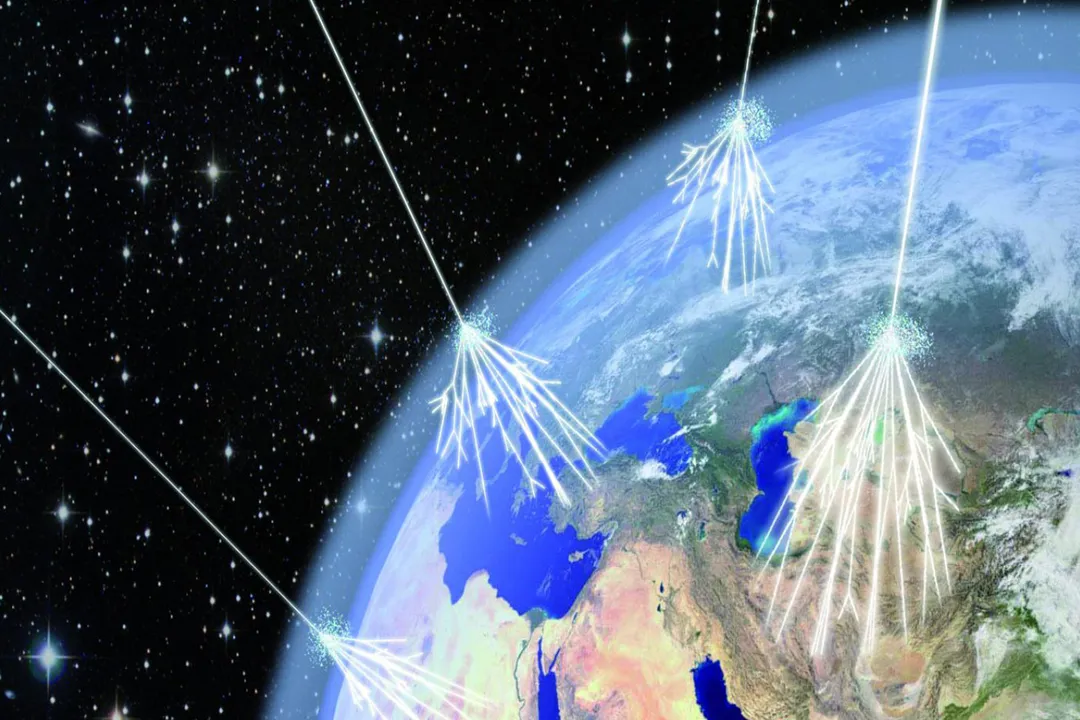
When scientists talk about cosmic rays, they are talking about ionizing radiation. [7] This means the particles carry so much energy that when they strike something—like the air, or even you—they can knock electrons away from atoms, changing the atom's electrical balance. [7]
What are these speeding particles made of? They are mostly protons, which are the positively charged parts found in the nucleus of an atom. [1][4][8] But they aren't only protons. Some cosmic rays are made up of heavier atomic nuclei, like helium or even iron nuclei, stripped bare of their electrons. [4] Because they are charged particles, they are constantly being pushed and pulled by magnetic fields both near the Sun and throughout the galaxy as they travel toward Earth. [2]
# Where Origin
These high-energy travelers don't all come from the same place, which helps scientists sort them into different categories based on where they start their trip. [4]
One major group originates within our own solar system. These are often called Solar Energetic Particles (SEPs). They are shot out from the Sun during massive events like solar flares or coronal mass ejections. [4] Because the Sun is relatively close, these particles take less time to reach us, but they are usually lower in energy compared to the other type.
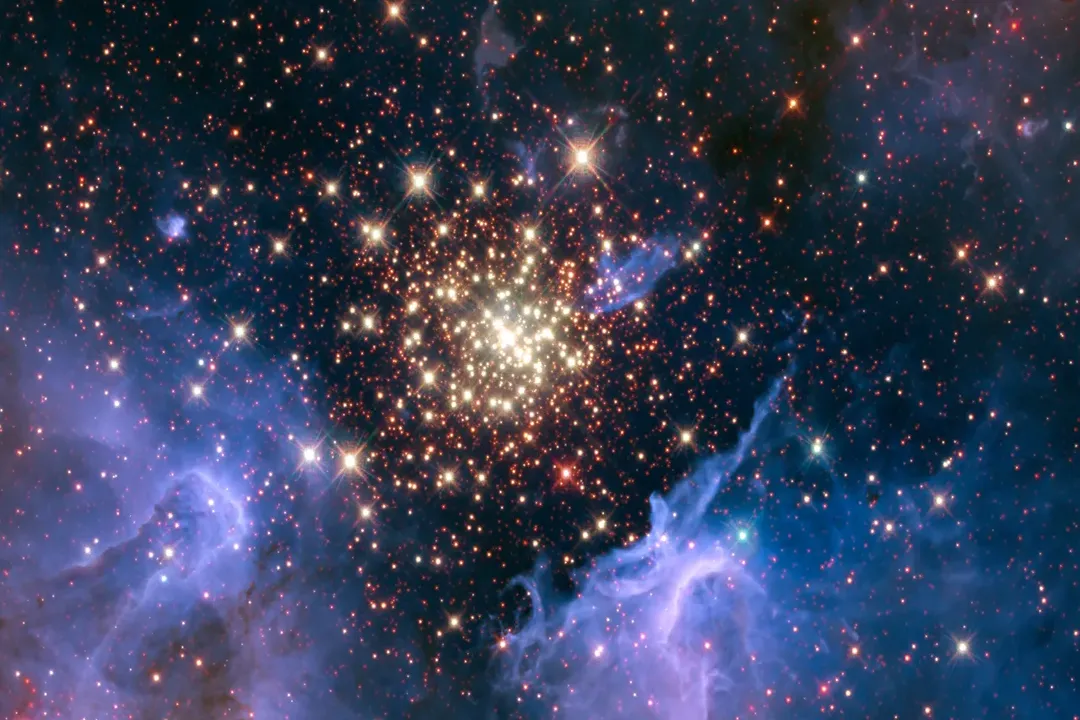
The second, and arguably more interesting, group comes from outside our solar system. These are called Galactic Cosmic Rays (GCRs). [4] GCRs are thought to be accelerated to incredible speeds by gigantic explosions in space, most famously when massive stars die in what is called a supernova. [2] These particles have traveled for potentially millions or even billions of years across the Milky Way galaxy before we detect them. [2] A fascinating thought to keep in mind is that if you took the energy of one of these GCR protons and compared it to a regular baseball pitch—the particle has the kinetic energy equivalent to that baseball being thrown nearly 60 miles per hour, but concentrated into a piece of matter thousands of times smaller than a grain of dust. [1] This sheer concentration of energy is what makes them so potent.
# Atmosphere Shield
If these high-speed particles are constantly bombarding Earth, why don't we all feel intense radiation all the time? The answer is our atmosphere and the Earth’s magnetic field, which act like a giant, invisible force field protecting us. [1][4]
When a primary cosmic ray particle—like a high-speed proton from a supernova—slams into the top layers of Earth's atmosphere, it doesn't just stop; it causes a massive collision. [1] This collision smashes the incoming particle apart and creates a shower of secondary particles—like muons, neutrons, and pions—that cascade down toward the ground. [1] It’s like a single bullet hitting a pane of glass and causing a spray of tiny shards on the other side. We on the surface are mostly being hit by these secondary particles, not the original galactic travelers. [1]
# Ground Exposure
Because of this atmospheric protection, the amount of cosmic radiation exposure people experience on Earth is generally quite low. [9] However, this exposure isn't uniform; it changes depending on where you are.
Think about it this way: the atmosphere is our shield. If you go higher up, that shield gets thinner. [9] People living high in the mountains or, more commonly, people who frequently fly in airplanes get slightly more exposure to cosmic radiation than those living near sea level. [9] The reason is simple: altitude means less air mass is sitting between you and space, so the shield has been partially thinned out. [9] For example, a flight from New York to Los Angeles exposes you to a measurably higher dose of cosmic rays than spending the same amount of time walking around a city at ground level. This is a practical way to visualize the thinning shield effect: as your elevation increases, your distance from the protective atmosphere decreases, leading to a slightly higher count of secondary particles reaching you. [9]
# Different Radiation
It is important not to mix up cosmic rays with another famous cosmic phenomenon: Cosmic Microwave Background (CMB) radiation. [6] They are completely different things, though both come from space.
Cosmic rays are energetic, discrete particles traveling at high speed. [1][4] The CMB, on the other hand, is an ancient form of low-energy electromagnetic radiation—essentially, the faint, cold leftover glow, or "afterglow," from the Big Bang when the universe was very young. [6] While cosmic rays are like tiny, ultra-fast cannonballs, the CMB is a vast, even bath of microwave energy that fills all of space, but it doesn't have the immediate energy to cause the kind of ionization that cosmic rays do. [6][7]
# Space Danger
While the radiation dose on Earth is safe for most people, the situation changes drastically for astronauts traveling beyond our atmosphere. [5] When astronauts are outside the protection of Earth’s magnetic field and thick atmosphere, they are directly exposed to the full spectrum of space radiation, including intense Solar Energetic Particles (SEPs) and the highly penetrating Galactic Cosmic Rays (GCRs). [5]
This is a major concern for long-duration space travel, like missions to Mars. GCRs are particularly tricky because they are made of heavier nuclei and travel so fast that they can easily penetrate the metal hull of a spacecraft. [5] Once inside, they can damage electronic equipment or, more seriously, pass through a human body, potentially damaging cells and DNA, which increases the long-term risk of health issues. [5] Missions like the International Space Station (ISS) are still protected somewhat by orbiting within the Earth’s protective magnetic field, but any deep-space trip requires significant shielding solutions. [5]
# Protection Methods
Because cosmic radiation is a natural part of our environment, whether we are on Earth or in space, understanding how to manage exposure is key. On the ground, we already deal with natural background radiation, which includes cosmic rays, radon gas, and radiation from the ground itself. [9] In a typical scenario, the contribution from cosmic rays is one component of your total annual exposure. [9]
For spacecraft, the protection strategy focuses on two things: mass and timing.
- Mass Shielding: Using thick layers of material—often lightweight plastics or hydrogen-rich materials—to absorb or deflect the primary particles before they reach the crew quarters. [5]
- Timing/Prediction: Since Solar Energetic Particles (SEPs) come from predictable solar events, space agencies monitor the Sun closely. If a major flare is predicted, astronauts can retreat to a heavily shielded "storm shelter" built into the spacecraft for a few hours or days until the burst of high-energy particles passes. [5]
Cosmic radiation reminds us that space is an extreme environment. It is the universe’s high-speed traffic, and while Earth’s atmosphere does an excellent job of keeping us safe from the vast majority of it, understanding these invisible, energetic particles helps us appreciate the protective bubble we live within. [1][9]
#Videos
How cosmic rays help us understand the universe - Veronica Bindi
Related Questions
#Citations
Cosmic ray Facts for Kids
Cosmic Radiation Facts For Kids | AstroSafe Search - DIY.ORG
How cosmic rays help us understand the universe - Veronica Bindi
Cosmic rays, explained - UChicago News - The University of Chicago
SET Education What is space Radiation?
Curious Kids: what is cosmic microwave background radiation?
radiation - Kids | Britannica Kids | Homework Help
cosmic ray | definition for kids | Wordsmyth Word Explorer Children's ...
Facts About Radiation from Space (Cosmic Radiation) - CDC