What is the meaning of cosmic radiation?
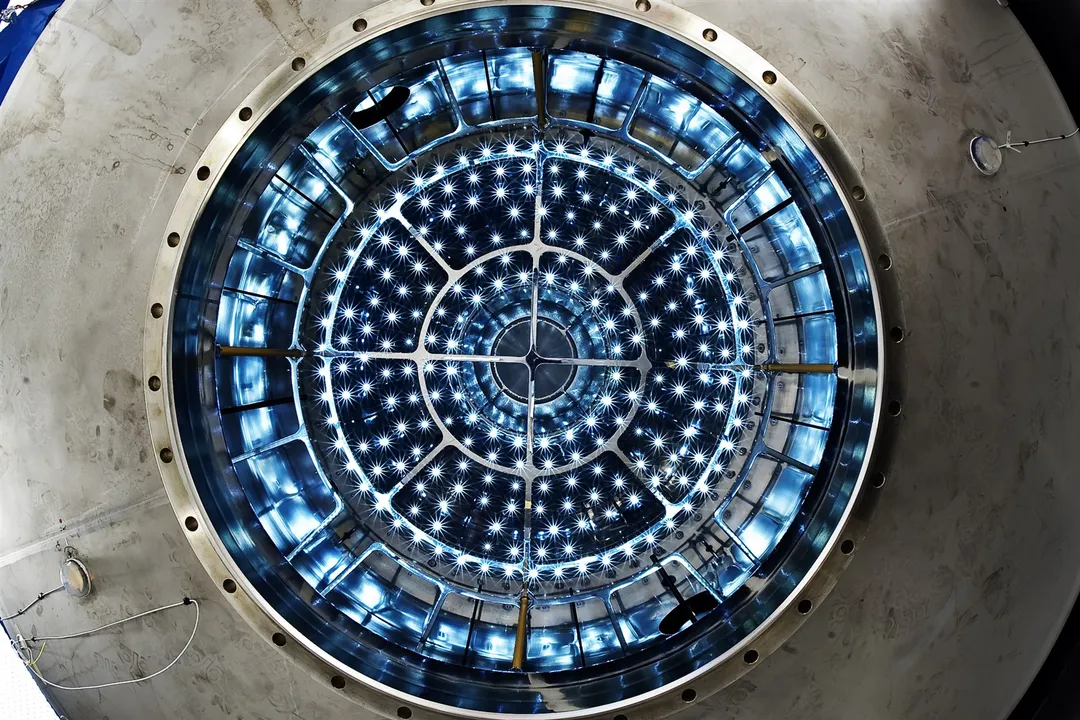
Cosmic radiation is fundamentally a stream of high-energy particles originating from outer space that bombards the Earth constantly. These aren't electromagnetic waves like light or radio waves; instead, they are atomic nuclei, electrons, and other subatomic particles moving at nearly the speed of light. When people hear "radiation," they often think of things like X-rays or nuclear fallout, but cosmic rays represent a distinct, extra-terrestrial source of ionizing radiation. They carry significant kinetic energy because of their incredible speed, making them much more penetrating and energetic than the particles typically encountered in everyday terrestrial radiation.
# Particle Makeup
The composition of cosmic radiation is quite telling about its origins. The majority of these incoming particles are atomic nuclei stripped of their electrons. Specifically, about 90% of primary cosmic rays are protons, which are simply hydrogen nuclei. Another 9% consists of heavier atomic nuclei, predominantly helium nuclei, often called alpha particles, with the remaining 1% being made up of electrons and other heavier nuclei like carbon, oxygen, and iron. Imagine the entire periodic table flying at you at relativistic speeds—that is the basic makeup of the primary cosmic ray flux.
It is important to distinguish between primary and secondary cosmic rays. The primary particles are those originating outside our solar system or Sun. When these highly energetic primaries smash into atoms within Earth's atmosphere—primarily nitrogen and oxygen—they create cascades of new particles as the original energy is transferred and splintered. These resulting particles, such as muons, pions, and neutrinos, are called secondary cosmic rays, and they are what actually reach the ground-level environment. This atmospheric interaction effectively acts as a natural radiation shield, converting extremely high-energy projectiles into a shower of lower-energy, albeit still ionizing, secondaries.
# Origin Points
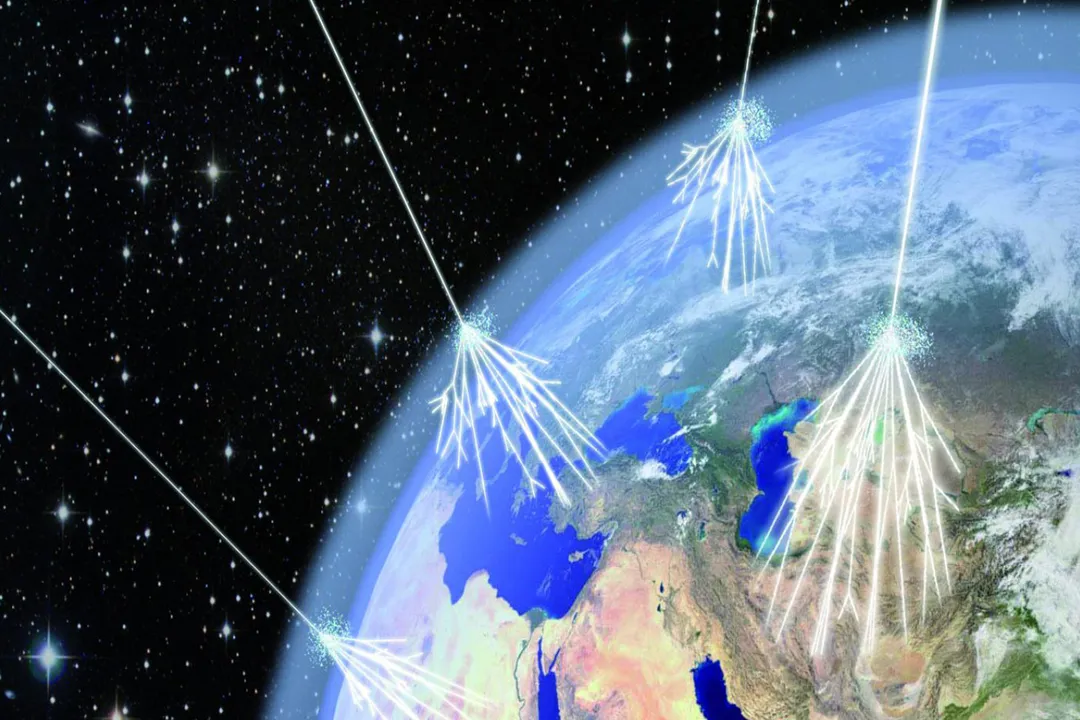
Cosmic rays are classified based on where they are thought to have originated, primarily dividing them into two main categories: galactic and solar.
# Galactic Rays
Galactic Cosmic Rays (GCRs) are the most energetic and persistent component of the radiation field. As their name suggests, they originate from outside our solar system, tracing their sources back to violent astronomical events in the Milky Way galaxy. The most likely production sites are supernova remnants—the expanding clouds of debris left over after massive stars explode. These explosions provide the intense shock waves needed to accelerate particles to near the speed of light. GCRs are constantly streaming in from all directions, penetrating deep into Earth's magnetosphere and atmosphere. Because their energy levels are so high, they offer scientists a unique window into the most extreme physics occurring throughout the galaxy.
# Solar Particle Events
In contrast to the steady drizzle of GCRs, Solar Particle Events (SPEs) are sudden bursts of radiation associated directly with our Sun. These occur during solar flares or coronal mass ejections (CMEs) when the Sun violently ejects large amounts of plasma and high-energy particles into space. While SPEs can produce radiation doses far exceeding GCRs for a short time, they are sporadic and their influence is often limited by the Sun’s own magnetic field, which deflects them somewhat as they pass through the solar system.
When comparing the two, GCRs are a relatively stable, continuous background radiation, whereas SPEs are the "wild cards" of space weather, posing acute, short-term hazards to astronauts or high-altitude flight crews during intense solar storms.
# Shielding Effect
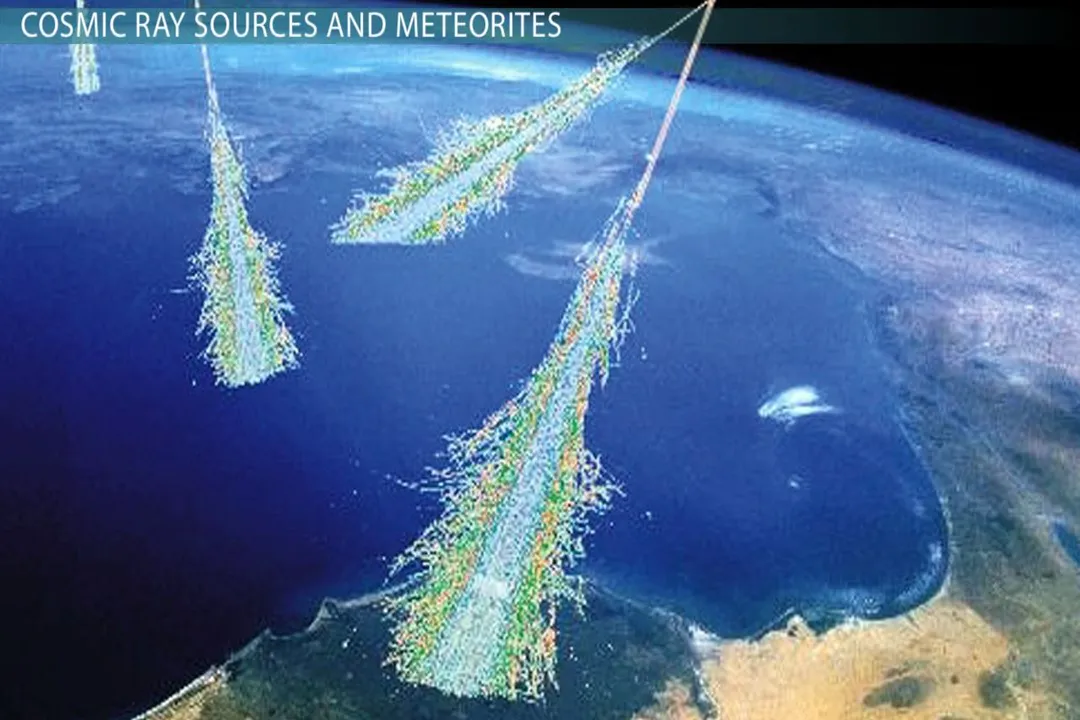
Fortunately, life on Earth is largely protected from the full brunt of cosmic radiation by two natural barriers: the Earth's magnetic field and its atmosphere.
# Geomagnetic Defense
The Earth’s magnetic field, or magnetosphere, acts like a giant deflector shield, particularly for lower-energy charged particles. Since cosmic rays are charged particles, this field diverts most of them around the planet. This deflection is not uniform; the field is weaker near the magnetic poles, meaning that radiation exposure from cosmic rays tends to be slightly higher at higher latitudes than at the equator. This is a subtle but real environmental difference: someone flying from Miami to London will experience slightly higher radiation exposure than someone flying the exact same distance from Quito, Ecuador, to Lima, Peru, solely due to the differing influence of the Earth’s magnetic field along those flight paths.
# Atmospheric Attenuation
The second layer of defense is the atmosphere itself, which is thick enough to absorb or dissipate the energy of the incoming primaries. A primary cosmic ray particle may collide with an air molecule high in the atmosphere, initiating a shower of secondary particles. By the time these secondary particles reach the ground, their energy levels are significantly reduced, and the overall flux of radiation is far lower than what hits the top of the atmosphere. The atmosphere reduces the exposure dose by roughly 70% compared to being outside the atmosphere at sea level.

# Terrestrial Exposure
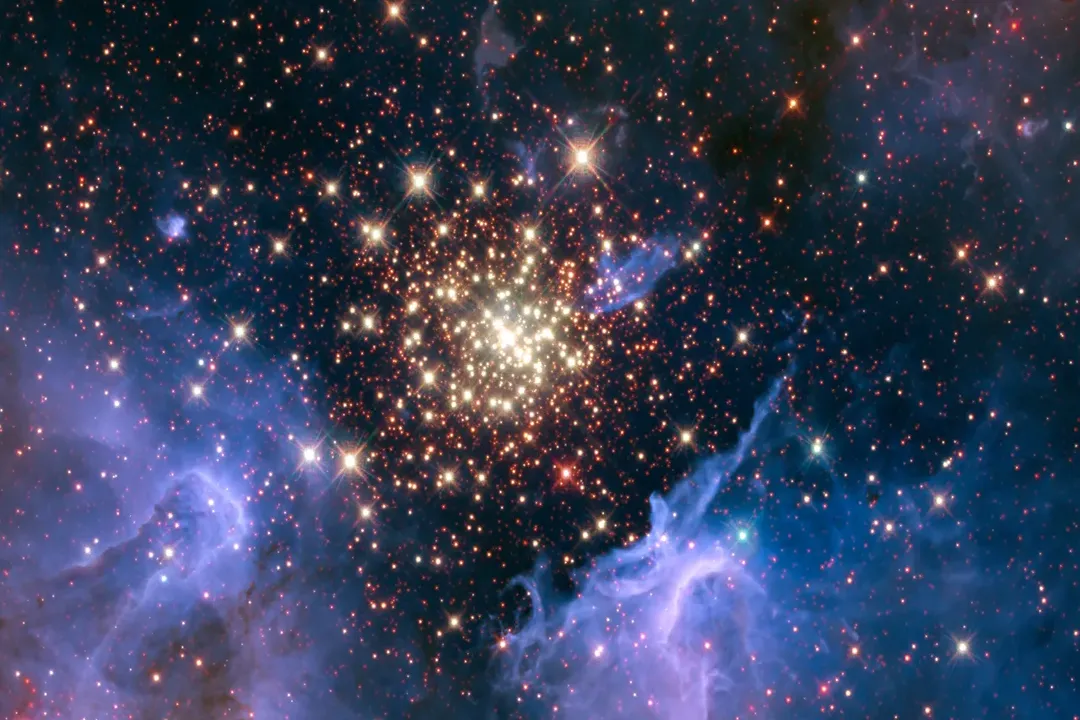
Even with these protections, we are never entirely free of cosmic radiation; it contributes to the natural background radiation we are exposed to daily.
# Dose Comparison
It can be helpful to contextualize this exposure. Natural background radiation comes from three main sources: terrestrial radiation (from naturally radioactive elements in the soil and rock), internal radiation (from naturally radioactive elements we ingest), and cosmic radiation. Cosmic radiation typically accounts for a small percentage of the average person's total annual dose at sea level, often cited as around 260 millirem per year in the US, although this number varies significantly based on location and lifestyle. To put this in perspective, a typical medical chest X-ray delivers a dose comparable to about 2 to 3 years of natural background radiation exposure, meaning the daily cosmic component is extremely small for someone living and working at sea level.
# Altitude Matters
The most significant variable influencing an individual's exposure to cosmic rays is altitude. As one ascends, the protective blanket of the atmosphere thins out, meaning fewer secondary particle collisions occur before reaching the person. Airline crews and frequent flyers therefore receive higher doses than the general public. For instance, a flight attendant might receive an annual dose equivalent to that of a civilian nuclear worker, though still far below professional occupational exposure limits. This elevated exposure is a known occupational hazard tracked by health agencies. While the exact dose depends on the flight path, altitude, and duration, it underscores the principle that as you get closer to space, you get closer to the source of this radiation.
# Consequences and Risks
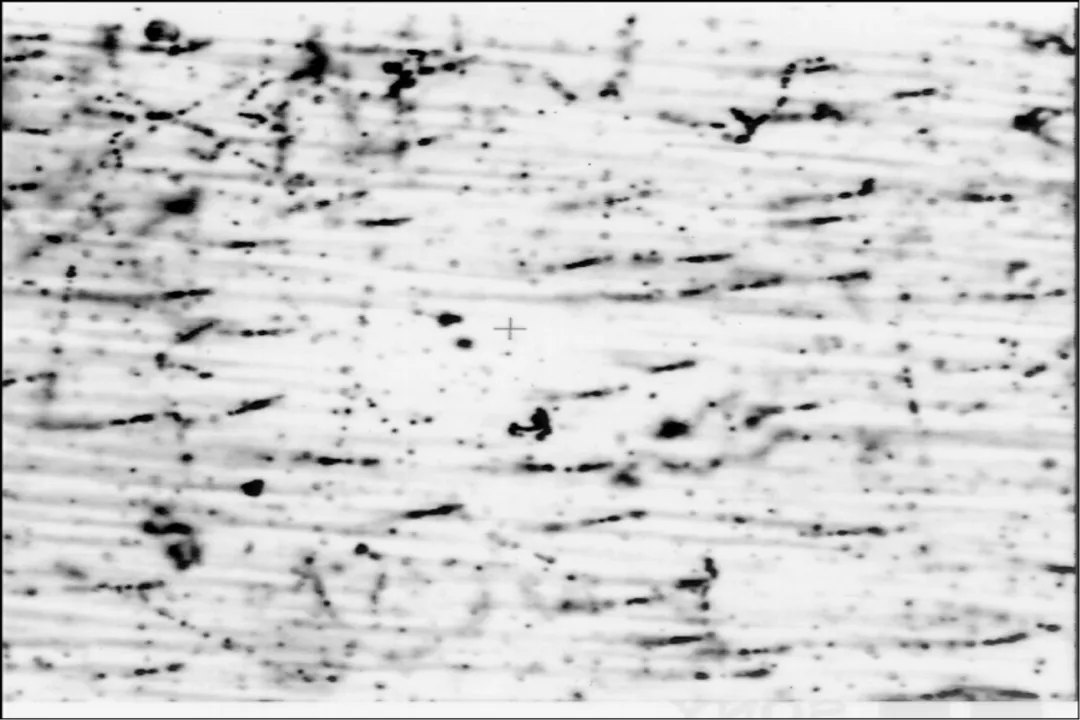
Cosmic radiation is a form of ionizing radiation, meaning the high-energy particles have enough kinetic energy to knock electrons out of atoms they strike, creating ions. This ionization process is what causes biological damage, as it can disrupt delicate molecular structures like DNA within living cells.
# Biological Impact
For life on Earth, the primary concern regarding cosmic rays is not the sea-level dose, which is managed well by our protective environment. The concern escalates dramatically for unprotected individuals outside the atmosphere, such as astronauts. In space, astronauts face the full spectrum of GCRs and SPEs, which can increase the risk of cancer, damage to the central nervous system, and other degenerative effects over long missions. This necessitates specialized shielding and monitoring for space missions beyond low Earth orbit.
Even for those on Earth, the biological interaction is real, though less severe. Secondary muons reaching the ground are a constant source of natural radioactivity, bombarding every object, including us, second by second. These muons, along with other secondaries, are continually passing through our bodies, contributing to our lifetime dose, though this contribution remains low and is generally considered unavoidable.
# Measuring the Invisible
Understanding and quantifying cosmic radiation relies on specialized detection equipment. Because these rays are often energetic enough to pass through thick materials, detection often involves measuring the secondary particles created or the ionization trails left behind. Instruments like Geiger counters or scintillators are used to measure the ionization rate, translating that into absorbed dose units like the sievert or the older rem. For instance, while terrestrial radiation often involves measuring alpha or beta particles emitted from radon or potassium, cosmic ray measurement focuses on recording the flux of highly penetrating muons and neutrons that penetrate deeply into matter.
If you were ever monitoring radiation levels with a sensitive detector inside an airplane at cruising altitude, you would notice the count rate spike noticeably during solar flare activity—a direct reading of an SPE washing over the aircraft. This real-time data is why space weather forecasting centers track solar activity so closely.
# The Science of Detection
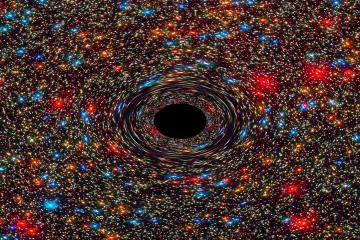
Cosmic rays are not just a health concern; they are a central subject of modern physics research, probing the limits of particle energy. Experiments are designed to study the interactions of these particles when they hit specialized targets or detectors.
# Underground Research
Ironically, some of the best places to study cosmic rays are deep underground or underwater. This might seem counterintuitive, but placing a detector deep beneath the surface—in a mine shaft or far beneath the ocean—effectively filters out almost all secondary cosmic rays and background radiation. What remains are the rarest, most energetic particles, often neutrinos or very high-energy muons, whose properties would be obscured by the atmospheric noise at the surface. By analyzing how these extreme events interact with the surrounding rock or water, scientists can deduce properties of the original primary particle that traveled millions of light-years to reach us.
# High-Energy Thresholds
The energy carried by these particles is immense compared to what can be achieved in ground-based particle accelerators like the Large Hadron Collider (LHC) at CERN. While the LHC can accelerate protons to energy levels in the tera-electronvolt (TeV) range, the highest-energy cosmic rays detected have energies millions of times greater, sometimes approaching the equivalent of a fast-pitch baseball in energy, but concentrated into a single proton. Studying these "ultra-high-energy cosmic rays" helps physicists understand the astrophysical processes capable of producing such vast accelerations, far exceeding current human technological capabilities.
Related Questions
#Citations
Cosmic radiation | Nuclear Regulatory Commission
Cosmic ray - Wikipedia
Cosmic rays, explained - UChicago News - The University of Chicago
Cosmic Radiation | US EPA
Facts About Radiation from Space (Cosmic Radiation) - CDC
Cosmic Radiation: Why We Should not be Worried
Cosmic Radiation - an overview | ScienceDirect Topics
Galactic Cosmic Rays - Space Weather Prediction Center - NOAA
Cosmic rays: particles from outer space - CERN
Video: Cosmic Rays | Definition, Origin & Types - Study.com