What kind of radiation comes from space?
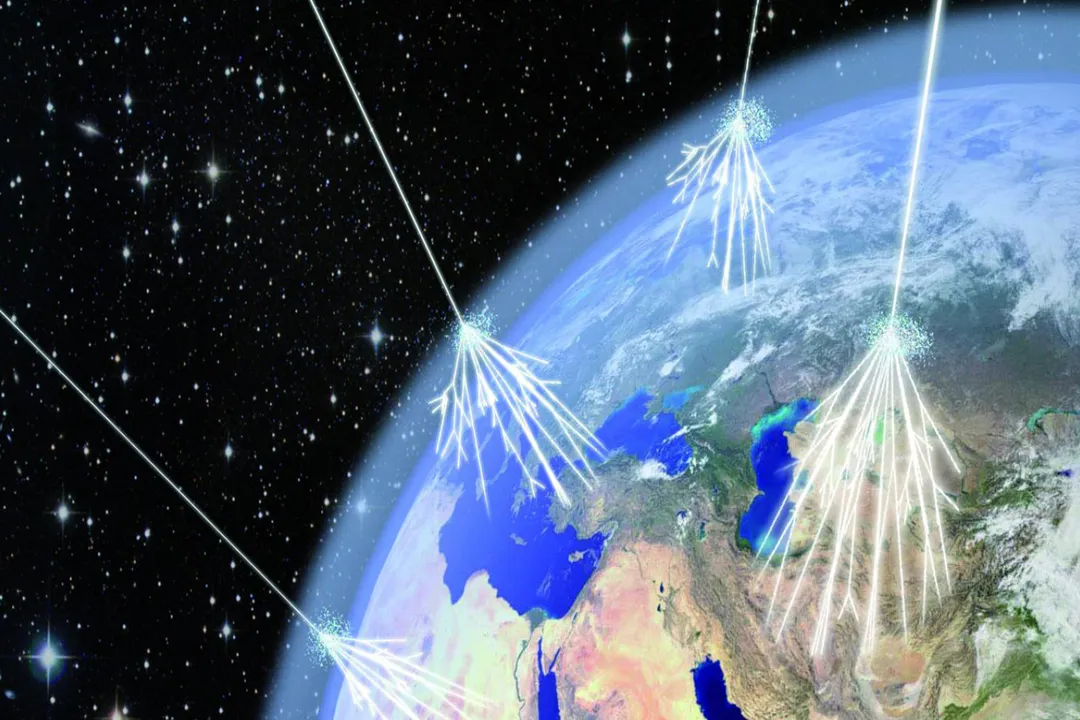
The environment beyond Earth's atmosphere is fundamentally energetic, saturated with various forms of high-speed particles that constitute space radiation. [1][7] Unlike the light we see daily, this radiation primarily consists of charged particles moving incredibly fast, posing a significant consideration for both satellite electronics and human exploration beyond low-Earth orbit. [7] Understanding the types of radiation bombarding us from the cosmos requires sorting these energetic travelers into distinct categories based on where they originate and what they are made of. [1]
# Particle Types
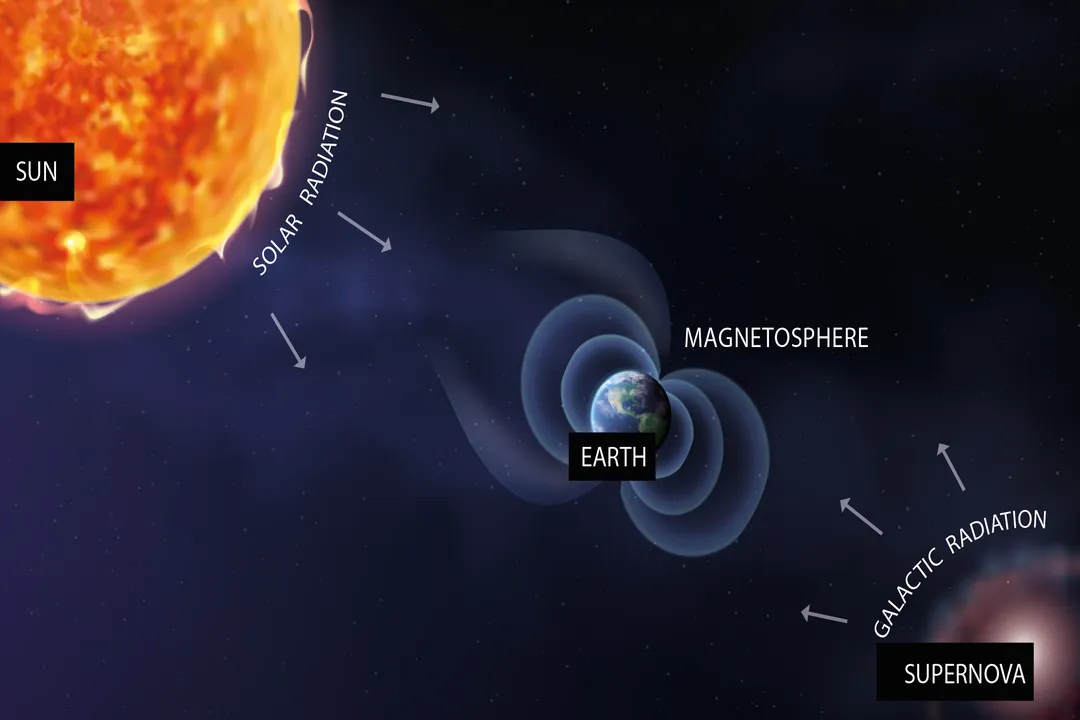
The radiation environment is generally divided into three main components when considering missions near or beyond Earth: Galactic Cosmic Rays (GCRs), Solar Particle Events (SPEs), and trapped radiation found within Earth's magnetic field. [1][7]
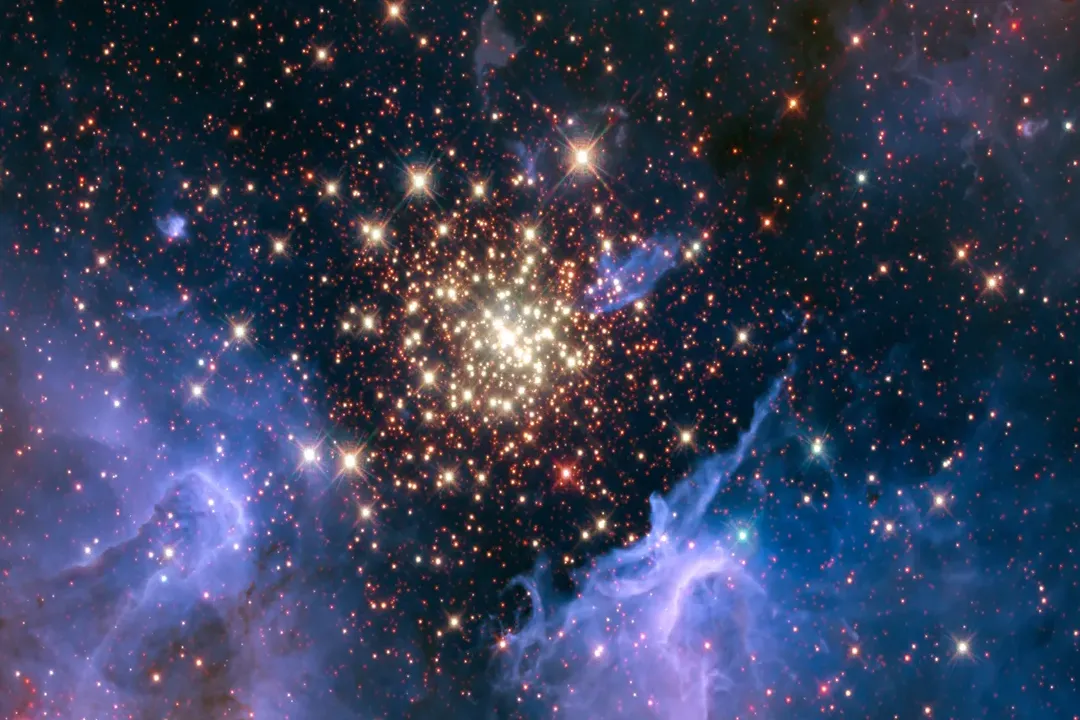
Galactic Cosmic Rays are arguably the most persistent and challenging component of deep space radiation. [3][5] These are high-energy particles that travel through the galaxy, originating from sources far outside our own solar system, such as supernova explosions. [3][9] GCRs are not just protons; they are atomic nuclei stripped of their electrons, meaning they include everything from simple hydrogen nuclei (protons) to heavier, highly charged elements like iron. [3][5] Because they are so energetic—some moving at nearly the speed of light—they possess immense penetrating power. [3] For astronauts outside the protection of Earth’s magnetosphere, the flux of GCRs remains relatively constant over time, providing a steady, low-level, high-energy exposure. [5][7]
Solar Particle Events represent the more dramatic, intermittent threat. [7] These events are bursts of high-energy protons and electrons ejected from the Sun, usually accompanying large solar flares or coronal mass ejections. [1][7] The energy spectrum of SPEs often peaks at lower energies compared to GCRs, but the intensity during a major event can swamp the background GCR flux, delivering a very high dose in a short period. [7] While GCRs are a marathon, an intense SPE is a sudden sprint hazard, requiring robust storm shelters or immediate precautionary measures for crewed missions. [1]
# Trapped Fields
Closer to home, Earth itself generates a radiation environment, though it is not radiation originating from space in the same sense as GCRs or SPEs. [1] Earth’s magnetic field acts as a shield, capturing some charged particles from the solar wind and GCRs. [7] These captured particles form the Van Allen Belts, which are zones of trapped radiation encircling our planet. [1][7] For missions operating in Low Earth Orbit (LEO), such as the International Space Station, the Van Allen Belts represent a distinct radiation concern, though the station's altitude generally keeps it below the most intense parts of the belts. [1] Navigating these regions requires accounting for this specific, locally held radiation source. [7]
# Secondary Fallout
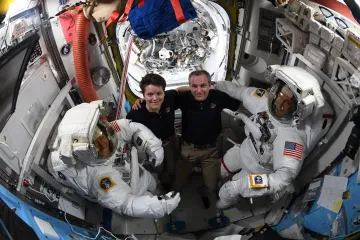
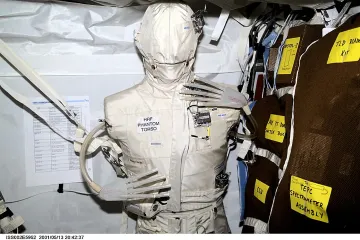
A critical, though often overlooked, aspect of the space radiation profile is the creation of secondary radiation. [1] When a primary particle—a high-speed proton from a GCR or an SPE—strikes the shielding material of a spacecraft or the tissue of a human body, it fragments and interacts, producing a cascade of new, lower-energy particles. [1][3] This secondary shower often includes neutrons, pions, and other hadronic fragments. [1]
This process means that simply adding more shielding does not always equate to proportional protection. For instance, materials rich in hydrogen, such as polyethylene or water stores, are often preferred for shielding against GCRs because they are more effective at breaking up the primary heavy ions into less damaging components than dense materials like aluminum, which can sometimes generate a higher flux of harmful secondary neutrons upon impact. [1] An interesting consideration for mission planners is that the optimal shielding strategy changes based on whether the primary threat is constant GCRs or intense, lower-energy SPEs, highlighting that the "best" material depends entirely on the radiation spectrum expected during the specific mission phase. [1] The characteristics of secondary radiation are therefore highly dependent on the absorber material itself, making passive shielding a complex engineering calculation rather than a simple mass addition problem.
# Cosmic Ray Composition
To further appreciate the nature of GCRs, it helps to look at their composition in more detail. [3] These are classified as high-energy particles, and while protons make up the vast majority—around 89%—the remaining 11% consists of heavier atomic nuclei. [3]
| Particle Type | Approximate Percentage | Origin Context |
|---|---|---|
| Protons (Hydrogen Nuclei) | ~89% | Primary GCR component [3] |
| Alpha Particles (Helium Nuclei) | ~10% | Heavier element component [3] |
| Heavier Ions | ~1% | Nuclei heavier than helium [3] |
These particles are generated through mechanisms far more powerful than anything occurring naturally on Earth, with supernova shockwaves being the leading candidate for accelerating these nuclei to such extreme kinetic energies. [9] This contrasts sharply with background radiation experienced on the Earth's surface, which is overwhelmingly dominated by terrestrial sources and secondary radiation resulting from GCRs interacting with the atmosphere. [2][10] While space radiation is often discussed in the context of astronaut health, the constant influx of GCRs interacting with our upper atmosphere creates a low, continuous level of background radiation here on the ground, though the atmosphere provides significant protection compared to space. [2][10]
# Origin Locations
The sources of this radiation define its behavior and predictability. The Sun acts as a localized, powerful, but temporary source via SPEs, releasing its charged particles in sudden bursts. [7] Outside of these solar events, the steady drizzle comes from across the Milky Way galaxy itself. [3][9] When we discuss radiation in deep space, we are essentially talking about the particle content of the interstellar medium, energized by distant astronomical processes. [3] This galactic origin is why the radiation field persists even far from the Sun, making shielding a necessity for any voyage toward Mars or beyond. [5]
It is worth noting that while the existence of space radiation might sound alarming, particularly concerning long-duration space travel, the levels encountered during typical spaceflight, such as LEO missions, are generally not a cause for widespread public worry. [4] For the general public on Earth, exposure to cosmic radiation is a minor component of overall background radiation, far less significant than radon gas or medical X-rays. [2][10] However, for space travelers, the cumulative dose and the risk associated with traversing areas with few magnetic field protections necessitate careful monitoring and planning. [4] The primary goal in radiation protection for space exploration is managing the dose received by the crew and ensuring mission-critical electronics are hardened against these energetic hits. [1]
Related Questions
#Citations
Why Space Radiation Matters - NASA
Facts About Radiation from Space (Cosmic Radiation) - CDC
Cosmic ray - Wikipedia
Why is there so much radiation in outer space? : r/askscience - Reddit
Cosmic Radiation: Why We Should not be Worried
What is Space Radiation? - SatNow
Space Radiation: Everything You Wanted to Know
Cosmic rays, explained - UChicago News - The University of Chicago
Cosmic Radiation | US EPA