What happens if a baby is born on Mars?
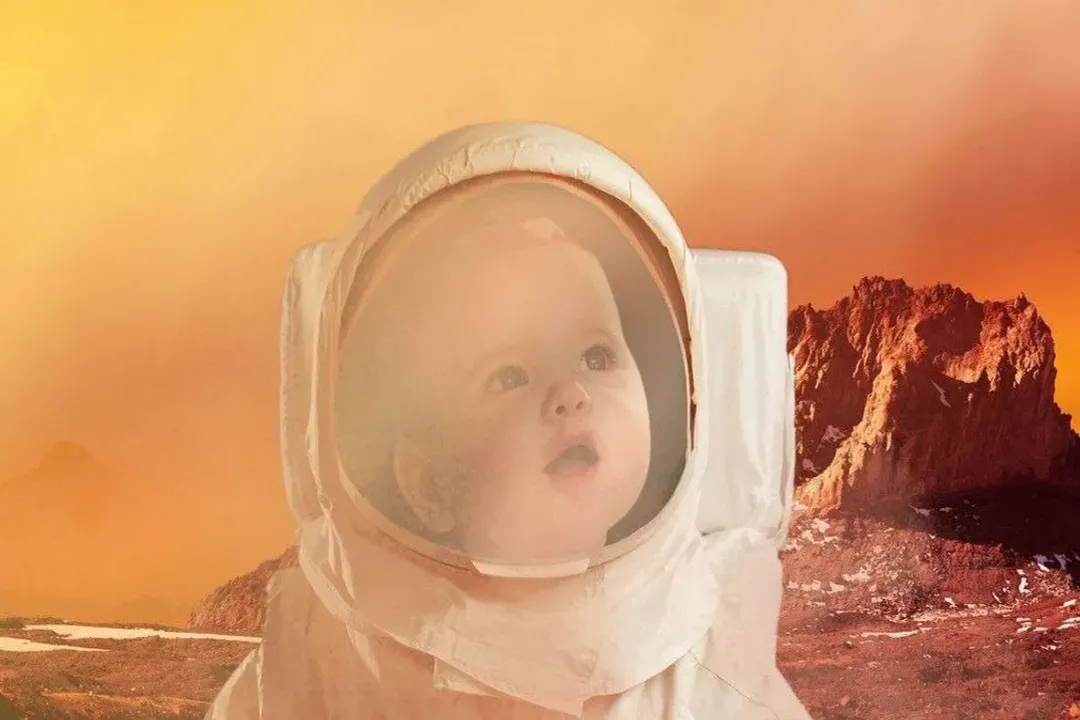
The prospect of a human birth occurring millions of miles from Earth introduces a cascade of unprecedented biological, physical, and legal challenges that eclipse any previous concerns about long-duration space travel. When the first infant draws breath on the Martian regolith, it will not simply be a medical event, but a fundamental test of our species' adaptability to a new world. The environment itself presents immediate, life-threatening hurdles for both mother and child, making the safe delivery a miracle of engineering before biology even enters the equation.[3][8]
# Physical Hazards
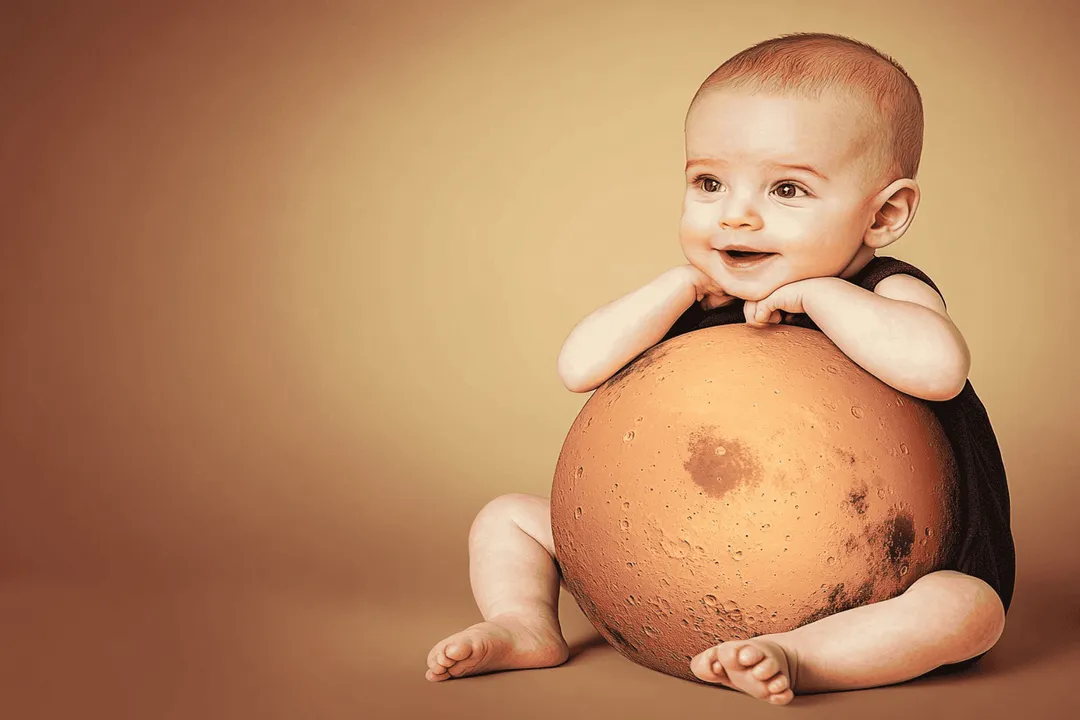
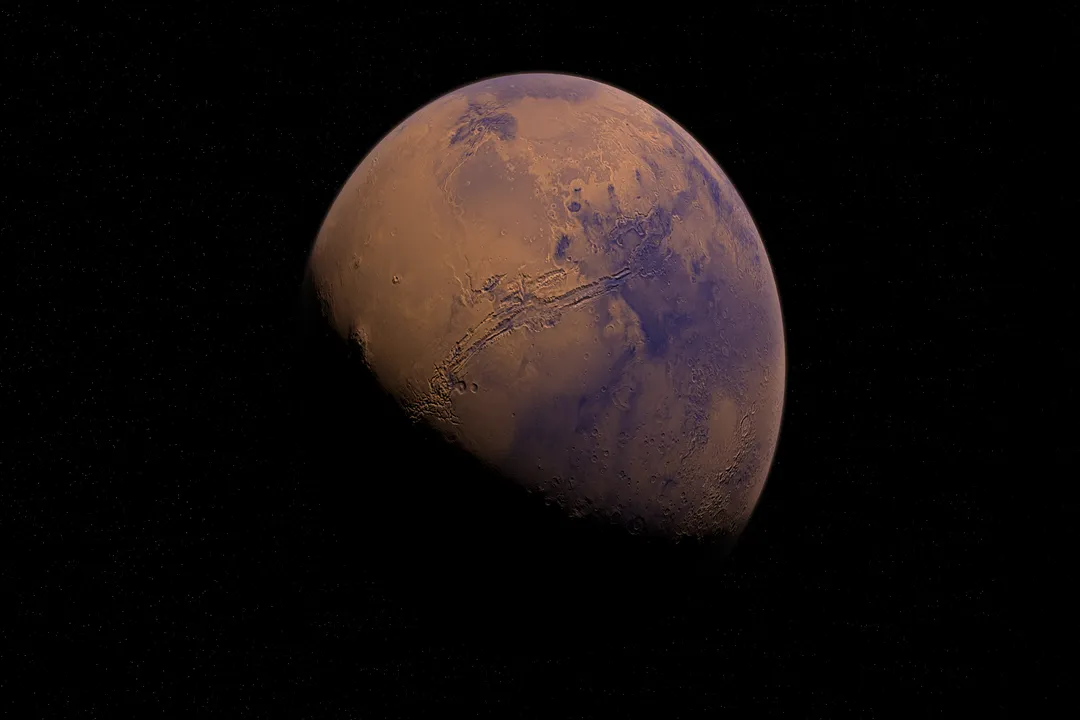
The primary concerns begin with the immediate physical conditions of the Martian surface, chiefly the extreme differences in gravity, radiation, and atmospheric pressure compared to Earth. Mars possesses only about 38 percent of Earth’s gravity, which is a significant departure from the near-zero gravity environment of low Earth orbit (LEO) that astronauts are accustomed to. [7] While full gestation in zero-g is theoretical, Martian gravity, or microgravity as some might term it in this context, presents an entirely new variable for development. A fetus growing in 0.38g will develop musculature and skeletal structures uniquely adapted to that lower load.[7]
Radiation exposure is another non-negotiable threat. Mars lacks a global magnetic field and has a very thin atmosphere, resulting in high surface radiation doses compared to Earth, which is shielded by its magnetosphere and thick air. [3][5] Protecting the developing fetus from this radiation before and after birth will require substantial habitat shielding, likely necessitating underground or heavily shielded living quarters. [5] The medical team would have to constantly monitor the accumulated dose for the pregnant crew member, a task made complex by the unpredictable nature of solar particle events.[8]
The environment also dictates the necessity of artificial life support. A Martian infant cannot breathe the ambient atmosphere, which is overwhelmingly carbon dioxide, nor can it withstand the low pressure where bodily fluids would boil at human core temperature. [3] Therefore, the birth must occur entirely within a pressurized, sealed habitat, essentially a highly sophisticated artificial womb that must function flawlessly for nine months and beyond.[6]
# Biological Adaptation
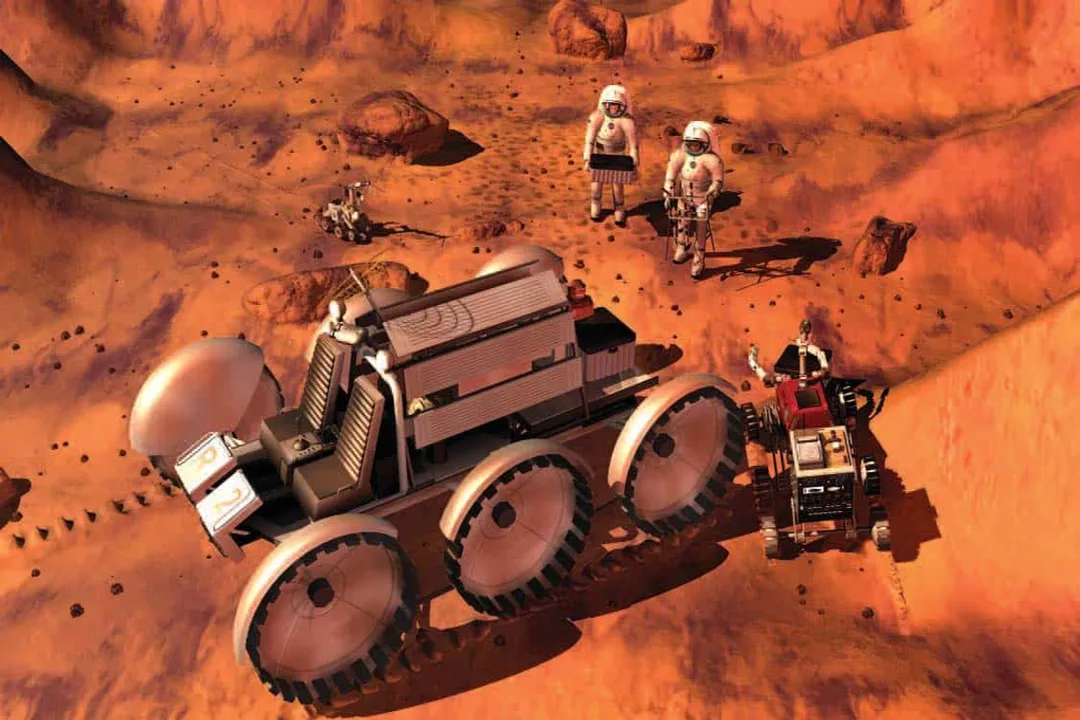
The human body is finely tuned to Earth's gravity and atmospheric conditions. Altering the developmental timeline for an infant who has never experienced full Earth gravity raises profound developmental questions. The bones and muscles of a child born on Mars, adapted to carrying only 38 percent of an Earth-equivalent weight, would be fundamentally different from those of an Earth-born counterpart. [7] This structural divergence is a key point of consideration when discussing future interplanetary travel.[4]
It has been discussed that a Mars-born child, hypothetically termed Homo martianus, might develop significant changes in bone density and muscle mass due to the reduced gravitational loading throughout their growth years. [4] A critical, unaddressed area involves the cardiovascular system; Earth-born astronauts experience orthostatic intolerance (fainting) upon return to gravity because their hearts adapt to lower resistance. [7] For a child who never experienced 1g, this effect would likely be far more pronounced, potentially making standing or walking on Earth incredibly difficult, if not impossible, without extensive rehabilitation. This difference in gravitational experience during the critical stages of organ development—from gestation through adolescence—is a major area where scientists anticipate profound, long-term changes.[7]
One aspect to consider is the timing of development versus adaptation. If the Mars environment prevents the proper conditioning of the fetus’s vestibular system (balance) or its overall circulatory regulation systems, the newborn may face immediate, life-threatening challenges simply attempting to manage basic functions once outside the tailored Martian habitat, even if the habitat simulates some Earth conditions. The very experience of Martian environment during gestation could program the infant’s physiology for a lifetime success on Mars at the expense of compatibility with Earth.[7]
# Return Dilemma
The potential incompatibility with Earth’s gravity raises the most dramatic question: If a child is born on Mars, can they ever visit Earth?[1] The consensus drawn from contemplation of low-gravity physiology suggests a significant physical barrier to returning to a 1g environment.[1][7] A Mars-born human, having developed entirely under low gravity, might lack the necessary bone strength, muscle mass, and cardiovascular conditioning to withstand the constant pull of Earth's gravity. [1]
For an Earth-born astronaut, returning to high gravity is arduous but achievable through rigorous reconditioning protocols, though effects like bone density loss can be significant. [8] For someone who has never experienced 1g, the transition would be far more extreme. While some speculate that the low Martian gravity might still be sufficient for proper development—perhaps better than zero-g—it remains far from Earth's 1g baseline. [2] It is highly plausible that a native Martian would effectively be gravitationally "trapped" on their home planet, unable to survive the physical stresses of Earth’s gravity well without perhaps years of intensive, specialized care that might not even be successful.[1]
# Legal Frameworks
Beyond the biological realities, the birth of the first Martian raises immediate, complex questions of jurisdiction and identity. Whose laws apply when a human being enters the world on another planet?[9] Currently, the Outer Space Treaty of 1967 declares that no nation can claim sovereignty over celestial bodies, which suggests that space territories are not under the jurisdiction of any single country. [9] This creates a legal vacuum where concepts like birth registration, nationality, and parental rights must be resolved.
If the parents are citizens of different nations, or if the colony is run by a private entity or a multinational consortium, establishing the infant's legal standing becomes an immediate priority. Do the laws of the launching nation, the owning corporation, or an established "Martian common law" govern the event? This scenario demands international agreements established before such births occur, clarifying citizenship and legal protection for the child born off-world. The prompt declaration of a Homo martianus is less pressing than the immediate need for a Martian Law of Nationality that supersedes Earth-based conventions upon registration of birth.[9]
# Medical Protocols
The planning for reproduction in space is not casual; it requires extensive research into the effects of spaceflight on reproductive health and fetal development, including radiation exposure and low gravity effects on gametes and gestation itself. [8] The guidelines for conception and pregnancy in space must be exceptionally conservative, likely requiring crew members to spend significant time on the surface or in transit at 1g (if possible, such as via rotation) before attempting conception to ensure maximum physiological stability.[8]
Medical teams would need specialized tools and knowledge for managing pre-eclampsia, hemorrhaging, and other complications that are already high-risk on Earth, but under the immense constraints of a small, isolated habitat. [8] Furthermore, neonatal resuscitation equipment suitable for low pressure and low gravity would need to be developed and miniaturized. The long-term care of the infant, especially concerning vision changes sometimes seen in zero-g, also presents a hurdle, although the Martian gravity might mitigate some of those specific effects compared to LEO missions. [3]
# Long Term Outlook
The entire premise hinges on whether humanity intends for the Martian-born population to remain exclusively Martian or eventually integrate back into Earth society. If the goal is true colonization, then we must accept the eventual divergence of the Martian and Terran human species, accepting that the physical price of becoming a multi-planetary species might be a population that can only thrive on Mars. [4] The challenges are not just surviving the birth; they are defining the physical future of the resulting human lineage. The success of the first Mars baby will not be measured by survival alone, but by their ability to thrive in an environment that fundamentally reshapes human biology in ways we are only beginning to model.[5]
#Videos
What If You Were Born on Mars? - YouTube
Related Questions
#Citations
If a child is ever born on Mars, will it ever be able to come to Earth?
The first person ever to be born on Mars — will they ever be able to ...
Can You Have a Baby on Mars? - Science | HowStuffWorks
Babies born on Mars could diverge from Earthlings within a couple ...
Child Neurodevelopment on Mars - Scirp.org.
What If You Were Born on Mars? - YouTube
Will new born babies on Mars have any body changes?
[PDF] BABY ON BOARD! ROCKETING THE CRADLE TO MARS
Ethics of human reproduction on Mars