Is our galaxy on a plane?

The Milky Way galaxy, our cosmic home, possesses a distinct, flattened geometry that often leads to the intuitive question of whether the entire structure lies upon a single, perfect plane. While visually, the structure appears remarkably thin when viewed edge-on from Earth, the reality of its organization is layered, involving billions of stars, gas, and dust organized around a central point. It is more accurate to say that the majority of the galaxy’s visible material and active star formation occurs within a definable, though not infinitely thin, region known as the galactic plane.
# Galactic Architecture
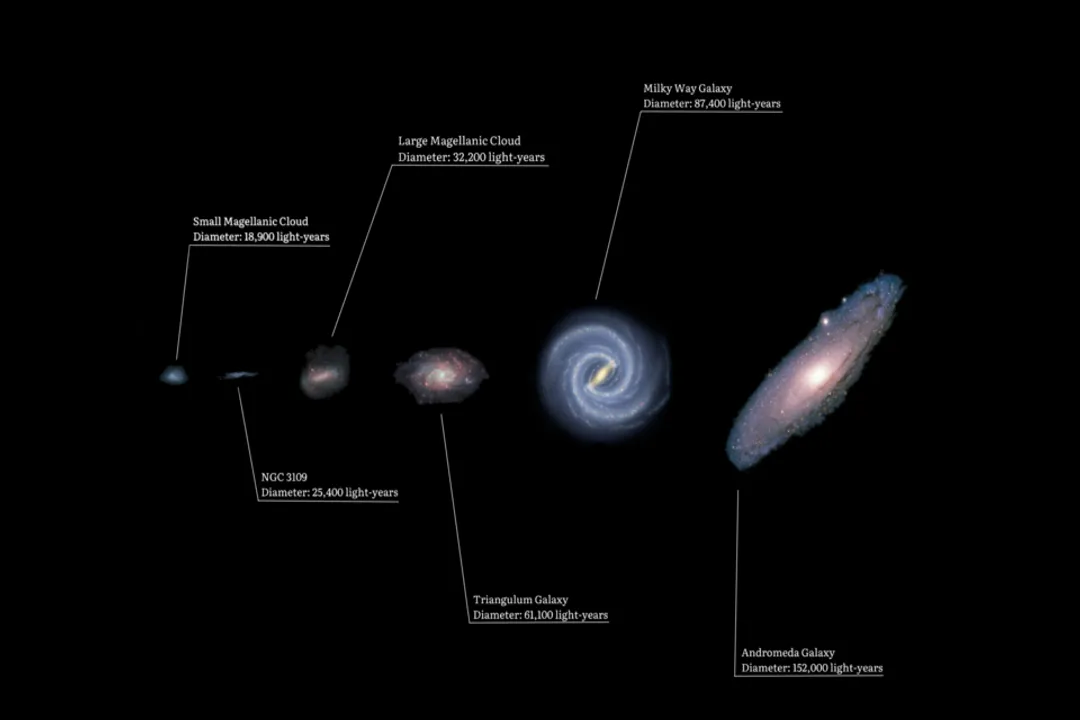
Our galaxy is classified as a barred spiral galaxy, a common structure among large galaxies. Like other spirals, it is not a simple disk but a vast collection of stellar populations organized into distinct components. These components include the central bar and bulge, the spiral arms which reside within the disk, and the surrounding, more sparsely populated halo. The entire structure spans an impressive 100,000 light-years in diameter. Galaxies, in general, are immense systems comprising stars, stellar remnants, interstellar gas, dust, and a significant amount of dark matter, all bound together by gravity.
The defining feature relevant to the "plane" question is the galactic disk. This disk is where the majority of the gas, dust, and younger, brighter stars are concentrated. The Sun, along with its solar system, resides within this disk, specifically situated in a minor structure known as the Orion Spur, one of the galaxy’s spiral arms. Because we are embedded within this disk, our perspective on the galaxy’s overall shape is inherently biased towards seeing its extent as a band across the night sky.
# The Disk Defined

The galactic plane is precisely the plane defined by the Milky Way’s disk. This plane serves as the fundamental reference surface for mapping our galaxy, much like the Earth’s equator defines the celestial equator in our local sky mapping. Stars and gas clouds that orbit near the center of mass generally follow paths that keep them close to this central plane. This configuration arises naturally from the conservation of angular momentum as the massive cloud of gas and dust collapsed and rotated over cosmic time, causing material to settle into the flattest possible rotational configuration.
However, labeling it merely a "plane" requires an important caveat regarding its depth. While it is structurally flattened, the disk is not infinitely thin. It possesses a certain thickness, which allows for some vertical movement for its constituent stars. Imagine a vinyl record: it appears thin from the side, but it has a measurable thickness; the galactic disk is similar, though much more diffuse and dynamic.

# Orbits and Deviation

If all celestial objects obeyed a strict single plane, the galactic structure would be perfectly two-dimensional. However, the galaxy is a three-dimensional environment, and orbital mechanics dictate that not everything follows the exact same path. The stars and gas concentrated in the disk orbit the galactic center in relatively circular paths, all roughly confined to that central plane.
Yet, the galaxy hosts significant populations that do not conform to this planar path. The galactic halo, for instance, is a roughly spherical region surrounding the disk, containing older stars and globular clusters. These halo objects often follow highly eccentric or inclined orbits, plunging through the galactic plane at various angles rather than orbiting neatly within it. This means that while the disk establishes the primary plane, the galaxy as a whole occupies a much larger, more three-dimensional volume. Comparing the distribution of old, metal-poor halo stars to the younger, star-forming disk stars clearly illustrates this difference in orbital geometry.
# Our Viewpoint
The phenomenon of seeing the Milky Way as a broad, cloudy structure stretching across the darkest skies is a direct consequence of our location within the disk. When you look toward the galactic center (in the direction of Sagittarius), you are looking through the maximum depth of the disk, viewing billions of stars superimposed along the line of sight.
Conversely, when you look away from the plane—perpendicular to it—you are looking out of the disk and into the relative emptiness of the galactic halo, where fewer stars are visible. This effect is why the visibility of the Milky Way depends so heavily on observing conditions on Earth. Light pollution dramatically obscures this faint band, but even without it, our atmosphere can interfere. One might wonder if an airplane flight can offer a superior view, but even at cruising altitudes of around 30,000 to 40,000 feet, the atmosphere still diffuses and scatters ground-based light, meaning truly dark sky viewing remains the primary requirement for seeing the structure clearly. To truly appreciate the plane, one needs a location far removed from artificial terrestrial light sources.

# Reference Systems
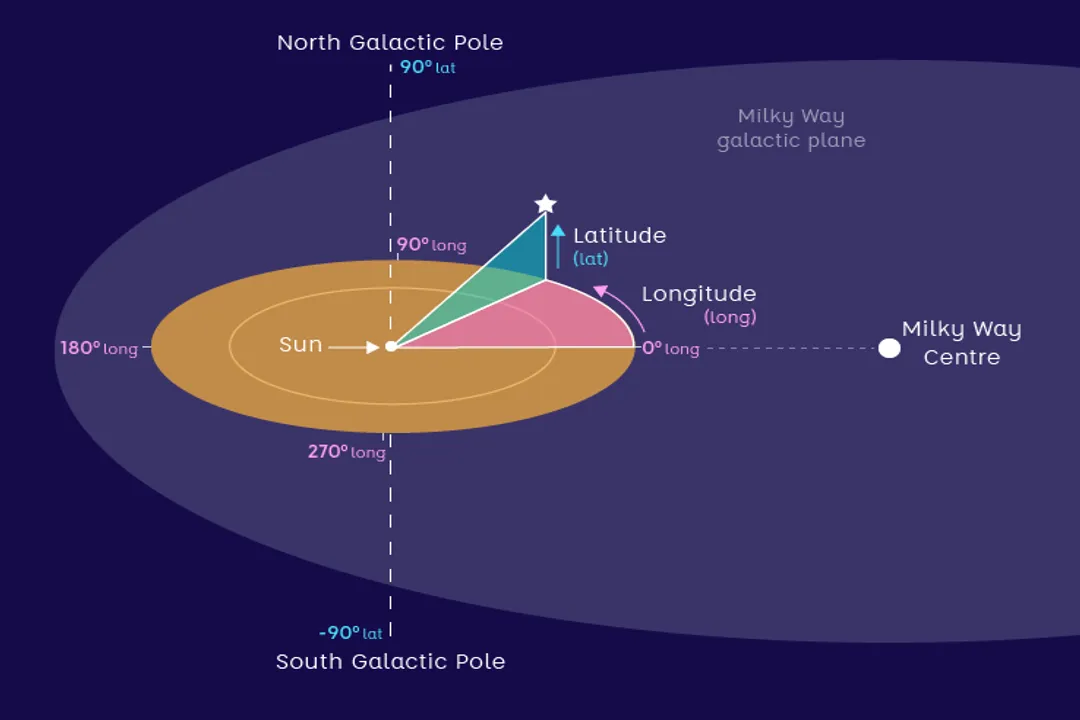
To study the precise locations of stars and nebulae relative to this structure, astronomers developed the galactic coordinate system. This system establishes the galactic plane as its equator, or zero point of latitude, with the galactic center as the origin. This is essential because standard sky coordinates (like Right Ascension and Declination) are based on Earth’s equator and rotation, which are not aligned with the galaxy’s structure. The galactic coordinate system allows researchers to precisely measure how far an object is above or below the central plane, even if it is a halo object with an unusual orbit.
Here is a quick comparison of how our location within the plane affects our view:
| Viewing Direction | Component Intersected | Visual Appearance | Relative Star Density |
|---|---|---|---|
| Towards Center (Sagittarius) | Thickest part of Disk | Brightest, densest band | Highest |
| Along the Plane (Away from Center) | Thinner Disk | Less dense band | Medium |
| Perpendicular to Plane | Galactic Halo | Few isolated stars | Lowest |
# Flatness Scale
When discussing how "flat" the plane is, the sheer scale necessitates perspective. Consider the diameter of the disk, roughly 100,000 light-years. Now, compare that to its estimated thickness—which varies depending on the stellar population being measured, but is often cited as being only a few thousand light-years thick at the Sun's location. To give this a tangible sense, if the entire Milky Way disk were scaled down to the size of a standard hardcover book, the diameter would be about 10 inches, but the thickness of the pages might only amount to a few thousandths of an inch. This extreme aspect ratio—thousands of light-years across for every single light-year in thickness—is why the structure looks so intensely planar from a distance. It is an incredibly thin pancake relative to its width.
This understanding of structure also offers a practical application for sky-gazers interested in viewing distant galaxies. When looking for objects outside the Milky Way, such as other galaxies or distant quasars, astronomers intentionally point their telescopes away from the galactic plane. Objects lying near or within the plane are often obscured by vast, opaque clouds of interstellar dust and gas concentrated in the disk, which block the light from objects far behind them. By observing toward the "galactic poles" (the directions directly above and below the disk), observers gain a clear view into the vastness of the intergalactic medium, seeing farther and clearer than if they were peering through the dense stellar lanes of the disk itself. This provides a genuine navigational benefit derived directly from knowing the galaxy's geometry.

# Stellar Settling
The organization into a plane is also dynamic, not static. Stars are constantly moving up and down relative to the galactic mid-plane over billions of years. Over time, a star might oscillate vertically, moving hundreds of light-years above the plane before returning below it. This gentle vertical oscillation is part of the overall movement within the gravitational potential well of the galaxy. The stars that form new structures, like those in the spiral arms, are born, live, and die largely confined to this plane because that is where the necessary raw materials—gas and dust—are concentrated. Stars born in the halo, however, retain their highly inclined, non-planar orbits, representing populations that formed earlier or through different accretion events. The galactic plane, therefore, defines the active, rotational heart of the Milky Way, even though the galactic halo encompasses a much larger, spheroidal volume.
# The Plane’s Importance
Ultimately, the Milky Way is not a perfect geometric plane, but rather an extremely thin, rotating disk that contains the overwhelming majority of the galaxy's luminous content and ongoing processes. This disk dictates the structure we observe, the coordinate system we use to map the cosmos, and the challenges astronomers face when trying to observe targets beyond our own structure. The existence of that plane, defined by the collective orbit of its main components, is the most fundamental characteristic of our home galaxy.
#Videos
Skylight: How Does Our Solar System Move Around the Milky Way ...
Related Questions
#Citations
Milky Way - Wikipedia
Do all celestial objects orbit on a similar plane to ours within ... - Reddit
Galaxy Basics - NASA Science
The Milky Way Galaxy - Las Cumbres Observatory
The Milky Way Galaxy | Center for Astrophysics | Harvard ...
Skylight: How Does Our Solar System Move Around the Milky Way ...
Is it possible to see the Milky Way from an airplane? - Quora