Why is the risk of a catastrophic event for a nuclear space reactor considered virtually zero compared to terrestrial nuclear power plants?
Answer
Space reactors contain much less radioactive material and use different operational dynamics.
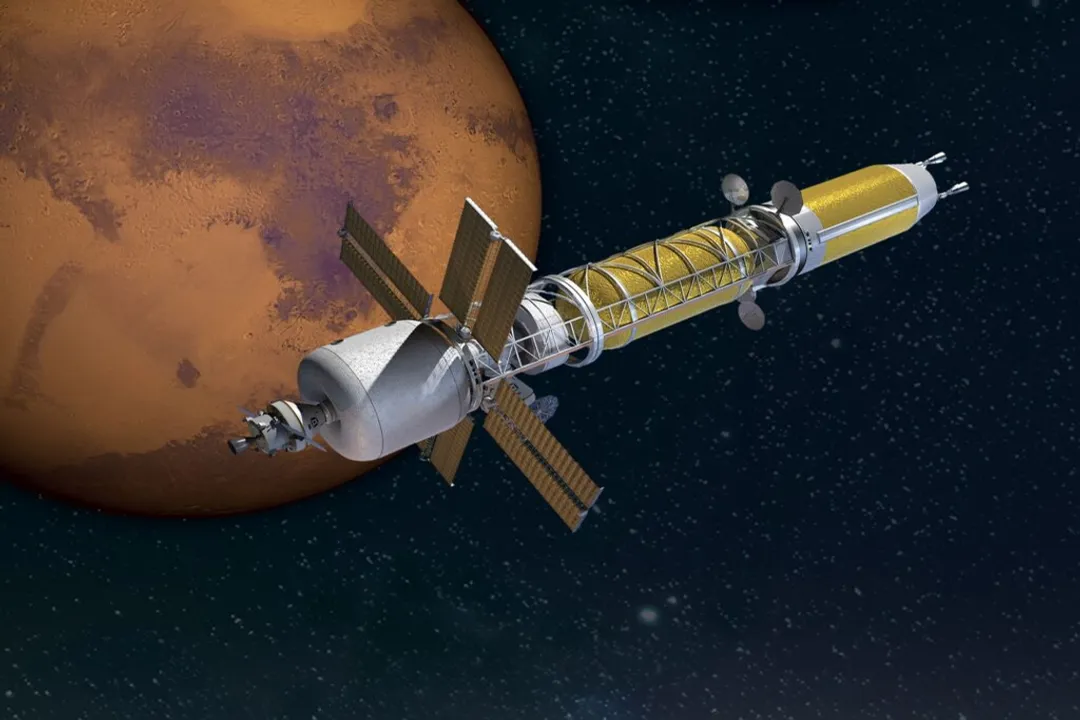
Unlike large terrestrial power plants, space-based nuclear reactors are engineered specifically for the extreme environments of space and launch. They are designed to operate with significantly lower amounts of radioactive material and utilize different operational dynamics. Furthermore, the nuclear fuel used is typically a durable ceramic or metallic material designed to withstand high-impact scenarios and extreme thermal stress, preventing the type of meltdown scenarios associated with Earth-based power stations.
#Videos
The Atomic Engine: US Unveils Nuclear Rocket to Dominate Space!
Related Questions
What is the primary function of Radioisotope Thermoelectric Generators in space exploration?How does a Nuclear Thermal Propulsion system generate thrust for a spacecraft?What characterizes the operational difference between Nuclear Thermal Propulsion and Nuclear Electric Propulsion?Why was the Project Orion spacecraft concept abandoned despite its potential for carrying massive payloads?What is the core objective of the DRACO program conducted by NASA and DARPA?How do engineers manage the risk of radioactive material dispersal during the launch phase of a nuclear-powered mission?Why is heat management a significantly greater challenge for nuclear reactors in space compared to Earth?Why is Nuclear Thermal Propulsion considered highly effective for reducing transit time to Mars?How does the use of nuclear propulsion influence the economic logistics of deep-space heavy-lift missions?Why is the risk of a catastrophic event for a nuclear space reactor considered virtually zero compared to terrestrial nuclear power plants?