How do engineers manage the risk of radioactive material dispersal during the launch phase of a nuclear-powered mission?
Answer
By keeping the nuclear reactor in a cold, inactive state until it reaches a safe orbit.
To mitigate the risk of spreading radioactive material in the event of a launch failure, nuclear reactors are designed to remain cold and unactivated during the launch phase. The reactor is only turned on once the spacecraft has reached a safe, stable orbit. This ensures that the radioactive material remains securely sealed within its containment housing even if the launch vehicle malfunctions.
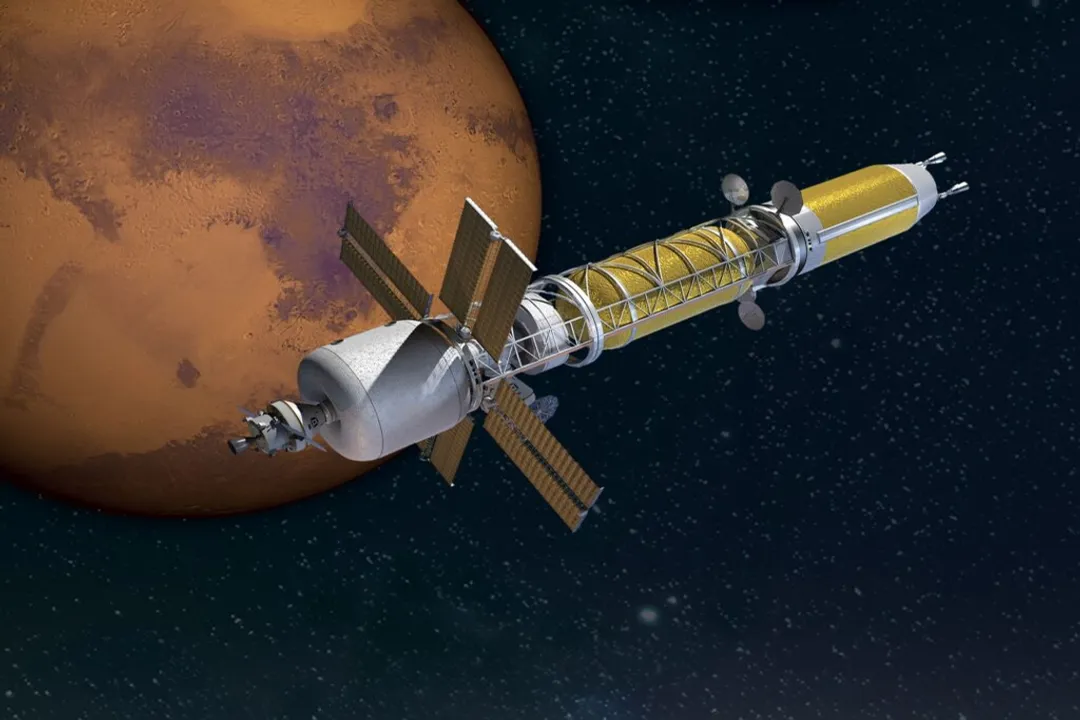
#Videos
The Atomic Engine: US Unveils Nuclear Rocket to Dominate Space!
Related Questions
What is the primary function of Radioisotope Thermoelectric Generators in space exploration?How does a Nuclear Thermal Propulsion system generate thrust for a spacecraft?What characterizes the operational difference between Nuclear Thermal Propulsion and Nuclear Electric Propulsion?Why was the Project Orion spacecraft concept abandoned despite its potential for carrying massive payloads?What is the core objective of the DRACO program conducted by NASA and DARPA?How do engineers manage the risk of radioactive material dispersal during the launch phase of a nuclear-powered mission?Why is heat management a significantly greater challenge for nuclear reactors in space compared to Earth?Why is Nuclear Thermal Propulsion considered highly effective for reducing transit time to Mars?How does the use of nuclear propulsion influence the economic logistics of deep-space heavy-lift missions?Why is the risk of a catastrophic event for a nuclear space reactor considered virtually zero compared to terrestrial nuclear power plants?