Why is a mission to Mars more radiation-intensive than a stay on the ISS?
Answer
Mars missions leave the protective bubble of Earth's magnetic field entirely
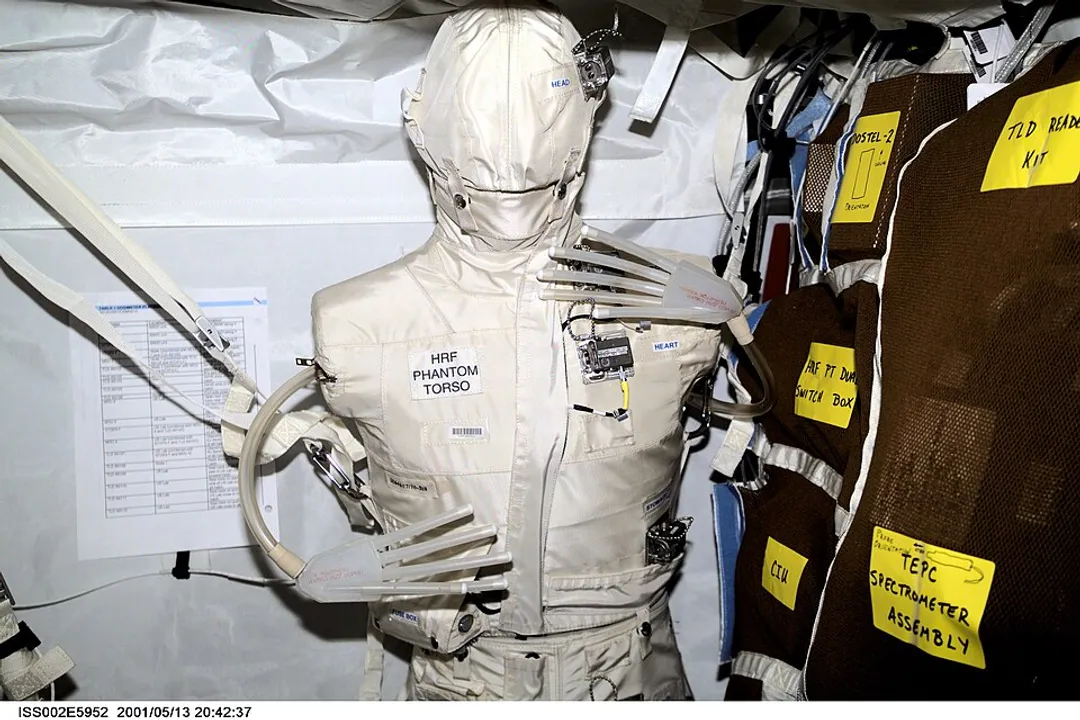
Operating within low-Earth orbit, such as on the International Space Station, allows spacecraft to remain partially shielded by the Earth's magnetic field, or magnetosphere, which filters out a significant portion of harmful cosmic energy. A mission to Mars requires traveling deep into space, completely exiting this protective environment. Consequently, astronauts on such journeys are exposed to an unshielded, constant barrage of galactic cosmic rays for the duration of the trip, leading to significantly higher estimated radiation doses compared to missions near Earth.
#Videos
MOON MINUTE: Battling Space Radiation for Human Spaceflight
Related Questions
What mechanism creates the Van Allen radiation belts?Where do Galactic Cosmic Rays originate?What characterizes Solar Particle Events?What is the primary function of the GOES satellite series in relation to space weather?How does space radiation affect human biological health?Why is polyethylene or water effective for spacecraft shielding?Why is a mission to Mars more radiation-intensive than a stay on the ISS?What is the purpose of the storm shelter approach on spacecraft?What is the goal of investigating biological countermeasures for space radiation?What tool helps the public and scientific community monitor solar activity?