Which star occupied the position near the north celestial pole 12,000 years ago due to axial precession?
Answer
Vega.
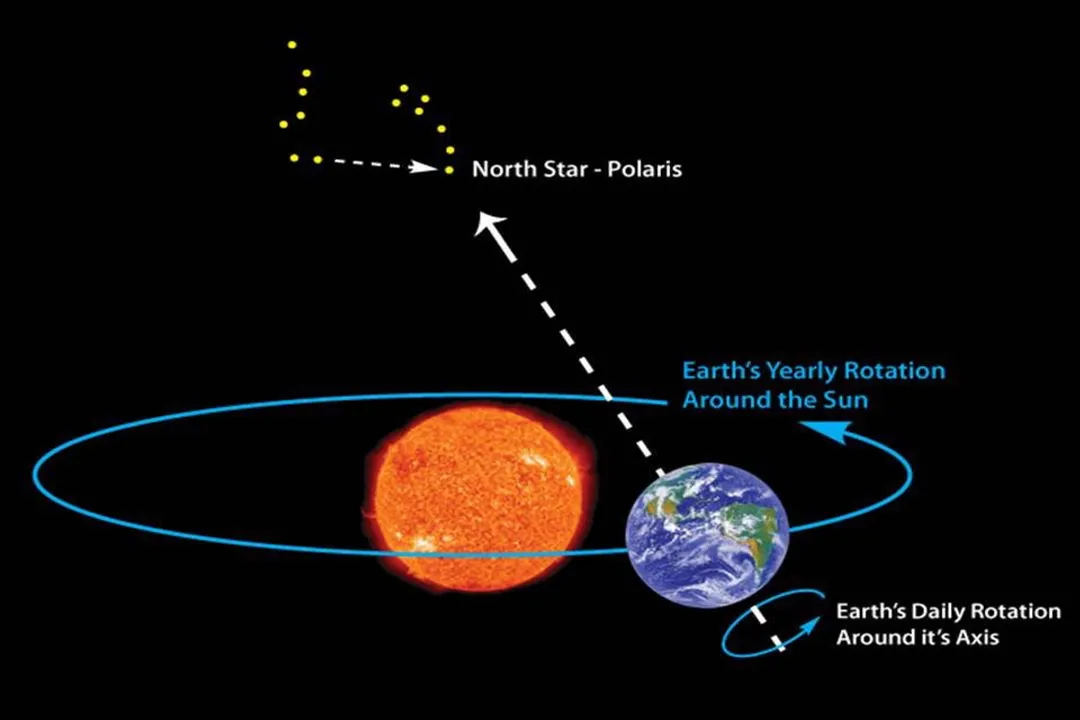
The Earth's axis is subject to a long-term, slow oscillation known as precession, which causes the point in the sky the axis points toward to shift gradually over a very long cycle lasting about 26,000 years. This means that the star serving as the North Star changes over millennia. Twelve thousand years prior to the current epoch, the star Vega held this privileged position near the north celestial pole. Due to the continued wobble of the axis, Vega is expected to resume this role once again in approximately 13,000 years, highlighting that Polaris's proximity to the pole is temporary within the grand cosmic timescale.
#Videos
Why is the North Star Always in the Same Place? - YouTube
Why Do Stars Draw Circles Around Polaris? - YouTube
Related Questions
Why does Polaris reliably hold its position against the apparent motion of other stars?What astronomical phenomenon causes the entire celestial sphere to appear to rotate opposite to Earth's movement?What is the name for the seemingly fixed point around which the Northern night sky appears to pivot?How does the view of the south celestial pole differ for observers south of the equator compared to the North Star's location?By what approximate angular measurement is Polaris currently offset from the true north celestial pole?Which star occupied the position near the north celestial pole 12,000 years ago due to axial precession?How do stars located near the celestial equator appear to move across the sky from a Northern Hemisphere perspective?Polaris's entire 24-hour circuit is only slightly wider than what celestial object's diameter?What is the term for the imaginary line on which the Earth constantly spins, completing a rotation roughly every 24 hours?What observational technique is suggested for visibly demonstrating Polaris's relative lack of movement compared to background stars?