When plotted on an H-R diagram, how does a star move when transitioning from the main sequence to a red giant?
Answer
Upward and to the right
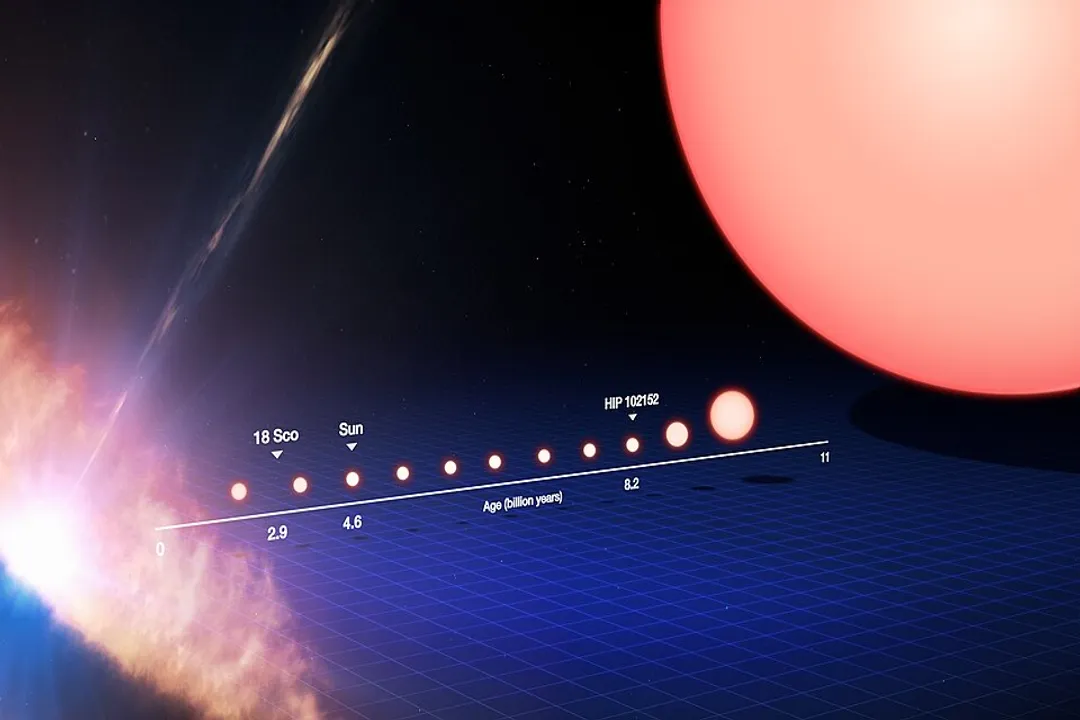
The move to the giant phase involves a significant temperature drop (moving right) but a massive increase in radius and luminosity (moving up), resulting in a steep diagonal climb on the diagram.
Related Questions
What two fundamental forces maintain equilibrium during a star's main sequence phase?What event signals the definitive end of a star's main sequence reign?When core hydrogen fusion ceases, which force immediately takes control?What process ignites in the layers surrounding the contracting inert helium core?What physical change causes a star transitioning into a red giant to appear distinctly red?Compared to its main sequence phase, how does the luminosity of a red giant generally compare?Approximately how long does a star similar to the Sun spend on the main sequence?What is the approximate upper mass limit distinguishing low-mass stars from high-mass stars post-MS?What is the rapid ignition event called when a solar-mass star begins fusing helium in its core?When plotted on an H-R diagram, how does a star move when transitioning from the main sequence to a red giant?