What specific physical characteristic of the Moon supports the Giant Impact Hypothesis?
Answer
Depleted iron core relative to Earth
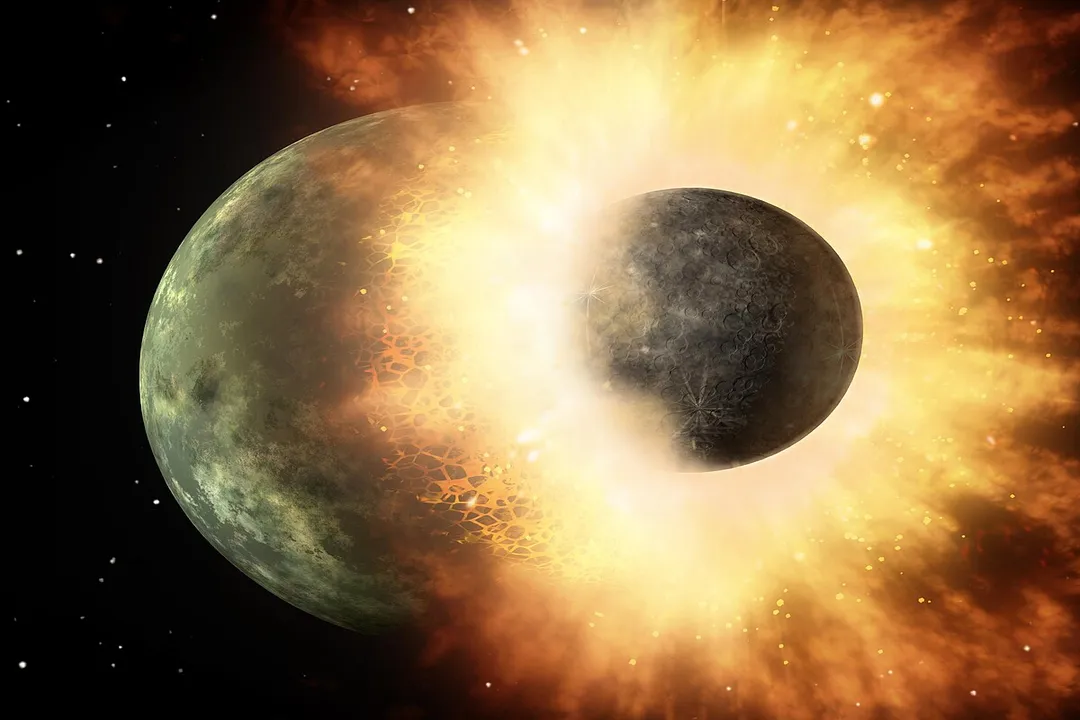
The Giant Impact Hypothesis successfully explains several key physical characteristics of the Moon that would be difficult to account for otherwise. Chief among these is the Moon's internal composition, particularly its iron core. Compared to Earth, which has a large, dense iron core, the Moon possesses one that is significantly depleted in iron. This depletion strongly suggests that the Moon formed primarily from the ejected mantle material of both Earth and the impactor, leaving the denser, iron-rich cores of the two bodies to largely merge with the remaining proto-Earth.
#Videos
What was Theia like? - YouTube
Related Questions
What mythological figure inspired the name of the impactor Theia?What celestial body's size is Theia estimated to be comparable to?What specific physical characteristic of the Moon supports the Giant Impact Hypothesis?Where do recent studies suggest Theia originated within the solar system?What type of collision best describes the interaction between Theia and the proto-Earth?What geological anomalies might be the undigested remnants of Theia’s core?Approximately how long did it take for the orbiting debris to form the Moon?What fundamental dynamic aspect of Earth was altered by the Theia impact?Beneath which major geographic areas are the chemically distinct LLSVPs situated?Does the impacting body Theia exist as an observed celestial body today?