What prevented the 1908 Tunguska event in Siberia from leaving an impact crater?
Answer
The object fragmented in the atmosphere
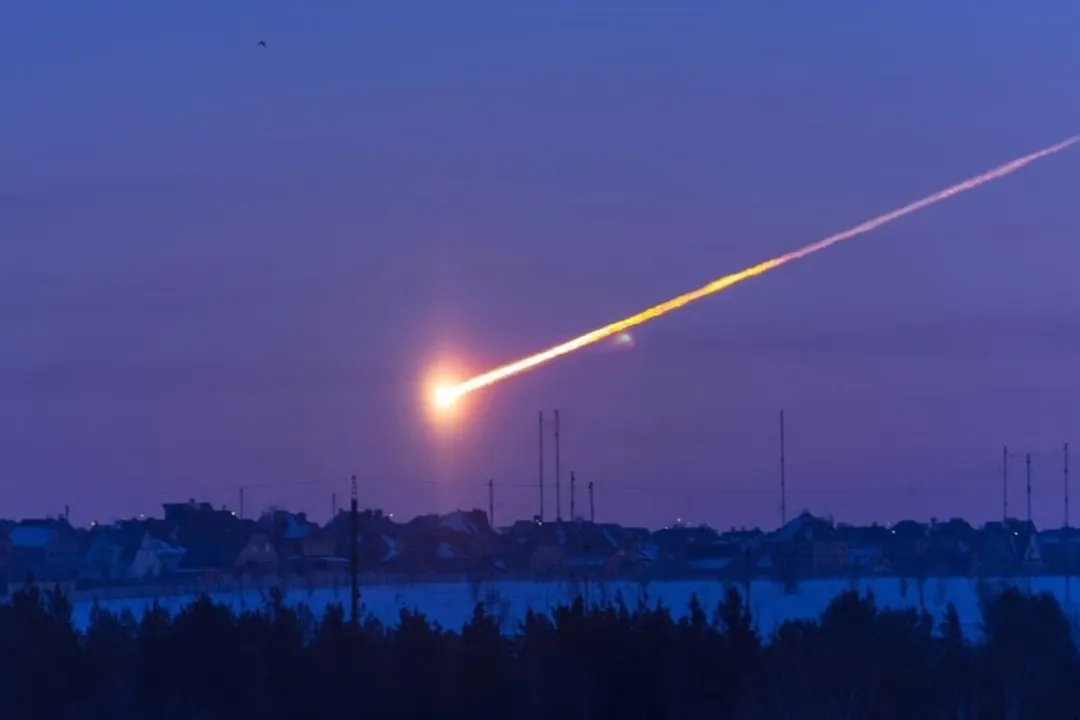
The Tunguska event involved a bolide, likely a few dozen meters in diameter, that exploded mid-air before reaching the ground. Because the object fragmented in the atmosphere rather than hitting the surface intact, it failed to produce a traditional crater. However, the force of the resulting airburst was powerful enough to generate seismic waves and flatten thousands of square kilometers of forest.
#Videos
The Science Behind Asteroid Impacts | How The Universe Works
Related Questions
Which variable in the kinetic energy equation most heavily influences the energy released during a collision?What are the three distinct stages of the cratering process when a large object hits the surface?Why does Earth appear to have fewer visible craters than the Moon or Mars?Where did the asteroid strike the Earth approximately 66 million years ago, leading to mass extinction?What prevented the 1908 Tunguska event in Siberia from leaving an impact crater?What is the primary function of the Torino Scale in planetary science?What specific hazard arises primarily when a medium-sized asteroid strikes an ocean?What did the DART mission demonstrate regarding planetary defense strategies?What energy release is generally associated with an impact by a 1-kilometer diameter bolide?What is the primary objective of scientific efforts to track Near-Earth Objects?