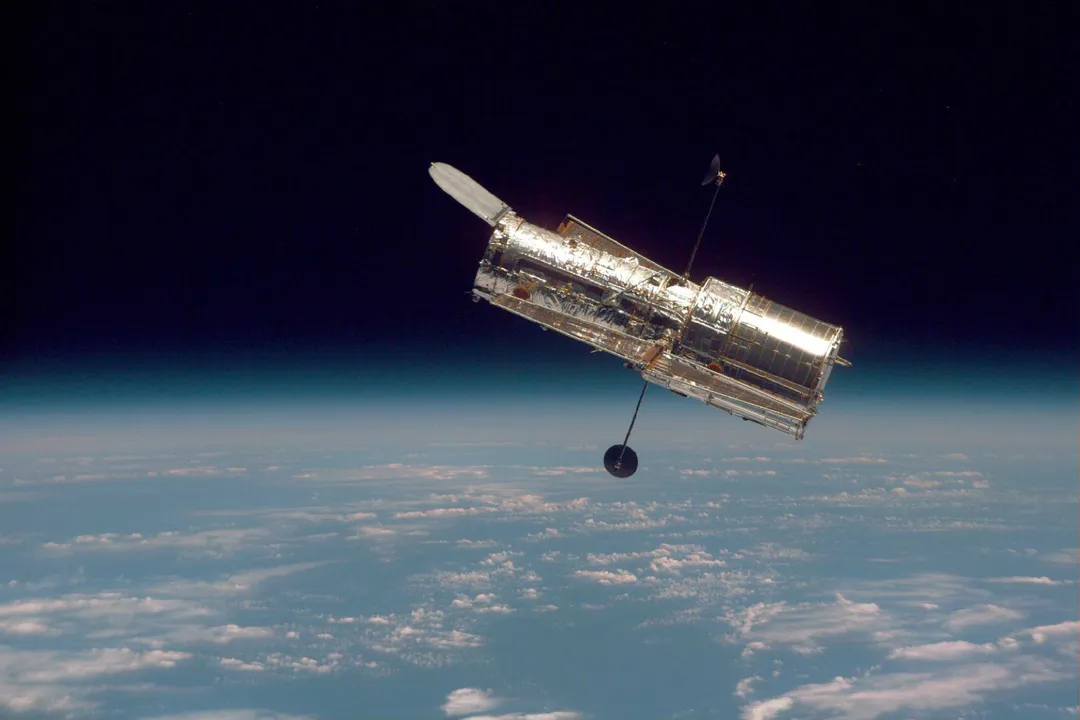
What implication did the discovery of Jupiter’s moons have for the geocentric model?
Not everything orbited the Earth
Galileo's discovery of four small celestial bodies revolving around Jupiter in early 1610 provided crucial empirical evidence against the core tenet of the prevailing geocentric worldview. In the Ptolemaic system, all heavenly bodies were required to circle the Earth. By observing these satellites—which he termed the Medicean Stars—maintaining a constant orbit around Jupiter, Galileo established a clear, observable counterexample. This demonstrated, on a miniature scale within the solar system itself, that there existed a system where the Earth was definitively not the center of all motion. While this observation did not constitute a complete, independent proof of the entire Copernican system, it offered indispensable support by showing that the Earth was not unique as the universal center of revolution.