What was the impact of the telescope's invention on early astronomy?
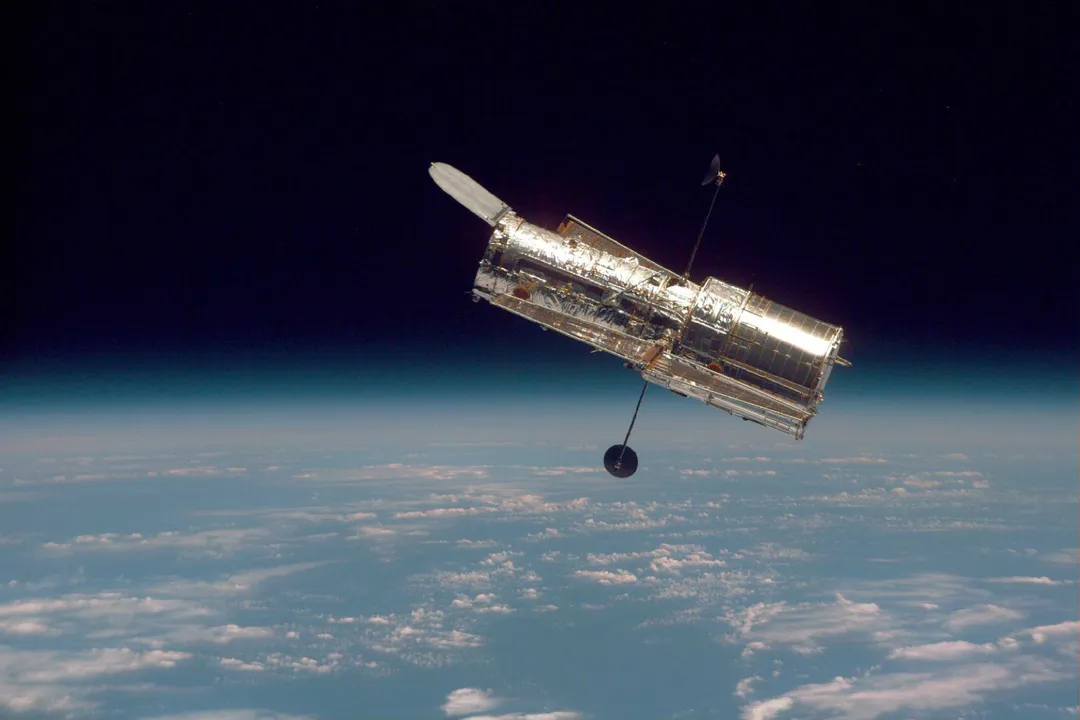
The moment the telescope was first pointed skyward irrevocably altered humanity’s perception of its place in the cosmos. Before this simple tube of lenses, the heavens were considered a realm of perfect, unchanging celestial spheres, an established truth upheld by millennia of naked-eye observation and philosophical agreement. The universe visible to the unaided eye was fixed and finite, its primary inhabitants the Sun, Moon, five wandering planets, and the distant, unblemished stars. The invention of the optical instrument, which brought distant objects close, didn't just improve vision; it shattered the ancient cosmological model, replacing certainty with a universe of complexity, motion, and imperfection.
# Early Optics
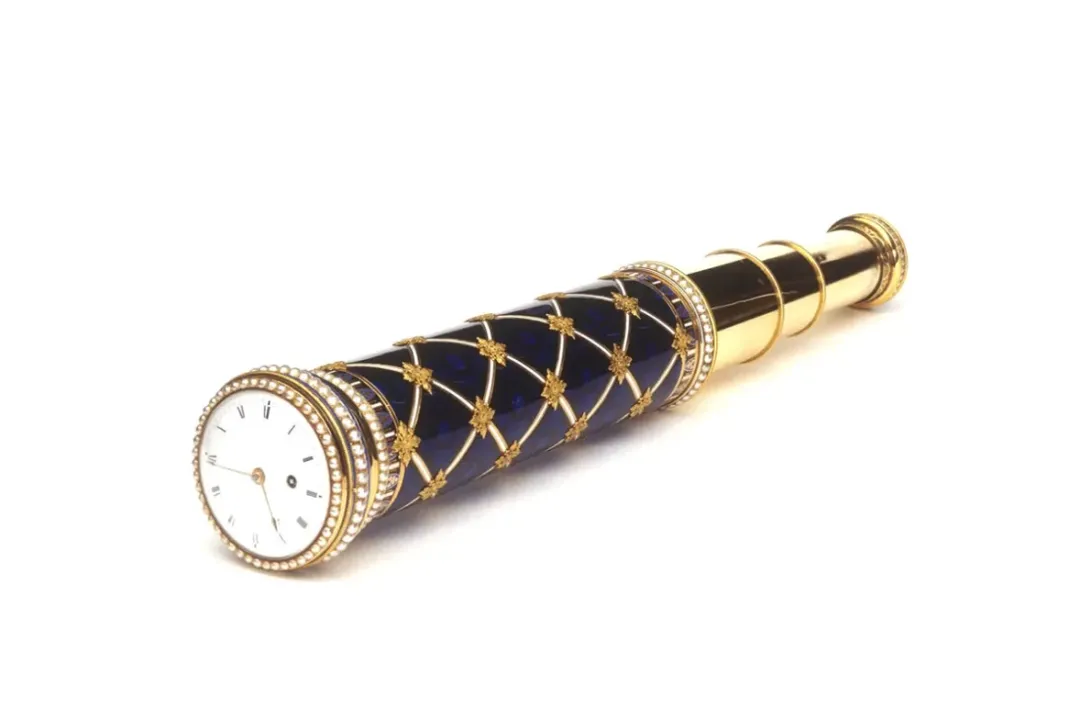
The genesis of the telescope itself is often shrouded in the misty origins of early 17th-century Dutch spectacle-makers. While the exact inventor remains a subject of historical debate, Hans Lippershey is credited with the earliest surviving patent application in October 1608 in The Hague for an instrument that magnified distant objects. The initial devices were relatively crude, typically using a convex objective lens and a concave eyepiece, resulting in low magnification—often around or . They were initially seen more as novelties or military instruments for terrestrial viewing rather than tools for philosophical inquiry into the heavens.
The true revolution began when word of this new "Dutch perspective glass" reached the Italian scholar, Galileo Galilei, in 1609. Galileo, driven by curiosity and perhaps a desire for patronage, swiftly grasped the potential of the device for astronomical study. He improved the design significantly, grinding his own lenses and achieving magnifications up to . This iterative improvement by Galileo was crucial; he turned a curiosity into a scientific instrument of unmatched power for the time.
# Shattering Perfection
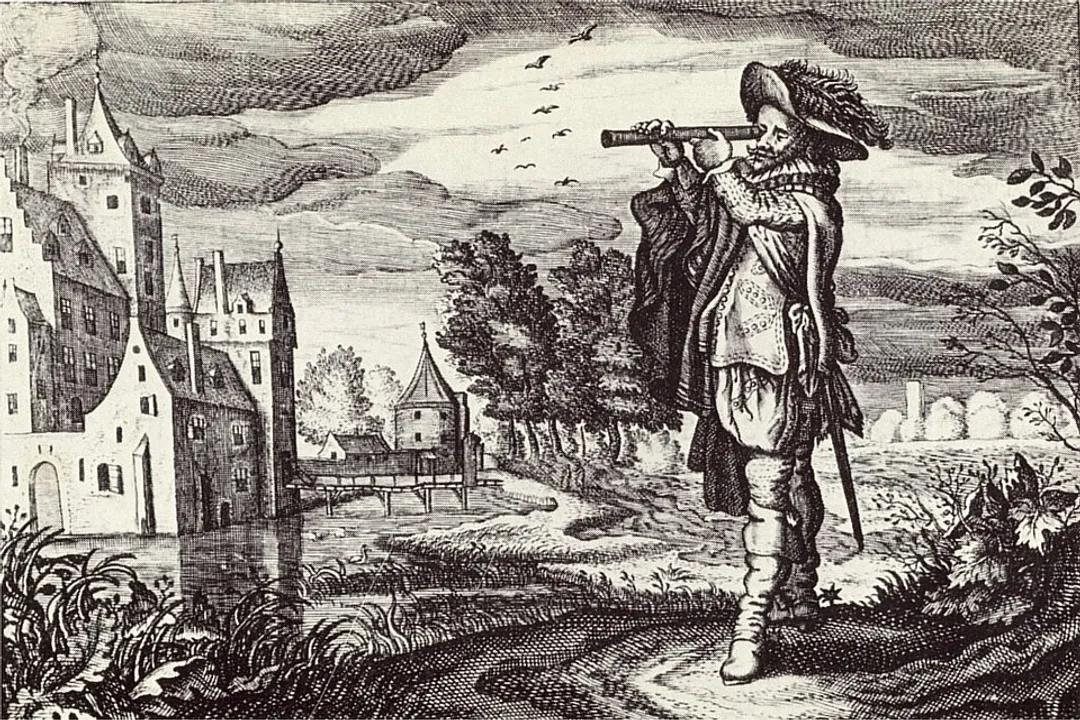
Galileo’s methodical observations, documented in his 1610 publication Sidereus Nuncius (Starry Messenger), were the first direct, observable proof that the heavens were not perfect and unchanging as Aristotle and Ptolemy had described. The impact was immediate and profound because his findings directly contradicted accepted dogma.
One of the earliest shocks concerned the Moon. Naked-eye observation suggested the Moon was a perfect, smooth sphere, a fundamental component of the flawless celestial realm. Galileo’s telescope revealed mountains, valleys, and craters, showing the Moon to be a world much like Earth, flawed and physically constructed. This undermined the traditional division between the terrestrial world (corruptible) and the celestial world (eternal and pure).
Perhaps the most devastating blow to the established geocentric model was the discovery of Jupiter’s moons. In early 1610, Galileo observed four small stars orbiting Jupiter, which he later named the Medicean Stars (now known as the Galilean moons). The existence of celestial bodies orbiting another body besides the Earth provided a miniature, observable model demonstrating that not everything orbited the Earth. This observation was a crucial piece of evidence supporting the Copernican heliocentric system, even if it didn't prove it entirely on its own.
The telescope also unveiled the nature of Venus. By observing Venus through successive phases, much like the Moon, Galileo proved that Venus orbits the Sun, as it displayed a full range of phases—crescent, gibbous, and full—only possible if it were circling the Sun inside Earth's orbit. The geocentric model struggled immensely to explain these full phases.
# Observable Data
The shift in observational data can be summarized starkly:
| Celestial Object | Pre-Telescope View | Post-Galilean Telescope View | Implication |
|---|---|---|---|
| Moon | Perfect, smooth sphere | Craters, mountains, valleys | Celestial bodies are imperfect/terrestrial |
| Jupiter | A single point of light | Four orbiting satellites | Not everything orbits the Earth |
| Venus | Ill-defined shape/phases | Full set of phases | Must orbit the Sun; supports Copernicanism |
| Milky Way | Indistinct, cloudy band | Resolved into countless individual stars | The heavens are vastly larger than previously imagined |
# Expanding the Heavens
Beyond the conflict with established cosmology, the telescope radically redefined the sheer scale of the universe accessible to human study. Before the instrument, the density of stars in the Milky Way appeared uniform and vague. Galileo’s telescope resolved this hazy band into an immense multitude of individual stars, suggesting the visible universe was far more populous and spatially extended than anyone had conceived. Similarly, he observed that the distant "fixed" stars, when magnified, did not appear larger in apparent size, only brighter, implying they must be vastly more distant than the planets. This realization immediately inflated the perceived volume of the cosmos.
A subtle, yet critical, methodological consequence was the shift from relying solely on geometry and philosophy to relying on empirical measurement and repeated observation. Prior to the telescope, ancient authority and mathematical elegance often trumped direct seeing. Galileo’s work established the telescope as the essential instrument of astronomy, moving the discipline firmly into the realm of experimental science. While many contemporary European astronomers initially resisted his findings, often refusing to even look through an instrument they suspected was deceiving—a common human tendency when confronted with evidence that contradicts deeply held beliefs—the sheer volume of verifiable observations eventually forced a paradigm shift.
For instance, the initial reluctance some scholars had stemmed from the fact that the early telescopes were refracting telescopes. They produced color fringes around objects and suffered from spherical aberration, leading some to dismiss the sights as optical illusions generated by the flawed lenses. This optical imperfection paradoxically became a catalyst for further innovation.
# Optical Innovation
The initial Galilean design—concave eyepiece and convex objective—produced an upright image, which was excellent for terrestrial use, but it introduced significant chromatic aberration (color fringing) when used for faint astronomical objects. Johannes Kepler quickly proposed a new configuration using two convex lenses, creating an inverting telescope. While the image was upside down, the Keplerian design offered a much wider field of view and better magnification, becoming the standard for astronomical work.
The inherent limitation of refractors—that the objective lens could not be made perfectly achromatic (free from color distortion) and that very large lenses would sag under their own weight—drove the next great leap: the reflecting telescope. Although Leonardo da Vinci had conceptually sketched the idea centuries earlier, it was Sir Isaac Newton who constructed the first practical reflecting telescope around 1668. By using a curved mirror instead of a lens to gather and focus light, Newton bypassed the problem of chromatic aberration entirely. This invention freed astronomers from the physical constraints of creating larger and larger glass lenses, paving the way for the massive instruments of the eighteenth and nineteenth centuries.
It is interesting to consider how the very quality of the early images—their small field of view and inherent fuzziness—demanded a new kind of observational skill. A modern astronomer relying on digital sensors receives vast amounts of data instantly. Conversely, an early observer like Galileo had to patiently sketch what he saw, often returning night after night to track planetary motion or map the lunar surface, building up a personal, internalized catalog of the new heavens. This demanded an experience-based expertise that is often lost when data is digitized. The act of sketching itself forced a level of commitment to detail that is a fundamental lesson for any budding observational scientist: the tool reveals what the mind is prepared to see and record.
# The Search for Parallax
The telescope’s impact wasn't just about what was seen, but where observers now knew they should be looking. Once the Copernican model gained credence, the major remaining empirical obstacle was demonstrating stellar parallax—the apparent shift in a star's position due to the Earth's yearly movement around the Sun. Geocentrists argued that if the Earth moved, this shift must be visible, and its absence was proof against the motion. However, the vastness of space implied by the non-shifting stars (as perceived by Galileo) meant the parallax angle would be infinitesimally small, well beyond the resolving power of even the best early telescopes.
The telescope thus defined the next century of astronomical pursuit: creating instruments powerful enough to measure this minute angular shift. For example, Christiaan Huygens, using improved telescopes, made significant contributions to understanding Saturn’s rings and Titan, further mapping the solar system in detail that was previously unimaginable. Even as instruments improved in the late 17th and early 18th centuries, stellar parallax remained elusive until the work of observers like Friedrich Bessel in 1838. The telescope revealed the problem, but required centuries of refinement to offer the final confirmation of Earth's true motion.
The invention also subtly changed the social structure of astronomy. While early telescopic work was dominated by individuals like Galileo and Kepler, the increasing cost and complexity of building better reflectors and larger refractors slowly began to transition astronomy from the domain of wealthy amateurs and clerics to state-supported observatories, establishing a more professionalized scientific enterprise.
An interesting point of contrast is the approach to the instrument itself. Galileo treated his telescope as a secret, enhancing it for personal observation before announcing his findings. Later astronomers, particularly in the English Royal Society, often favored immediate, shared verification of instruments and results. This early divergence in publication and sharing protocols shaped the initial reception of the discoveries themselves.

# New Instruments New Cosmos
The initial impact was dominated by the Galilean Refractor, but the subsequent development of the Keplerian Refractor and the Newtonian Reflector showed a direct lineage of advancement driven by the initial success.
Here is a brief timeline of related optical improvements following the initial breakthrough:
- 1609: Galileo improves the Dutch spyglass to .
- c. 1611: Kepler’s design (two convex lenses) allows for higher magnification, though the image is inverted.
- c. 1668: Newton develops the first practical reflecting telescope, replacing the objective lens with a mirror.
- 1700s: Improvements in lens grinding (like achromatic lenses by John Dollond) slowly reduce chromatic aberration in refractors.
The reflector, in particular, proved superior for observing faint, deep-sky objects because mirrors could be made larger than lenses without the weight limitations or the inherent chromatic distortion of glass. This realization meant that the objects Galileo glimpsed—the multitude of stars, the faintness of nebulae—were not just marginal curiosities, but the true, primary targets for the next era of observational astronomy.
The telescope fundamentally shifted the relationship between theory and observation. Before 1609, an observation that contradicted the prevailing cosmological model was often dismissed as an error in human perception or instrument quality. After 1610, the instrument became the arbiter of truth regarding the physical structure of the heavens. It provided not just a better look, but an entirely new kind of data, forcing philosophy to yield to physics derived from sight. The impact was not just an increase in knowledge; it was a complete re-validation of the scientific method itself, centering it around verifiable, repeatable, instrumental evidence. The universe was suddenly bigger, messier, and knowable in a way that Aristotelian metaphysics could not accommodate.
Related Questions
#Citations
Galileo and the Telescope | Modeling the Cosmos | Digital Collections
Invention of the Telescope | Research Starters - EBSCO
Telescope | Smith | Encyclopedia of the History of Science
The history of the telescope | Royal Museums Greenwich
The Telescope: Science, Tech, Society - Student Exploration
telescope | AMNH
History of the telescope - Wikipedia
[PDF] Galileo, the Impact of the Telescope, and the Birth of Modern ...
May 2009: The history of the telescope | Astronomy.com