What characteristic of ion propulsion leads to rigid, non-agile mission planning?
High operational inertia from continuous, low-thrust acceleration
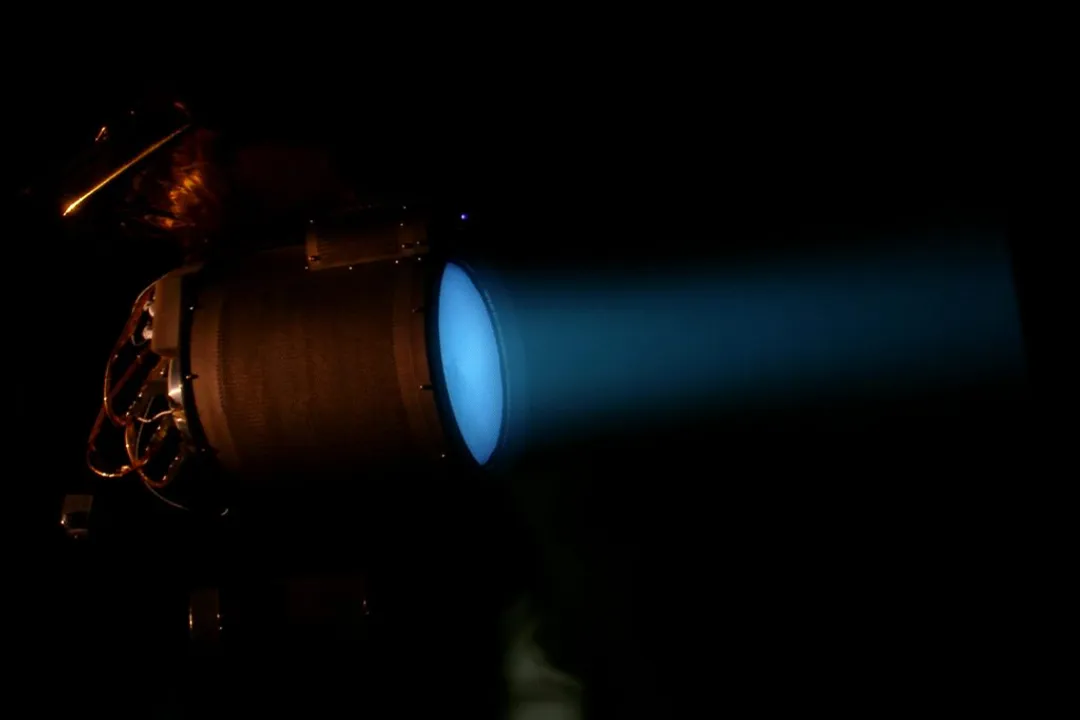
Ion thrusters exhibit high operational inertia because they are designed for slow, sustained acceleration over very long durations, often running for months or years to achieve the target $\Delta V$. This commitment means that once a long burn sequence begins, interrupting it is generally counterproductive, as it forces the mission to restart accumulation of velocity from a disadvantaged point, severely extending the mission timeline. This rigidity demands that mission planning must be exceptionally precise, accounting for every foreseeable perturbation or required velocity change before the engine even starts, leaving little flexibility for immediate, rapid responses to unpredicted events or unexpected trajectory corrections.
#Videos
Is Ion Propulsion Safe? - Physics Frontier - YouTube