What catastrophic explosion marks the end of life for stars with initial masses greater than about eight times the Sun's mass?
Answer
Type II Supernova
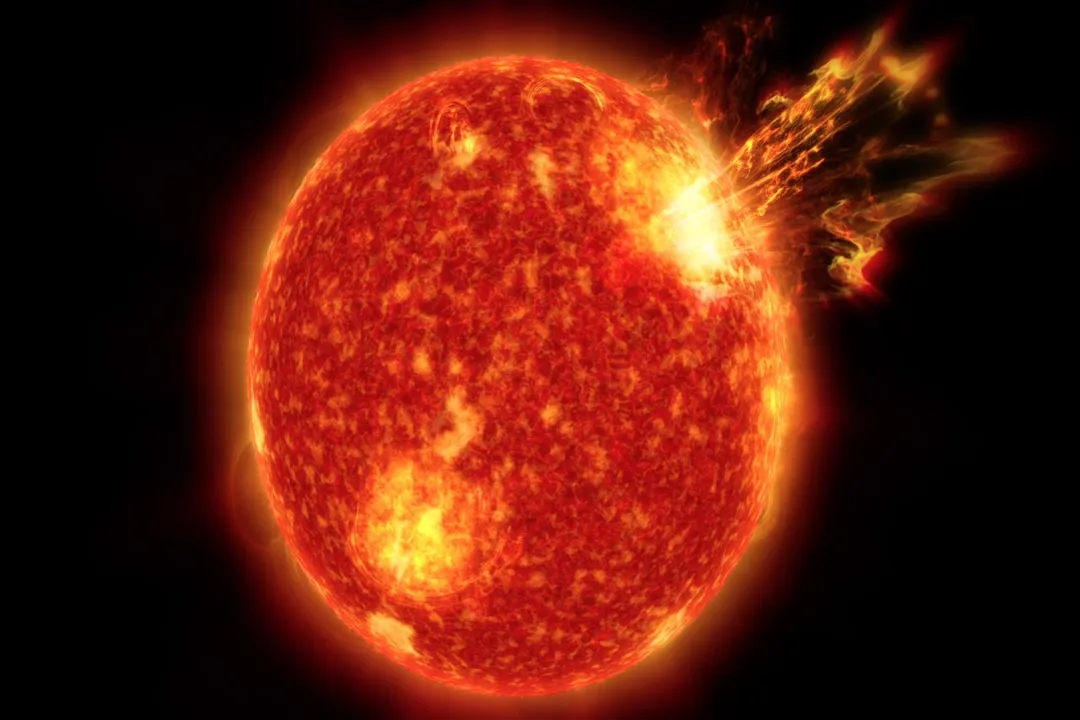
Stars exceeding roughly eight solar masses end their lives violently. When their fusion process stops at the iron core, gravity causes rapid collapse, resulting in a rebound explosion known as a Type II Supernova.
Related Questions
What single factor fundamentally dictates the duration of a star’s stellar period?What condition signifies a protostar's official birth and entry onto the Main Sequence?Approximately what percentage of a star's total lifespan does the Main Sequence phase represent?What is the final theoretical remnant of a star less massive than 0.5 solar masses after cooling?In a Sun-like star, what temperature (approximately) is required to ignite helium fusion in the core?What element's formation causes fusion to stop abruptly in high-mass stars because fusing it consumes energy?What catastrophic explosion marks the end of life for stars with initial masses greater than about eight times the Sun's mass?If a core remnant following a supernova is between 1.4 and 3 times the mass of the Sun, what object forms?What is the collective term for the vast, cold reservoirs of gas and dust where stars begin their lives?What celestial role defines stars regarding the creation of heavier elements in the universe?