Will ESCAPADE orbit Mars?
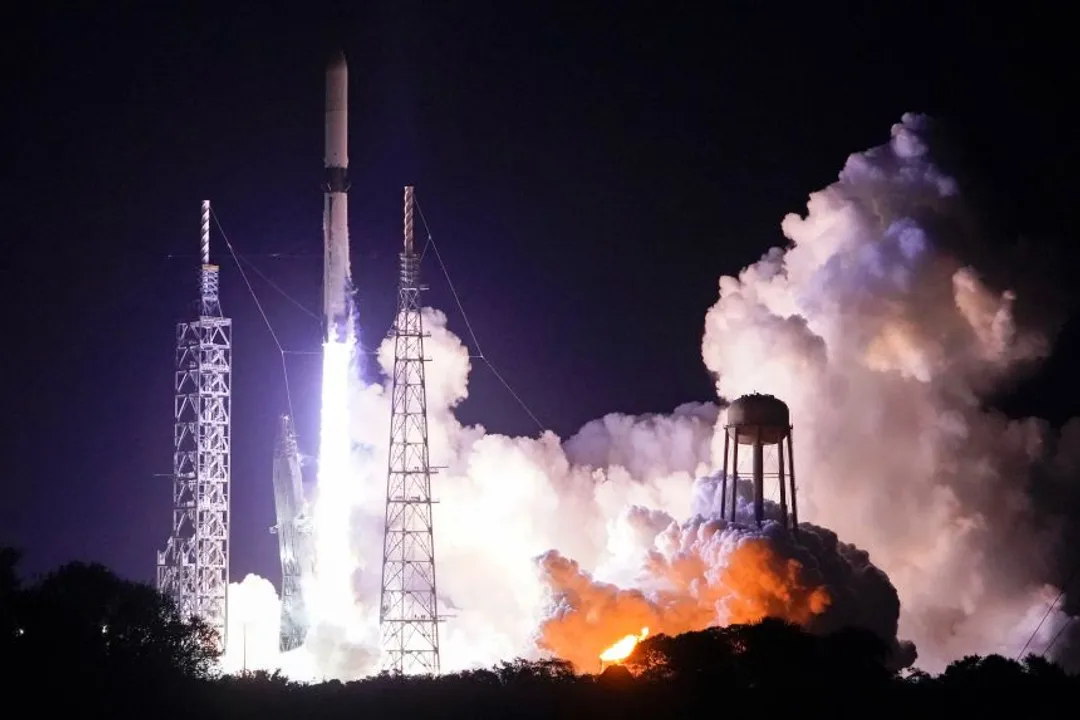
The ESCAPADE mission, consisting of twin spacecraft named Blue and Gold, is officially destined to orbit the Red Planet. [1][7] Designed to study the Martian atmosphere and magnetosphere, this mission represents a significant shift in how space agencies approach planetary science, opting for smaller, nimble spacecraft rather than massive, multi-instrument satellites. [4][7] While the ultimate goal is to reach and operate in a dual-orbit configuration around Mars, the path taken to arrive there is distinct from traditional planetary missions, involving a period of coasting that allows the probes to reach their destination efficiently. [2]
# Mission Objectives
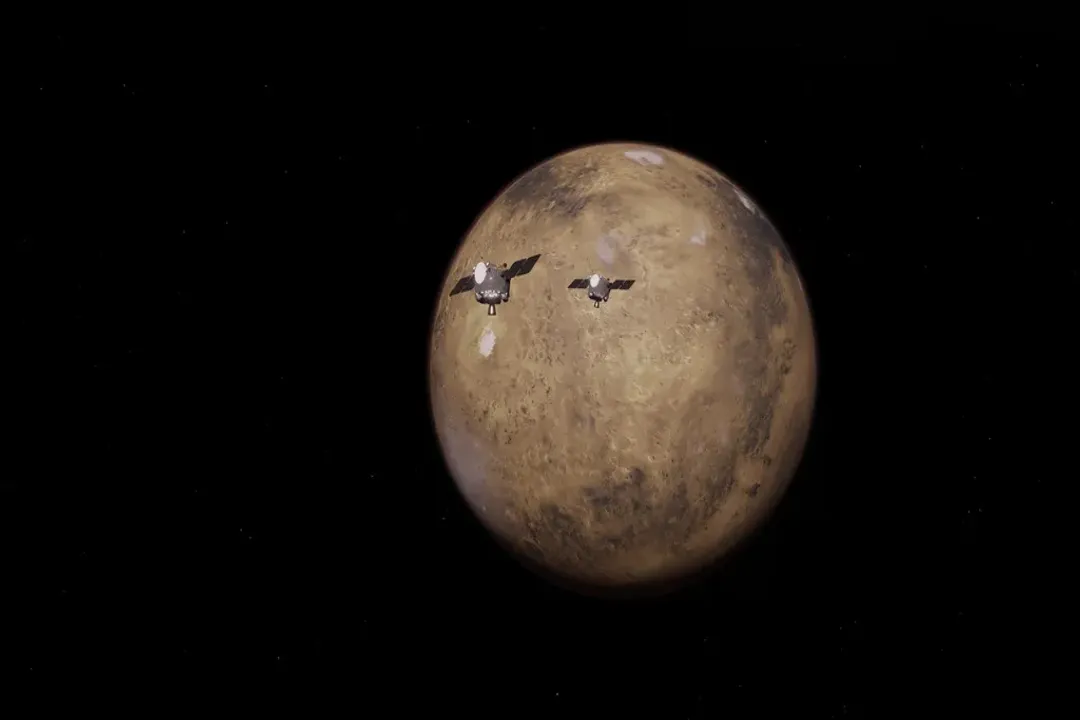
The primary scientific function of the Escape and Plasma Acceleration and Dynamics Explorers (ESCAPADE) is to observe how solar wind interacts with the Martian environment. [4] Mars lacks a global magnetic field to protect its atmosphere, which makes it particularly susceptible to the constant stream of charged particles emitted by the Sun. [7] By utilizing two spacecraft, NASA aims to collect simultaneous data from two different points in space. [6]
This dual-point measurement is critical. A single orbiter, while useful, often struggles to differentiate between temporal changes (events occurring over time) and spatial variations (differences across locations) in the solar wind. [4] With two probes, the mission can capture real-time, comparative data that paints a more accurate picture of how energy and plasma move through the Martian magnetosphere. [2][7] This information helps scientists understand how the planet has lost its atmosphere over billions of years, providing context for the evolution of Mars from a potentially habitable world to the dry, cold environment observed today. [3]
# Twin Design
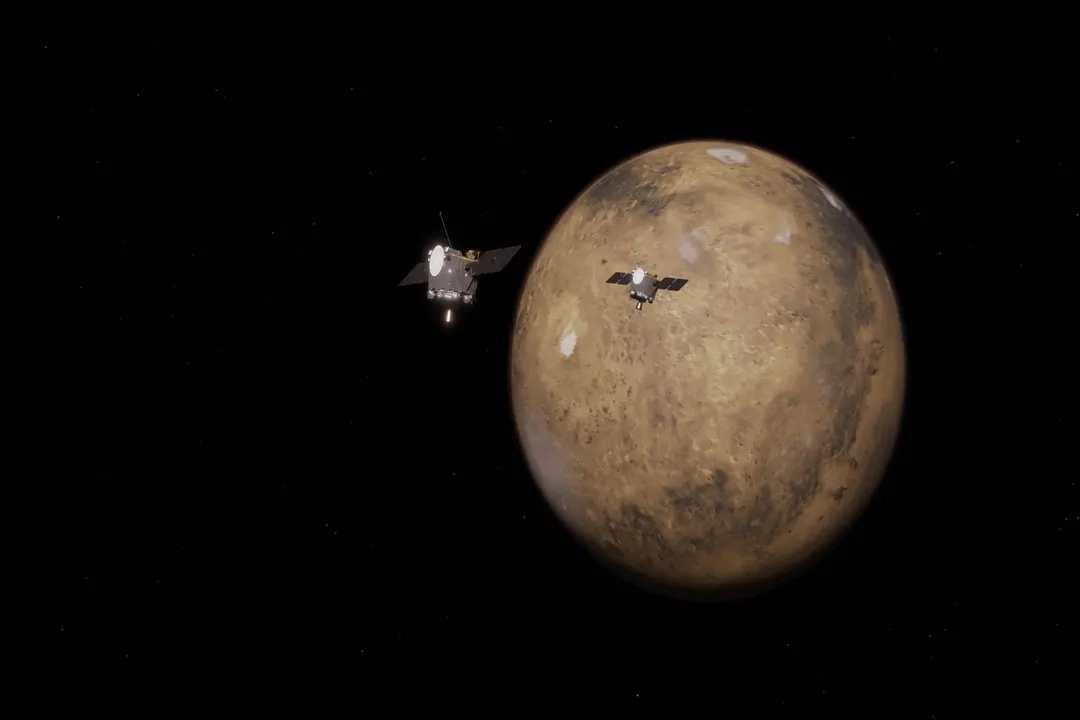
The spacecraft, Blue and Gold, are built on the Photon platform developed by Rocket Lab. [4][6] These are not typical, large-scale NASA probes; they are categorized as SmallSats, or small satellites, designed for cost-effective planetary access. [7] Their compact size allows for a different launch strategy, often requiring them to be secondary payloads on larger rockets. [2]
This modular approach reduces the weight and volume constraints that usually complicate interplanetary mission planning. [4][6] Despite their reduced size, the probes carry high-quality instrumentation, including magnetometers and electrostatic analyzers, tailored for studying plasma environments. [3][4] This balance of capability and size is the definition of the SIMPLEx program (Small Innovative Missions for Planetary Exploration), which prioritizes low-cost, high-reward science. [7]
# Orbital Loitering
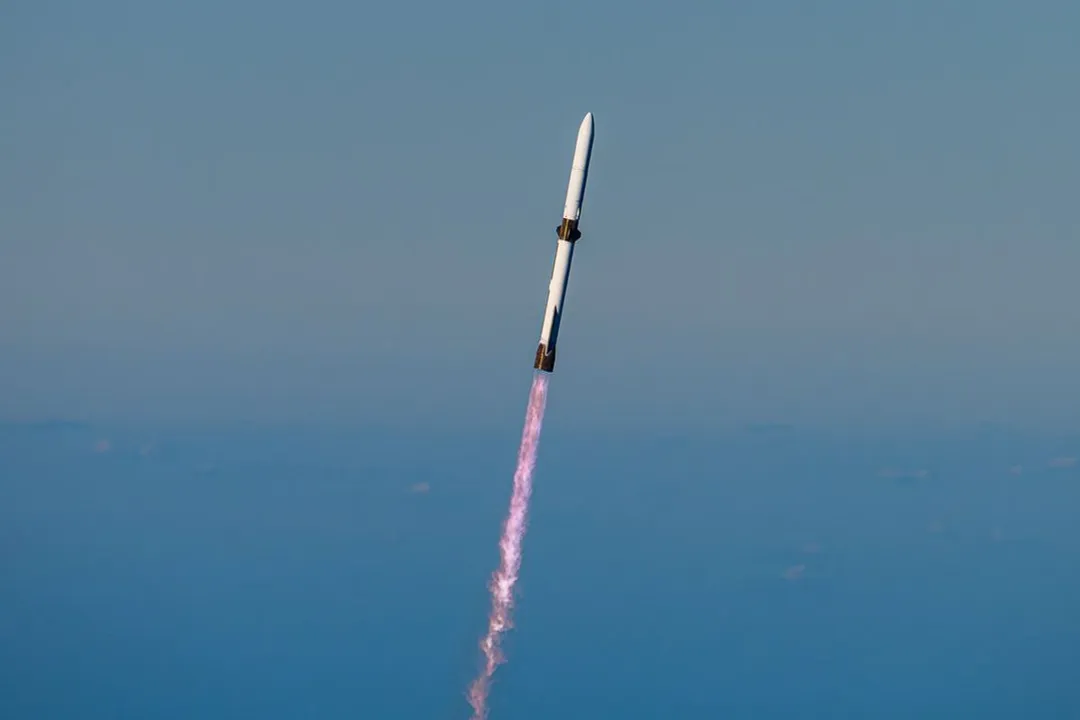
One of the most distinct aspects of this mission is the "loiter" phase. [2] Unlike massive probes that often undergo complex, high-energy burn sequences to enter Martian orbit immediately upon arrival, the ESCAPADE probes utilize a trajectory that requires them to spend time in deep space before reaching Mars. [2] This is not a failure or an issue, but a deliberate orbital mechanic. [2]
By opting for a longer, more efficient flight path, the mission designers save significant fuel, which would otherwise be consumed during an aggressive, high-speed transfer. [2] This extended transit serves as a waiting period, ensuring the spacecraft arrive at Mars with sufficient propellant to maintain their complex dual-orbit configuration once they arrive. [6] The decision to "wait" in space minimizes the cost of the launch vehicle required, as it does not need to carry the extra fuel necessary for a rapid arrival. [2][8]
# Operational Risks
While the loitering strategy reduces launch costs, it introduces specific engineering challenges. A spacecraft spending an extended time in transit faces degradation risks, particularly regarding battery health and the longevity of onboard systems. [2]
| Factor | Large Orbiter (e.g., MAVEN) | SmallSat (ESCAPADE) |
|---|---|---|
| Launch Cost | High (Dedicated Launch) | Lower (Rideshare) |
| Data Point | Single | Dual (Simultaneous) |
| Transit Time | Optimized for speed | Optimized for efficiency |
| Redundancy | High (Heavy shielding) | Medium (Distributed design) |
The longer a satellite spends in the harsh radiation environment of deep space before reaching its target, the greater the wear and tear on sensitive electronic components. To mitigate this, the engineering teams must manage the "sleep" modes of the satellites, ensuring that power is conserved and systems remain dormant enough to avoid unnecessary wear, yet active enough to maintain communication and navigation. [2] This requires a delicate balance of software management and hardware resilience that defines the modern approach to SmallSat operations.

# Scientific Impact
When Blue and Gold finally enter their designated orbits around Mars, they will work in tandem to monitor the Martian ionosphere and magnetosphere. [4][6] This data will supplement the work of previous orbiters, such as MAVEN (Mars Atmosphere and Volatile EvolutioN), but with a different vantage point. [7]
The primary difference lies in the "swarm" capability. Where traditional missions rely on a single instrument platform, the ESCAPADE mission provides a two-dimensional look at plasma flow. [4] This allows researchers to track how solar storms impact the Martian atmosphere in real-time, providing a dynamic view that a single spacecraft simply cannot offer. [3] It is akin to moving from a single static camera to a coordinated video feed; the latter allows for a much richer understanding of motion and interaction.
# Future Projections
The success of the ESCAPADE mission will likely serve as a blueprint for future planetary studies. [6] If these twin probes can successfully arrive, capture into orbit, and execute their science mission on a limited budget, it will likely lead to an increase in similar "swarm" missions throughout the solar system. [8]
The reliance on smaller, cheaper platforms offers an accessible entry point for planetary research that does not require the massive budget of a traditional flagship mission. [7] If the mission demonstrates that these orbiters can endure the deep-space transit and effectively study a planetary environment, it may change how space agencies prioritize their future objectives, placing more value on distributed, multi-spacecraft networks over centralized, monolithic orbiters. [4]

# Data Verification
The current status of the mission remains positive, with deployment confirmed and the long cruise phase underway. [1][8] Observers watching the mission should not be alarmed by the lack of immediate "Mars news" following the launch; the quiet period is an intentional part of the mission design. [2]
Communication continues as the probes move toward their destination, with NASA ground teams periodically checking in on the health of the twins. [1][9] As they get closer to the Martian gravity well, the focus will shift from energy conservation to the high-stakes maneuvers required for capture. [2][6] Success will be defined not just by the arrival, but by the ability of these two small satellites to maintain their orbital relationship, proving that even small, cost-effective missions can perform significant, high-quality science at the planetary scale. [4]
#Videos
NASA's ESCAPADE Investigates Mars Space Weather - YouTube
Related Questions
#Citations
NASA's Twin ESCAPADE Spacecraft Have Deployed
Live long and loiter: Why NASA's ESCAPADE probes will wait a year ...
ESCAPADE Prepares for Flight (2025) - NASA SVS
ESCAPADE - Wikipedia
NASA's ESCAPADE Investigates Mars Space Weather - YouTube
ESCAPADE - Advanced Space
NASA's latest ESCAPADE is sending twin low-cost orbiters to ... - PBS
Why the NASA EscaPADE mission is set to take off on a winding ...
Liftoff! NASA's ESCAPADE Begins Journey to Mars - NASA Science