How long does it take for ESCAPADE to reach Mars?
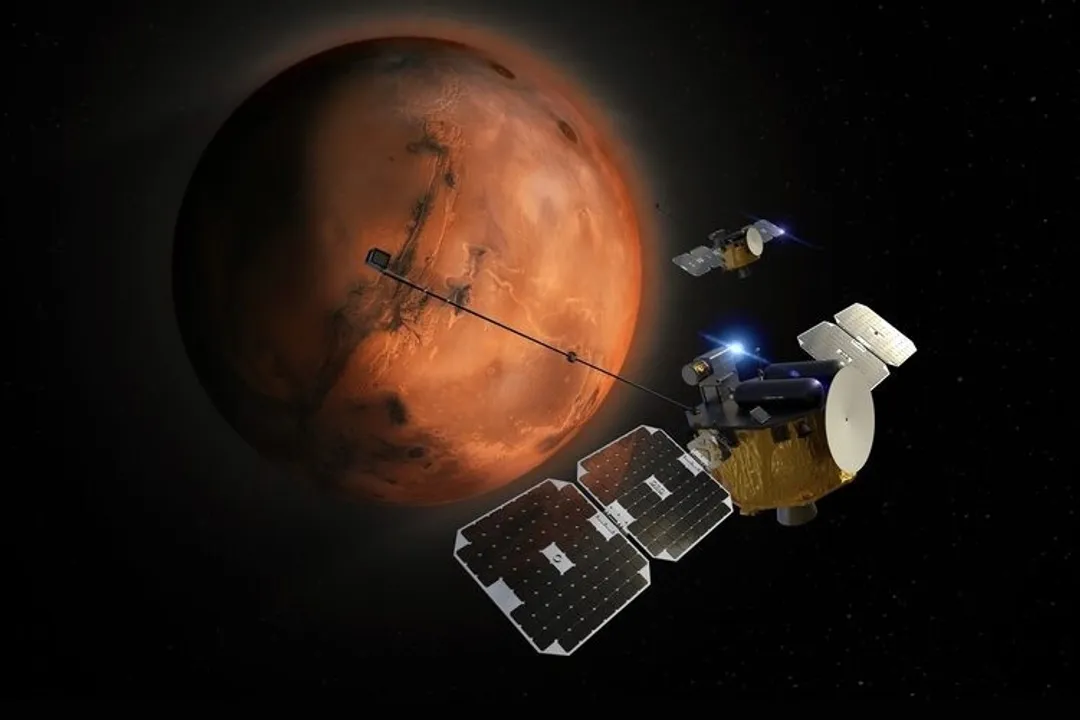
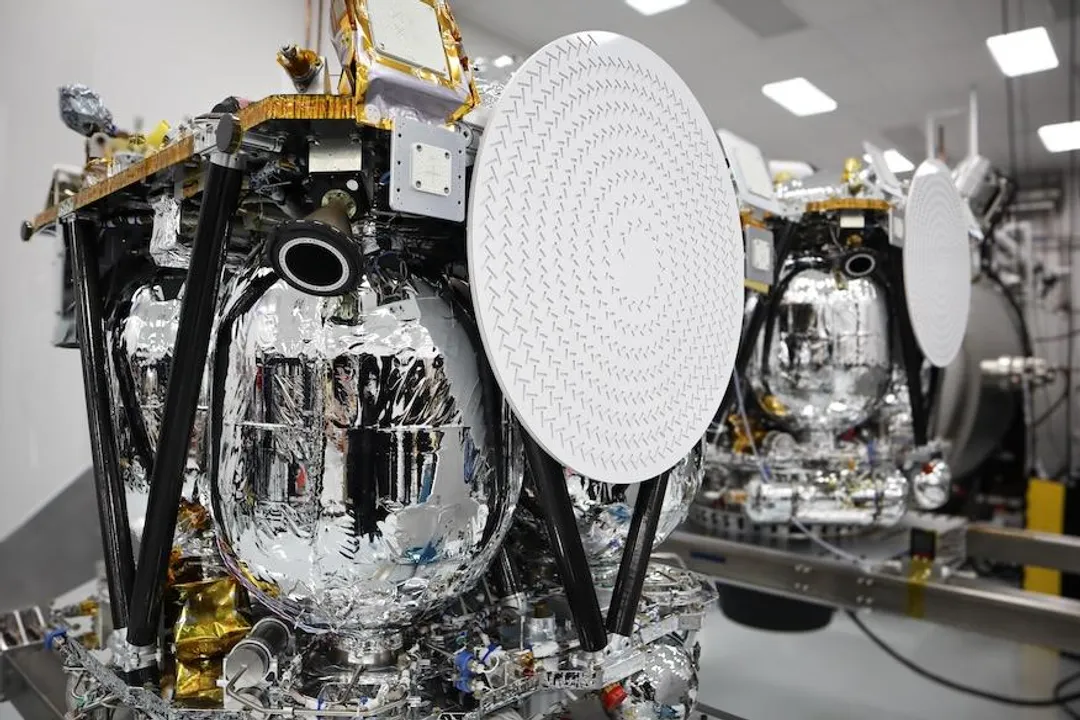
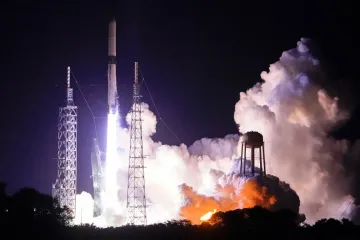
ESCAPADE, an acronym for Escape and Plasma Acceleration and Dynamics Explorers, began its transit to Mars on November 13, 2025. [2][5] The mission, managed by the University of California, Berkeley, consists of two identical small satellites, named Blue and Gold. [4][8] Unlike conventional heavy-lift planetary missions that prioritize speed, this project utilizes a low-energy trajectory to reach the Red Planet. [3][5] By choosing this path, the mission designers prioritized budget and fuel mass constraints over transit time. [3]
# Transit Timeline
The satellites are scheduled to arrive at Mars in late 2026. [2][5] Given that the launch occurred in mid-November 2025, the total transit duration spans approximately 11 to 12 months. This timeline stands in contrast to the typical 6 to 9 months required for direct Hohmann transfer orbits, which are the standard paths for larger, more expensive missions. [3]
This difference in duration is a standard trade-off in aerospace engineering. When mass is limited—as it is with small satellite platforms—engineers must prioritize weight savings. By opting for a trajectory that takes longer, the spacecraft requires less propellant to enter the correct orbital path, allowing for a lighter and more cost-effective launch vehicle. [3]
# Efficient Mechanics
The "long way round" approach is a calculated strategy rather than a necessity dictated by technology limits. [3] Standard planetary transfers involve a high-energy burn to inject a spacecraft into a transfer ellipse that intersects with Mars at the perfect moment. ESCAPADE, however, operates on a trajectory that requires significantly less energetic input. [5]
To understand why this takes longer, consider the difference between a direct highway route and a slower, winding scenic road. A direct route requires high speeds and high fuel consumption to maintain momentum. The ESCAPADE satellites are effectively "loitering" or cruising through space, allowing the natural gravity of the Sun and the target planet to influence their velocity rather than relying solely on onboard propulsion. [9]
The following table provides a comparison between a standard Hohmann transfer and the low-energy approach taken by these satellites.
| Characteristic | Direct Hohmann Transfer | Low-Energy Transfer |
|---|---|---|
| Duration | 6–9 Months | 11–12+ Months |
| Fuel Mass | High (Requires more propellant) | Low (Uses orbital dynamics) |
| Launch Window | Highly restrictive | More flexible |
| Energy Input | High impulsive burns | Low, sustained trajectories |
This strategy reflects a growing trend in planetary science. Small satellites—often termed SmallSats or CubeSats—are changing the way space agencies conduct research. [4][8] Because the cost per kilogram to launch into deep space remains high, any reduction in fuel mass creates significant economic value, allowing more funds to be directed toward the actual scientific instruments rather than the transport mechanism. [3]
# Waiting Period
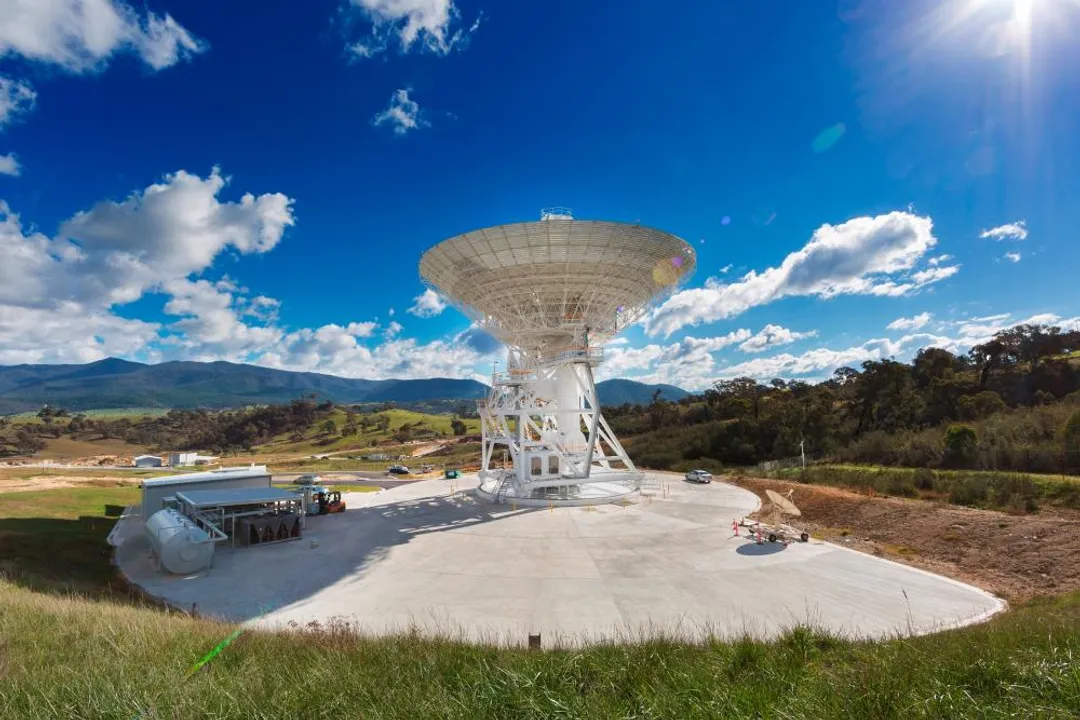
A common misconception regarding this extended transit is that the spacecraft remains idle. In reality, the satellites are active throughout this period. They are not merely drifting; they are maintaining communication with ground stations, managing thermal systems, and preparing their scientific payloads for arrival. [2]
The "loitering" phase also allows ground teams to test the health of the twin satellites extensively. [9] Because Blue and Gold must operate in tandem to gather data on the Martian magnetosphere, ensuring that both units are synchronized and functioning correctly before they arrive at the planet is a high-priority task. Any anomalies detected during the transit can be addressed and patched while the satellites are still in the cruise phase, reducing the risk of failure upon arrival. [6]
# Scientific Goals
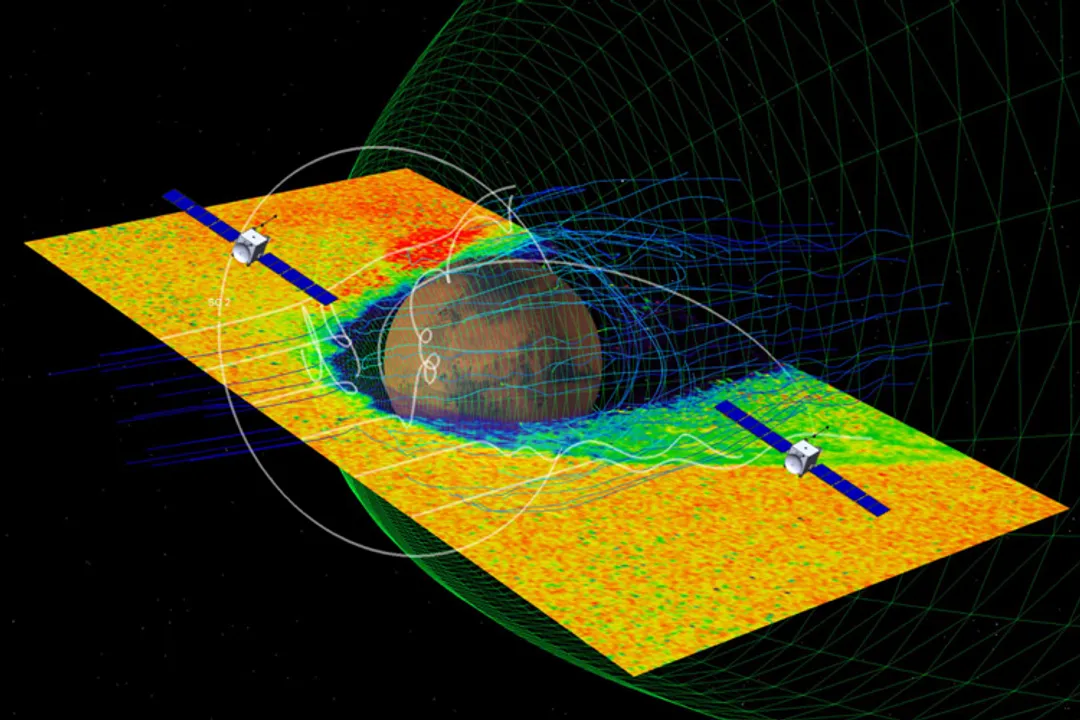
Once the satellites complete their transit and insert themselves into orbit around Mars, their primary function is to study the Martian magnetosphere and its interaction with the solar wind. [4][7] Mars lacks a global magnetic field like Earth's, which means its atmosphere is directly exposed to the harsh, charged particles streaming from the Sun. [8]
Understanding how this solar wind strips away the Martian atmosphere is critical for scientists looking at the planet's history. The dual nature of the mission allows for something a single spacecraft cannot do: simultaneous measurements from two different points in space. [4] By positioning Blue and Gold at varying distances or angles relative to the solar wind, the team can create a three-dimensional model of the plasma environment around the planet. [7]
This multi-point observation is the primary justification for the extended transit time. If the mission had opted for a faster, more expensive launch, the budget would have been exhausted before the satellites could even reach the Martian system. The extra months spent in transit are a direct trade-off that enables this specific, high-value scientific investigation. [3]
# Managing Risk
Operating two spacecraft instead of one introduces complexity, but it also provides a buffer against mission failure. If one satellite were to experience a technical issue, the other could potentially continue to gather data, albeit with reduced coverage. The team manages this risk by ensuring that Blue and Gold can communicate with each other as well as with Earth-based receivers, forming a small, coordinated network in space. [4]
Data collected during the flight to Mars also serves as a calibration tool. As the satellites move through the interplanetary medium, they gather information about the solar wind before it interacts with Mars. This provides a baseline, allowing researchers to subtract the background solar wind effects from the data they collect once they are in the Martian orbit. [7] Effectively, the long flight is not just "waiting" time; it is a period of continuous data acquisition that helps set the stage for the final analysis.
# Future Implications
The success of the ESCAPADE mission suggests a path forward for future planetary research. If small satellites can reach Mars using low-energy trajectories and perform high-quality science, it lowers the barrier to entry for other research institutions and smaller nations to engage in deep space observation. [8]
This operational model proves that speed is not always the deciding factor for scientific success. While a 12-month transit requires patience, it demonstrates that mission designers can achieve substantial outcomes by relying on precise calculations and orbital mechanics rather than raw power. For future missions to the outer solar system or toward other planetary bodies, the methods used by Blue and Gold will likely serve as a reference point for efficiency and cost-containment. [6]
The arrival of these satellites at Mars in late 2026 will mark a shift in how the scientific community approaches the study of planetary atmospheres. [5][7] By the time they begin their primary data collection, the long months spent navigating the quiet, cold expanse between Earth and Mars will have been worth the time investment, proving that a measured, steady approach can deliver results as effectively as a high-speed sprint.
Related Questions
#Citations
ESCAPADE - Wikipedia
Liftoff! NASA's ESCAPADE Begins Journey to Mars - NASA Science
Escaping with ESCAPADE, or Going to Mars the Long Way 'Round
NASA's ESCAPADE mission to Mars — twin UC Berkeley satellites ...
ESCAPADE Mission Launches for a Long Trip to Mars
ESCAPADE begins its journey to Mars | The Planetary Society
EscaPADE (Escape and Plasma Acceleration and Dynamics ...
Live long and loiter: Why NASA's ESCAPADE probes will wait a year ...