Why is the sun not a planet?
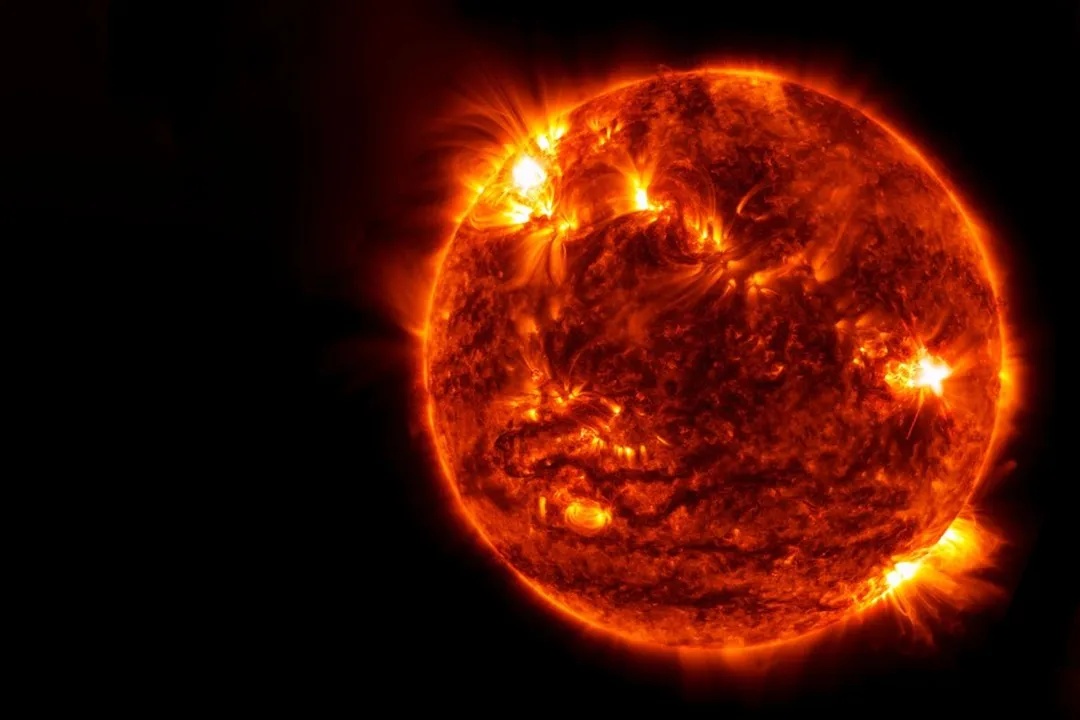
The Sun is the powerhouse of our neighborhood, glowing with intense heat and light that sustains all life on Earth. To understand why it sits in a completely different category than Earth, Mars, or Jupiter, we must look at how it generates energy and the sheer scale of its physical existence. While it may appear to be just another large object in space, the distinction between a star and a planet is defined by the fundamental laws of physics rather than just size or location. [2][9]
# Stellar Identity
At the most basic level, the Sun is classified as a star because of its ability to produce its own light through nuclear fusion. Deep within its core, the temperature and pressure are high enough to force hydrogen atoms to fuse together to create helium. This process releases a staggering amount of energy in the form of radiation, which travels outward and warms our solar system. [2][8]
Planets, by contrast, lack the mass required to initiate this process. If you gathered all the material in the solar system, the Sun accounts for approximately 99.8% of the total mass. [9] This immense gravitational pressure is the engine that drives fusion. Without this specific threshold of mass, an object cannot compress its core enough to ignite. Planets are essentially the remnants of the solar system's formation—material that accreted into solid bodies but did not have the density to become a star. [5]
# Energy Production
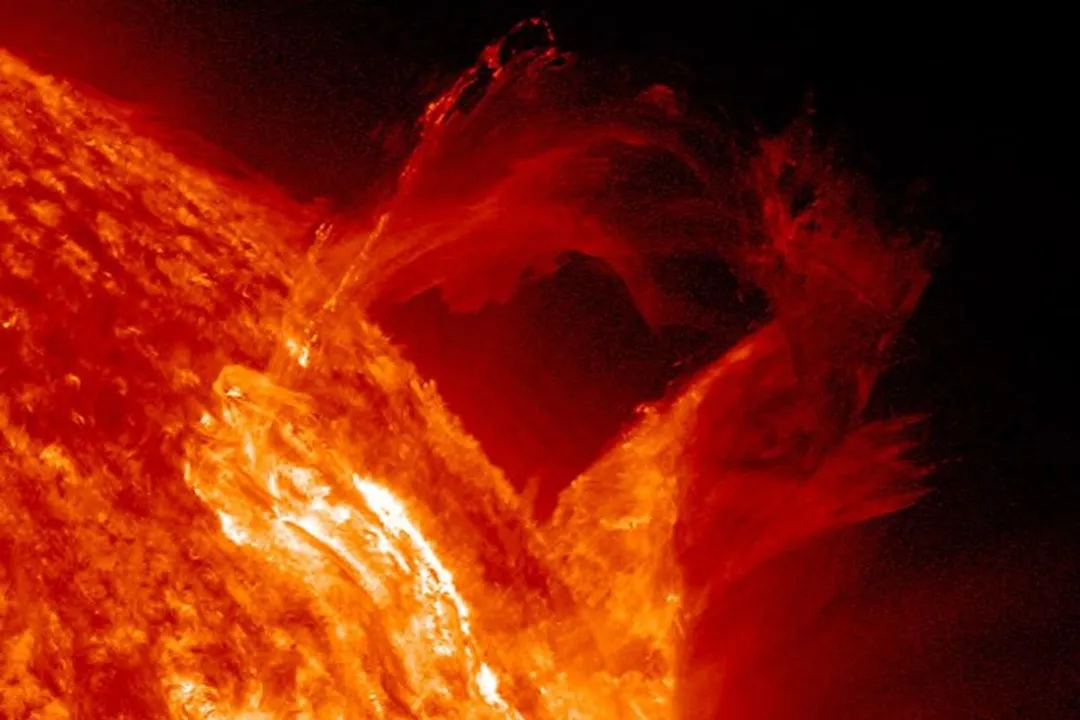
One of the most reliable ways to distinguish between these two types of celestial bodies is how they manage their energy budgets. Stars are self-luminous. They create energy internally, emitting it as light and heat. When you look at the Sun, you are seeing the result of billions of nuclear reactions happening every second. [2][7]
Planets operate differently. They do not generate energy through fusion. Instead, they appear bright in the night sky only because they reflect the light of a nearby star. If the Sun were suddenly extinguished, the planets would become dark, frozen worlds. They might still emit a small amount of heat from radioactive decay within their cores or residual heat from their formation, but they cannot produce the consistent, high-intensity output that characterizes a star. [3][5]
# Mass Comparison
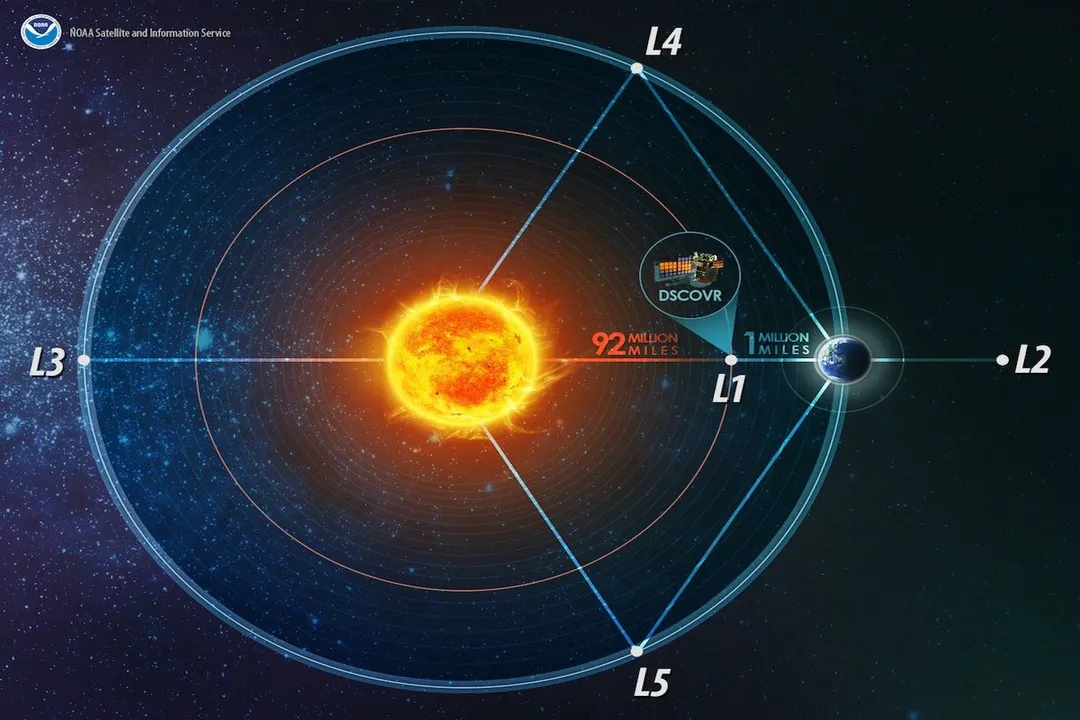
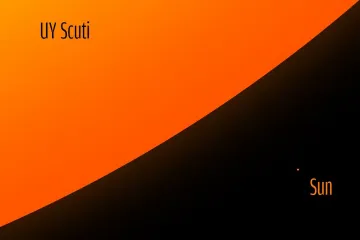
The disparity in mass is not just a minor difference; it is the defining factor that separates the two. To visualize this, consider that the Sun is so massive that it exerts a gravitational hold on everything in the solar system, including giant planets like Jupiter and Saturn. It acts as the gravitational anchor for the entire system. [9]
| Feature | Star (Sun) | Planet |
|---|---|---|
| Energy | Generates via fusion | Reflects light |
| Mass | > 99% of system mass | Fraction of system mass |
| Composition | Mostly Hydrogen/Helium | Variable (Rock/Gas/Ice) |
| Gravity | Sufficient for fusion | Insufficient for fusion |
While a gas giant like Jupiter is large by planetary standards, it would need to be roughly 80 times more massive to trigger nuclear fusion and become a star. [5] Because planets lack this density, they occupy a completely different functional niche in the universe. They are passive observers orbiting a central energy source, rather than the sources of energy themselves. [1][9]
# Orbital Mechanics
The definition of a planet has evolved over time, particularly after the International Astronomical Union established formal criteria in 2006. To be considered a planet, an object must orbit the Sun, be spherical due to its own gravity, and have cleared its orbital neighborhood of other debris. [9]
The Sun does not meet these criteria because it is the central point around which planets orbit. It does not "orbit" the solar system in the way a planet orbits a star. Instead, the Sun and the entire solar system orbit the center of the Milky Way galaxy. This galactic orbit is a massive, long-term journey that takes approximately 225 to 250 million years to complete a single revolution. Comparing the movement of a planet around a star to the movement of a star around a galaxy highlights the different scales at which these objects exist. [2][4]
# Formation History
The birth of a star is a violent, energetic process, while the formation of planets is a quieter, slower accumulation. Stars form from massive clouds of gas and dust known as nebulae. As gravity pulls this material together, the center becomes increasingly hot and dense until fusion begins. [8]
Once a star "turns on," the remaining material in the surrounding disk begins to clump together. These clumps are the building blocks of planets. Essentially, planets are the leftovers of star formation. They are composed of the heavier elements—silicates, metals, and ices—that were not consumed by the central star during its birth. Because these objects formed from the remaining dust, they never attained the mass required to generate their own internal nuclear fires. [5]
# Analyzing Density
It is helpful to think about the "density of purpose" when comparing these objects. The Sun’s existence is defined by its output. It is a constant, steady reactor. A planet’s existence is defined by its environment. Its temperature, atmosphere, and surface conditions are dictated by its distance from its host star.
If we were to place Earth at the center of the solar system, it would be a cold, inert rock. It lacks the internal mechanism to maintain a glowing surface. The Sun’s status as a star is not just a label; it is a description of its fundamental role as a provider of kinetic and electromagnetic energy for its entire surrounding system. Without this distinction, the solar system would not exist as we know it, as there would be no energy gradient to drive the chemistry and weather of the planets. [2][7]
# Classification Systems
The scientific community maintains these classifications to keep our understanding of the universe organized. When researchers observe a new system, they look for specific indicators to determine if an object is a star or a planet. They search for signatures of fusion, such as specific light spectra that indicate hydrogen and helium burning. [5][9]
If an object is too small to be a star but too large to be a planet, it might be classified as a brown dwarf—a "failed star" that never quite gathered enough mass to sustain fusion. This further clarifies that the division between star and planet is not merely arbitrary; it is based on physical realities like mass, pressure, and temperature. The Sun sits firmly in the category of a main-sequence star, a stable stage of its life where it burns hydrogen efficiently. [9]
# Stability Factors
The Sun’s stability is a direct result of the balance between two opposing forces: gravity pulling inward and the pressure from nuclear fusion pushing outward. This balance, known as hydrostatic equilibrium, ensures that the Sun remains the same size for billions of years. If the fusion rate were to change significantly, the Sun would expand or contract until a new balance was reached. [2][8]
Planets do not have this internal pressure mechanism. They are held together by gravity, but they do not have the outward pressure of fusion to oppose the crushing force of their own weight. Instead, the rigidity of their rocky or icy material provides the necessary counter-force to prevent them from collapsing into a smaller, denser state. This mechanical stability is why planets maintain their solid forms, while stars exist as massive, boiling spheres of plasma. [3][6]
# Future Evolution
Even the Sun will eventually change. In several billion years, it will exhaust its hydrogen fuel. When that happens, the balance of forces will shift. The Sun will expand into a red giant, consuming the inner planets, before eventually shedding its outer layers and collapsing into a white dwarf—a dense, cooling core that no longer performs fusion. [2][9]
Even in this final state, the Sun will not become a planet. It will remain a stellar remnant. This lifecycle is unique to stars. Planets simply do not have the internal fuel supply to experience such a transition. They are static in their fundamental nature compared to the dynamic, evolving life cycle of a star. By understanding these differences, we gain a clearer picture of how the solar system functions as a cohesive unit, with the Sun as the source and the planets as the beneficiaries of its immense energy output. [2][5]
#Videos
Why the Sun is a Star, Not a Planet | Space Facts for Kids - YouTube
Related Questions
#Citations
ELi5 what makes the sun a star and not a planet? And why ... - Reddit
Our Sun: Facts - NASA Science
Why is the Sun not a planet? Why is it classified as a star? - Quora
Why the Sun is a Star, Not a Planet | Space Facts for Kids - YouTube
Is a Sun a Star or a Planet? How We Know - Discover Magazine
Why is the sun not considered as a Planet - Facebook
is the sun a planet | Wyzant Ask An Expert
Sun - National Geographic Education
Sun - Wikipedia
Why Is a Planet Not a Star? | National Air and Space Museum