Why is measuring the luminosity of stars difficult?
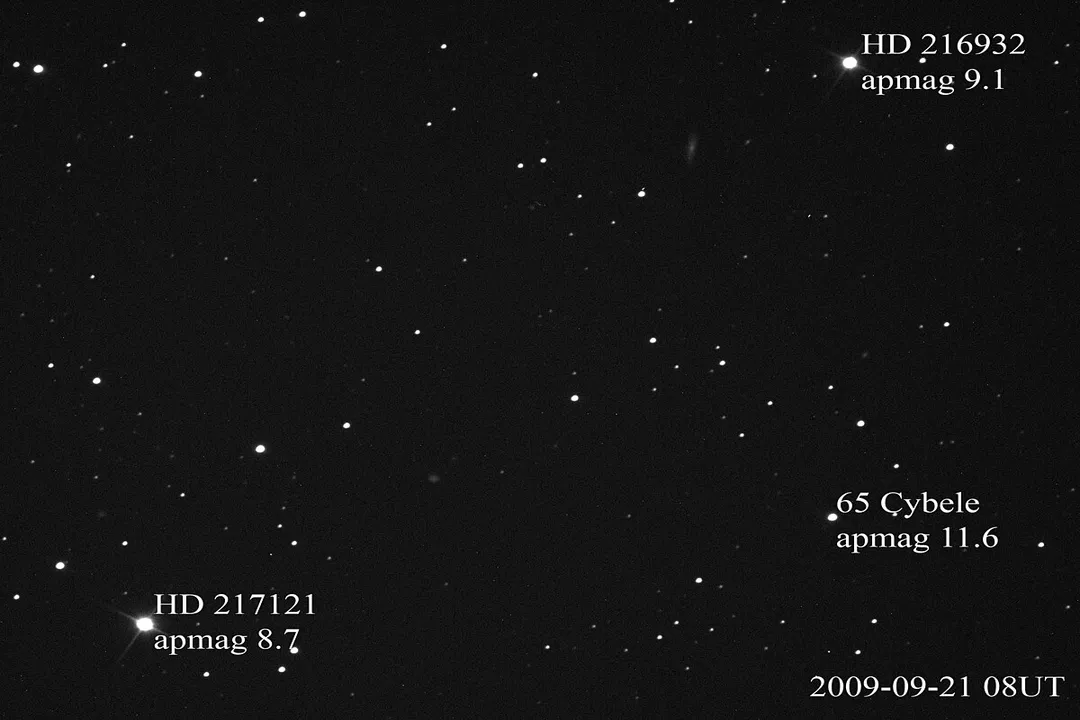
The light that reaches our telescopes or eyes from a distant star is a convoluted signal, carrying the fingerprint of its massive, fiery origin but heavily modulated by the emptiness of space and the atmosphere above us. Determining the true output—the star’s intrinsic luminosity—is far more challenging than simply measuring how bright it appears, which is known as apparent magnitude. [1][6] The core difficulty lies in disentangling the star’s actual power from the effects of its separation from Earth. [5]
# Apparent Scale
The very system used to quantify observed brightness introduces immediate complexity. Apparent magnitude is a measure of how bright a star looks from our specific vantage point on Earth. [3][6] Crucially, this scale is inverted: the smaller the number, the brighter the object appears, with the brightest naked-eye stars having positive numbers, and the very brightest objects, like the Sun or Moon, possessing large negative values. [3]
This system is not linear; it is logarithmic. [3][6] A difference of exactly one magnitude corresponds to a brightness ratio of approximately $2.512$ times. [3][6] For example, a star designated as magnitude $2$ is only about $2.5$ times brighter than a star designated as magnitude $3$. [3] However, stepping from magnitude $1$ to magnitude $6$ means observing a star that is about $100$ times fainter ($2.512$ to the power of $5$). [3] Thinking of it like a high-end audio mixer helps; you aren't turning a linear volume knob, but adjusting a logarithmic slider where each click represents a significant, fixed factor increase in power, making small numerical differences represent huge physical differences in energy received. This logarithmic quantification means that when converting an observed magnitude into actual energy flux, the math required is inherently multiplicative rather than additive, adding a layer of necessary complexity before we even consider the star itself. [6]
# Distance Barrier
The single largest physical impediment to calculating true luminosity is distance, governed by the inverse square law. [1][2] This law dictates that the apparent brightness of a star drops off proportionally to the square of its distance from the observer. [2] If you were to move a star twice as far away, its observed light reaching Earth would be reduced to one-fourth of its previous intensity. [2]
Because apparent brightness () is a product of the star's intrinsic luminosity () and the distance (), expressed as , finding requires knowing with extreme accuracy. [7] Any small error in measuring the distance propagates into a massive error when calculating the true energy output. [2] This leads to significant ambiguity: a very dim, nearby star can easily appear just as bright as a tremendously powerful, luminous star that resides thousands of light-years farther away. [1] For astronomers, determining this distance—often achieved through the painstaking process of measuring stellar parallax—is the prerequisite for any meaningful discussion about a star's true power. [2]

# Atmospheric Obstacles
Even if a perfect measurement of apparent brightness could be taken instantly, the light must first survive passage through Earth's atmosphere. [6] This gaseous envelope causes two primary issues: extinction and scintillation. [6] Extinction is the general dimming effect caused by atmospheric gases, dust, and aerosols absorbing or scattering the incoming photons before they reach the ground-based detector. [6] While this effect can be modeled and partially corrected for, the degree of extinction varies based on the star's position in the sky (how much air the light passes through) and local weather conditions. [6]
Scintillation is the phenomenon we know as twinkling. [6] This is caused by the turbulence of the air cells bending the light path randomly and rapidly. [5] For precise photometric measurements, this twinkling means the exact number of photons hitting the telescope aperture changes wildly from moment to moment. [5] While space-based telescopes bypass this terrestrial interference entirely, ground-based observers must employ sophisticated instruments or observe only when the atmosphere is exceptionally stable to gain reliable readings on apparent magnitude. [4][6]
# Intrinsic Nature
Luminosity is an intrinsic property tied directly to the star's physical characteristics: its surface temperature and its physical size or radius. [7] The relationship is described by the Stefan-Boltzmann Law, which states that luminosity is proportional to the square of the radius times the fourth power of the temperature (). [7]
While stellar temperature can be estimated with reasonable precision by analyzing the star's spectral features and overall color—cooler stars appear reddish, hotter stars appear blueish [7]—determining the size remains extremely difficult. For all but the closest and largest stars, these celestial bodies appear as perfect pinpoints of light, even through the world's most powerful telescopes. [7] It is hard to measure the surface area of something that resolves into no discernible disc.
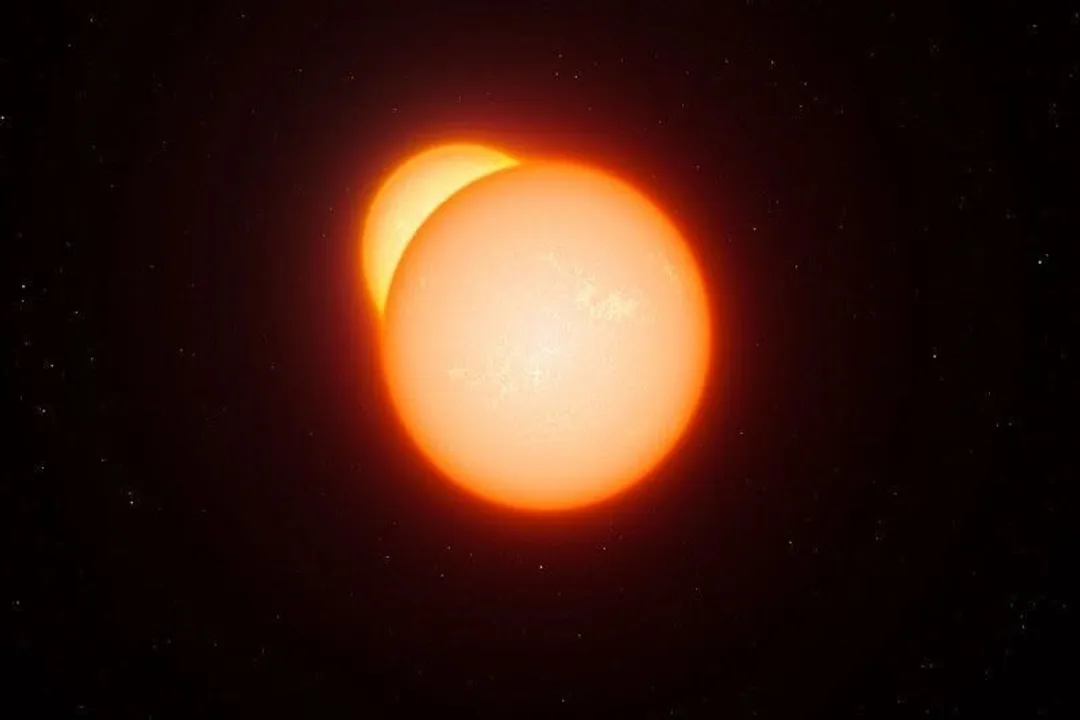
Furthermore, stars are not reliably constant sources of energy. Many stars exhibit changes in brightness over time, classifying them as variable stars. [8] These changes can stem from internal pulsations, occultation by orbiting planets or companion stars, or surface activity like starspots or flares. [8] If an astronomer measures a particular star’s apparent magnitude during an unusually active flare phase, they might calculate an absolute luminosity that is significantly higher than the star's average, long-term output. [8] This highlights that "measuring" a stellar property often means capturing a state at a specific instant, rather than the star's stable, defining characteristic. [8]
# Measurement Approach
The practical methods employed reveal why precision is elusive. For a hobbyist astronomer aiming to determine the apparent magnitude of an unknown star, the easiest technique involves direct comparison with cataloged reference stars. [4] This means visually estimating how much brighter or dimmer the target is compared to a star whose magnitude is precisely known. [4] This reliance on subjective visual perception is highly prone to error, especially when comparing stars that are close in brightness or when atmospheric stability is poor. [4]
The measurement must capture the energy received across a specific bandpass—the range of wavelengths collected by the instrument. [6] A measurement taken only in visible light will differ from one taken incorporating infrared or ultraviolet light, requiring clear definitions of the observing band when reporting any magnitude value. [6]
Ultimately, the difficulty in measuring luminosity boils down to this chain of dependencies: one must accurately measure the apparent brightness, correct for atmospheric interference, determine the precise distance to the object, and then ascertain that the star is not currently in an anomalous state of variation. [1][2][6][8] Each step introduces potential error, and because the distance calculation error impacts the final luminosity calculation exponentially, confirming the true energy output of a star across the galaxy remains one of astronomy’s most demanding quantitative tasks.
#Videos
Astronomy - Measuring Distance, Size, and Luminosity (1 of 30 ...
Related Questions
#Citations
The Brightness of Stars | Astronomy - Lumen Learning
ELI5: How is star distance, brightness and mass calculated/measured?
Apparent magnitude - Wikipedia
How could a hobbyist astronomer determine apparent magnitude of ...
EarthSky - Facebook
Magnitude, Luminosity and Brightness - The Universe Adventure
What factors determine the size and brightness of stars? Is there a ...
Astronomy - Measuring Distance, Size, and Luminosity (1 of 30 ...
Why is it difficult to find out how common the most luminous stars are ...