Who witnessed the first supernova?
The moment a star dies in a violent, brilliant explosion marks one of the universe's most dramatic events, a supernova. For millennia, humans have looked up at the night sky, charting the predictable motions of the planets and the seemingly eternal pinpricks of light we call stars. When one of those steady lights suddenly flared into something brighter than the Moon, it must have been an event both terrifying and awe-inspiring, forcing observers to question the very nature of the cosmos. Determining who witnessed the first supernova depends entirely on whether we mean the first one ever to occur, the first one observed by humanity, or the first one we can now detect using modern tools looking back in time.[1]
# Ancient Starlight
When discussing the earliest recorded witnessing, we look back not just hundreds, but over a thousand years ago, to observations made before the invention of the telescope. The distinction of the earliest documented supernova observation is generally given to an event that occurred roughly 1,800 years ago. [4] This stellar explosion was so bright that it would have been visible to the naked eye during the daytime. [4] It was only recently, thanks to the power of the James Webb Space Telescope (JWST), that astronomers were able to capture an image of the remnant of this ancient blast. [4][9]
This specific supernova, sometimes referenced in historical contexts, has been confirmed as the most distant stellar explosion ever directly observed by humanity using our current technology. [8] The light from this distant cataclysm traveled across the vast expanse of space for those approximately 1,800 years before finally striking the JWST's detectors. [9] The confirmation of its existence and documentation underscores the incredible sensitivity of modern instruments when looking back at cosmic history. [8]
# Early Observers
The act of recording such a singular celestial event suggests organized astronomical practices were in place. These earliest records do not typically come from Western traditions, which were still developing their sophisticated sky-mapping techniques, but rather from East Asia. [1] Chinese astronomers, known for their meticulous record-keeping, noted the appearance of a "guest star" around the year AD 185. [6] This event is often cited as the first recorded supernova. [4] The term "guest star" itself is telling—it implies something that did not belong, an anomaly against the backdrop of familiar constellations. [3]
It is fascinating to consider the context of these ancient sky-watchers. While European and later American observers relied on progressively better optics, the recorders of the AD 185 event were working with pure, unassisted eyesight. [1] They weren't trying to measure precise distances or spectral classes; they were documenting the event itself—its brightness, its location, and its duration. [3] This fundamental act of observation, recording an unpredicted, transient phenomenon, is the basis upon which all subsequent astrophysics is built. If we were to compare the required effort, charting a supernova with the naked eye, noting its position relative to fixed stars, is a testament to an existing, dedicated community of sky watchers. [1]
A key insight emerges when comparing this to the Western tradition. While the Chinese recorded the AD 185 event, records from other contemporaneous cultures, such as those in the Middle East or the Americas, might hold other, perhaps less famous, early sightings. The very definition of "witnessed" hinges on documented testimony, meaning that supernovae that exploded over populated areas but were never written down remain forever unwitnessed by history. [2] We are inherently biased toward cultures with robust, surviving written traditions in this historical quest.
# Notable Flares
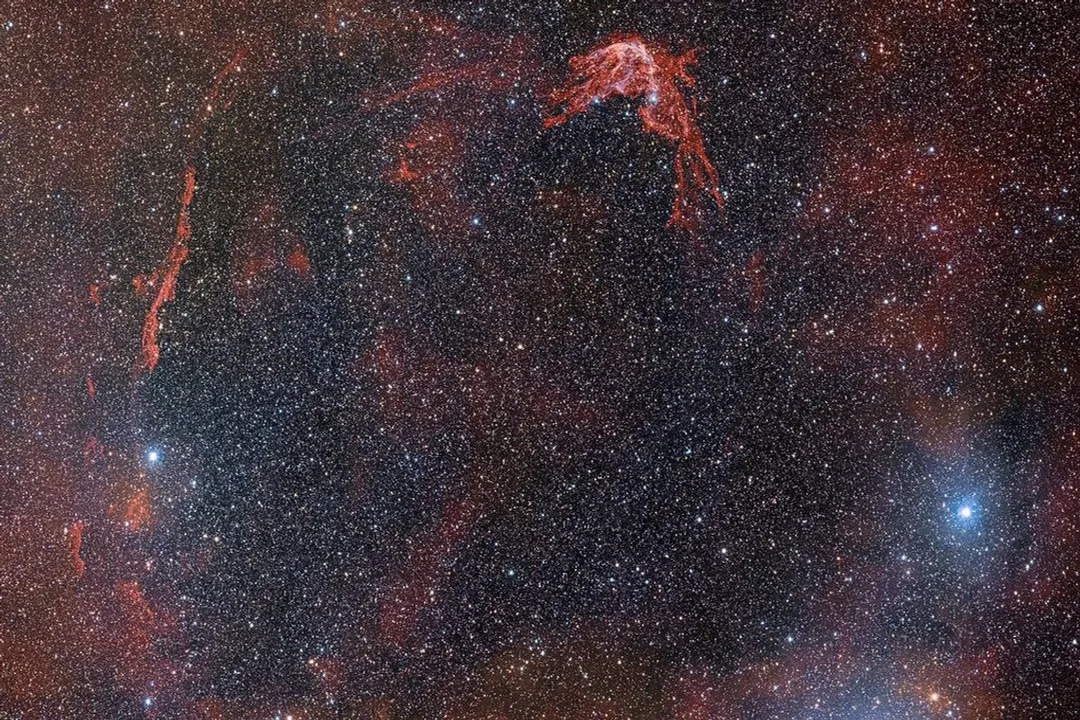
While the AD 185 event is the current record holder for the earliest observed, there are several other supernovae that stand out in historical records because they were exceptionally bright, visible long enough to be studied, or occurred in relatively recent history when observational methods were rapidly improving. [2] Astronomers have identified at least seven supernovae throughout human history that were bright enough to be seen easily with the unaided eye, meaning they were witnessed by ordinary people, not just professional or dedicated amateur observers. [2]
| Event Year (Approx.) | Location/Designation | Notable Feature | Naked Eye Visibility |
|---|---|---|---|
| AD 185 | Unknown Galaxy | Earliest known documented sighting [4][9] | Extremely Bright (Daytime visible) [4] |
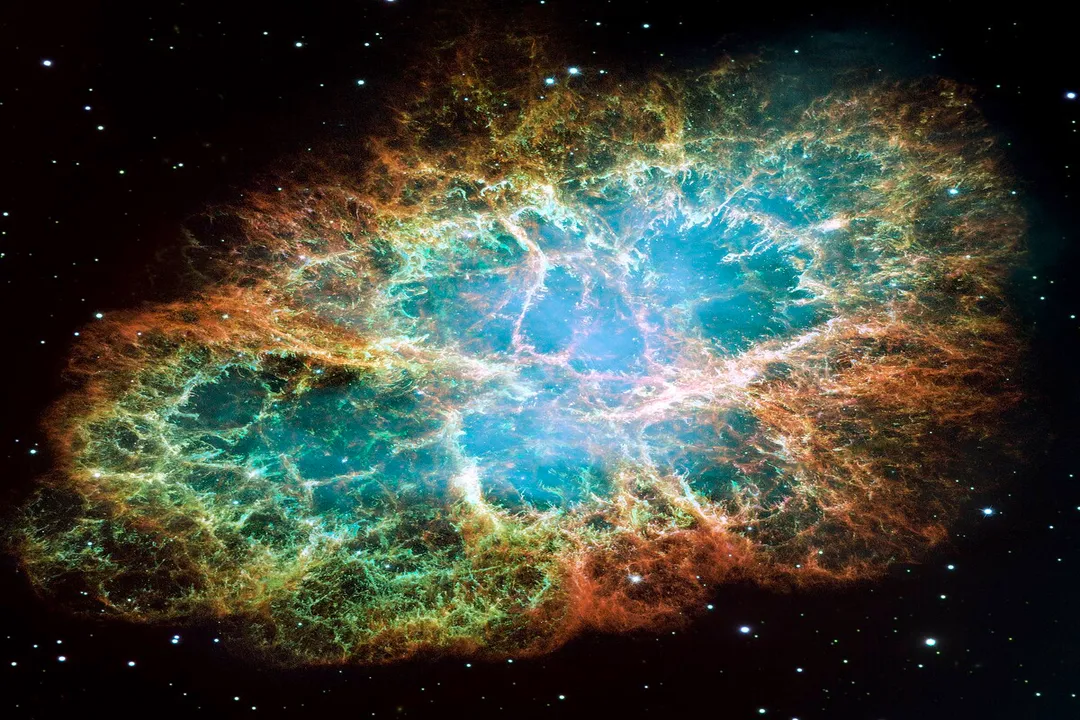
| AD 1054 | Crab Nebula (SN 1054) | Observed by Chinese and Arab astronomers [2] | Very bright, visible for weeks [2] |
| AD 1572 | Tycho's Supernova | Observed by Tycho Brahe, challenging Aristotelian cosmology [1][2] | Bright, visible in daylight for a time [2] |
| AD 1604 | Kepler's Supernova | Last one seen in the Milky Way [2] | Bright, visible in daylight [2] |
The appearance of a supernova like SN 1054, which resulted in the famous Crab Nebula, was meticulously recorded by Chinese and Arab observers. [2] These observations served a crucial purpose beyond mere curiosity; they often indicated a shift in understanding the heavens. For centuries, the celestial sphere was considered perfect and unchanging, a doctrine strongly influenced by Aristotelian philosophy. [1] The sudden appearance of a brilliant new star directly contradicted this long-held belief, providing critical empirical evidence that the heavens did change. [1][5]
The supernova observed by Tycho Brahe in 1572 became particularly significant in the West because his careful measurements proved the object was far beyond the Moon and planets, cementing its status as a genuine stellar event outside the supposedly immutable sphere of the fixed stars. [1][2] This event, along with Kepler's Supernova in 1604, represents a transition point where eyewitness accounts began to merge with early telescopic study. [2]
# Technological Leap
The transition from naked-eye observation to modern detection is stark, highlighted by the very latest discoveries. While the AD 185 event is the earliest documented light we have captured, technology now allows us to find supernovae that occurred much earlier in cosmic time, effectively finding witnesses from the universe's infancy. The JWST’s capabilities mean astronomers are now essentially "witnessing" light from the earliest epochs of star formation. [8][9]
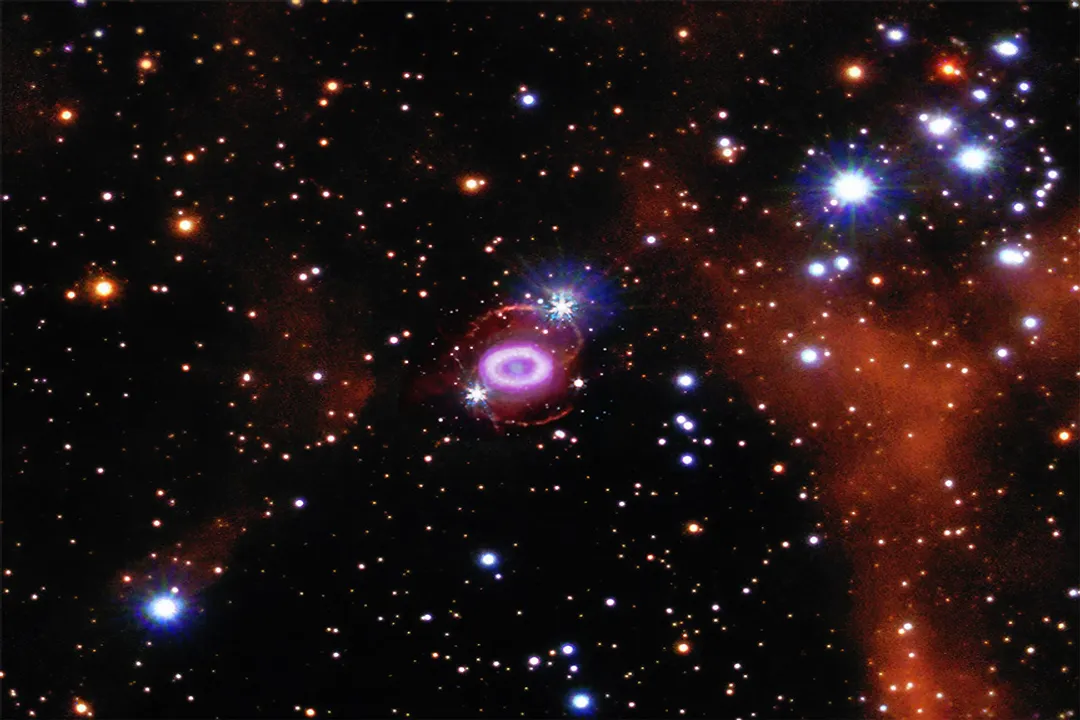
Consider the implications of Supernova 1987A. When this exploded in the Large Magellanic Cloud in 1987, it was a landmark event for modern astronomy because it was close enough (about 168,000 light-years away) for detailed study. [7] However, its light also carried a profound, invisible message: the first direct detection of neutrinos from a core-collapse supernova. [7] While early observers saw the flash of light, modern scientists could detect the nearly massless particles that preceded the light, giving them direct evidence of the physical collapse happening inside the star's core. [7] This shows that the definition of "witnessing" has expanded from just observing electromagnetic radiation to tracking every particle released during the explosion.
If we examine the data purely from a distance perspective, the contrast between the historical record and current technology is staggering. A naked-eye supernova can be seen across a few thousand to tens of thousands of light-years, perhaps occasionally a bit further, but the JWST is now looking at events whose light has traveled for billions of years. [8] A helpful way to visualize this is to think about time dilation in observation: an ancient observer saw an event happen at that moment in space, whereas a JWST observer sees an event that happened when Earth was still a barren, volcanic planet, or even before the Sun formed. [9]
# Understanding Impact
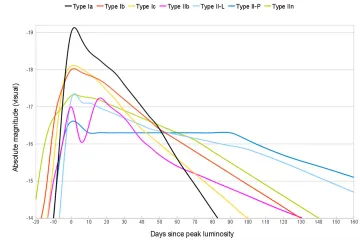
The study of these ancient and modern sightings offers more than just dates and locations; it offers insight into stellar evolution itself. When astronomers review the records of supernovae, they are often cross-referencing them against known progenitor candidates—the remnants left behind. [5] Sometimes, a supernova leaves behind a remnant that appears to be an old, quiet star, leading to theories about "zombie stars" or binary systems where one star strips material from the other before exploding. [5] The ancient witnesses simply saw a new light; modern science seeks the mechanism behind its birth and death.
For anyone interested in following this field, one actionable piece of advice stems from this historical record: pay attention to non-traditional records. Historical surveys of ancient documents, including texts from cultures that might not be frequently referenced in mainstream astrophysics journals, can sometimes unlock new data points for known supernova locations or potentially reveal previously uncataloged events. [3] A careful cross-reference of early folklore and navigational texts might occasionally reveal an observation from a culture whose astronomical records were lost or never centralized. [1]
Ultimately, the identity of the first person to witness a supernova is likely lost to time, buried in the uncountable moments before organized documentation began. We can only point to the earliest recorded witness, the unknown Chinese astronomer who, nearly two millennia ago, saw a new light blaze in the familiar night sky and understood, or at least recorded, that something extraordinary had occurred. [4][9] Their contribution, made with nothing but their eyes, remains the foundation for the complex, particle-detecting observations we conduct today. [7]
Related Questions
#Citations
History of supernova observation - Wikipedia
7 naked-eye supernova throughout human history
This Day In Science History: The Discovery of a Supernova
First Supernova Ever Documented 1800 Years Ago ... - IFLScience
A Short History of the Supernova, From Ancient China to the New ...
The earliest supernova ever observed. - Facebook
February 1987: Discovery of Supernova 1987A
Astronomers discover the earliest supernova ever observed with JWST
New image captures a supernova first observed in the year 185 | CNN