Who thought there were canals on Mars?
The belief that the ruddy face of Mars was scored by vast, artificial networks of waterways captivated scientists and the public alike during the late nineteenth and early twentieth centuries. It was a spectacular idea, suggesting not just life elsewhere in the solar system, but intelligent life engaged in planetary-scale engineering. This fascination didn't spring from a single moment of delusion but from a linguistic misstep amplified by optimistic astronomy and the limits of early telescopic technology.
# Initial Sightings
The story often begins in 1877, the year of a close opposition that brought Mars closer to Earth than it would be for decades. [2] During this period, Italian astronomer Giovanni Schiaparelli, working with his 8-inch refractor telescope at the Brera Observatory in Milan, began charting the planet's surface features. [9][3] Schiaparelli observed dark, linear features crisscrossing the Martian plains. [9] When he cataloged these markings, he used the Italian word canali. [3][9]
This term, canali, translates most accurately to "channels," "grooves," or "furrows"—natural geological features that could be carved by erosion or tectonic activity. [1][3] However, when his observations were reported and translated into English, canali was rendered as "canals". [1][2][3] This subtle linguistic shift carried immense weight. A "channel" suggests a natural depression, perhaps seasonal, but a "canal" implies deliberate construction by an intelligent civilization. [1] This translation error became the foundation upon which an entire era of Martian speculation was built. [3]
# Lowell’s Maps
While Schiaparelli planted the seed, American astronomer Percival Lowell became the fervent champion of the canal hypothesis. [2] Lowell, a wealthy businessman turned astronomer, established the Lowell Observatory in Flagstaff, Arizona, specifically to study Mars. [2][5] He possessed the conviction and the resources to pursue this idea doggedly, often using better instruments than Schiaparelli had available. [2]
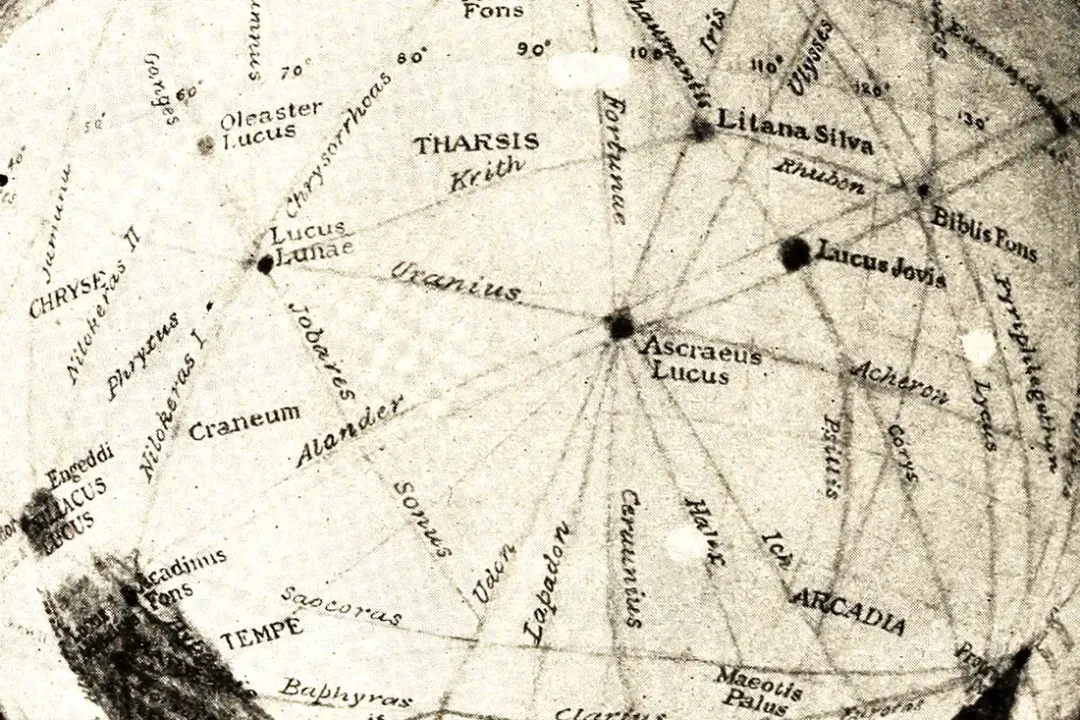
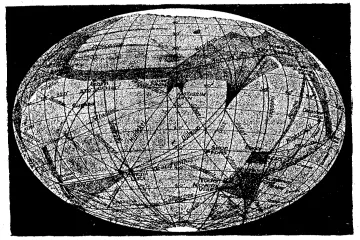
Lowell interpreted the canals as the lifeblood of a dying world. He theorized that the Martians, facing the desiccation of their planet, had engineered these massive conduits to transport water from the melting polar ice caps to the warmer equatorial regions where their civilization resided. [2][5] His observations, beginning in the early 1890s, resulted in intricate, detailed maps showing thousands of interconnected lines, some straight, some curving, forming geometric patterns across the planet. [4][5]
Lowell’s drawings were not mere sketches; they were detailed cartographic representations, often showing apparent seasonal variations in the darkness or prominence of the lines, which he took as evidence of flowing water or vegetation thriving near the water sources. [2] He published several books detailing his findings, most notably Mars and Its Canals (1895) and Mars as the Abode of Life (1906), turning an astronomical anomaly into a popular scientific certainty for many readers. [4]
# Seeing Patterns
The widespread acceptance, or at least the intense debate, surrounding Lowell’s canals points to a deep-seated psychological phenomenon: pareidolia—the human tendency to perceive meaningful patterns, especially faces or familiar shapes, in random or ambiguous stimuli. [1] Mars, when viewed through telescopes of that era, presented a faint, reddish, mottled disc. The features observed were often indistinct and highly dependent on atmospheric conditions. [4]
This reliance on subjective observation meant that what one astronomer sketched as a solid line, another might see as a series of faint smudges or the alignment of natural surface features like craters and valleys. [1] The faintness of the Martian surface detail meant that the observer’s expectations heavily influenced what they recorded. If you go looking for straight, connecting lines across a faint target, your brain is highly motivated to connect the dots into those lines. [1]
Consider a comparison between the maps drawn during this period. While Lowell’s charts were remarkably consistent with each other—a testament to his consistent observational technique—they often disagreed significantly with charts drawn by contemporaries like French astronomer Eugène Antoniadi, who, using large, high-quality telescopes in the early 1900s, saw only vague spots and indistinct markings, which he attributed to atmospheric haze, not construction. [4] The sheer volume of Lowell’s claimed features, numbering in the hundreds or even thousands, contrasts sharply with the much sparser, hazier depictions of his skeptics, highlighting the gap between what the instrument recorded and what the human eye interpreted. [4] It’s fascinating to reflect that the very tools meant to bring the heavens closer became crucibles for projecting human desires onto the void. A dedicated observer might spend hours patiently waiting for the atmosphere to clear, only to "see" the canals solidify in the brief moments of clarity, reinforcing the belief that the structure was real and merely waiting to be perceived correctly.
# Testing Evidence
The era of the canals persisted largely because there was no definitive counter-evidence readily available. However, scientific inquiry naturally moves toward better instrumentation and higher resolution. The development of spectroscopy and, later, space-based imaging slowly chipped away at Lowell’s Martian architecture.
By the 1950s and 1960s, even Earth-based observations, thanks to improvements in optics and filtering techniques, were becoming less convinced of the massive, unified network. [2] The true test came with the age of robotic planetary exploration.
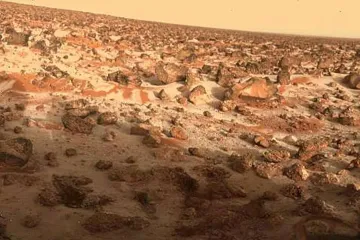
The Mariner 4 flyby in 1965 delivered the first close-up photographs of the Martian surface. These images showed a barren, cratered world, bearing no resemblance to the intricate, irrigated landscape depicted by Lowell. [2] The features seen were natural—craters, plains, and variations in albedo (surface reflectivity)—but conspicuously absent were any signs of planet-spanning irrigation systems. [2] Subsequent missions, including the more comprehensive orbital mapping by Mariner 9 and later landers, confirmed this assessment unequivocally: Mars does not possess artificial canals. [2] The features Lowell mapped were optical illusions, the visual artifacts of looking through the thickest, lowest part of Earth's atmosphere at a distant, dimly lit world. [4]
# Lasting Impact
Although the canals were scientifically debunked, the idea they represented had already secured a permanent place in popular culture. [4] The concept fueled what historians sometimes refer to as Mars Mania. [8] If intelligent Martians were building canals, what else might they be doing? This question was answered, in part, by fiction writers. H.G. Wells’s The War of the Worlds (1898), featuring Martians invading Earth with advanced technology, is perhaps the most famous literary product of this period of intense speculation about Martian inhabitants. [8]
The historical episode of the canals offers more than just a cautionary tale about poor translation or wishful thinking. It demonstrates the powerful role that aspiration plays in scientific observation. For a generation of astronomers and the public, the canals were tangible evidence that humanity was not alone, transforming a cold, dead planet into a place of potential neighbors struggling for survival. [5] This desire for companionship in the cosmos drove generations of scientists to fund, build, and operate increasingly sophisticated telescopes aimed at that very question. Even the mistaken observation was, in a way, a powerful catalyst for advancing observational astronomy. The legacy is not just in the erroneous maps, but in the renewed cultural emphasis on searching the skies, which continues today with missions dedicated to finding evidence of past or present microbial life. [1] The failure to find canals ultimately paved the way for the more rigorous searches for water ice and past habitability that define modern Martian science.
Related Questions
#Citations
Seeing and Interpreting Martian Oceans and Canals
Tracing the Canals of Mars: An Astronomer's Obsession - Space
Mars and Schiaparelli's "canals" - Educational Evidence
A Martian Sensation: Maps, delusion, and the Mars Canals
That Marvelous Legend: The Canals of Mars – Gould Library
Alien Aqueducts: The Maps of Martian Canals
Life on Mars: A Brief History of the Martian Canals
In 'The Martians,' author David Baron explores Mars mania ... - WYPR
Is there life on Mars? Guardian letters, September 1882