What were Percival Lowell's observations on Mars?
Percival Lowell, born in 1855, was a wealthy Bostonian whose later life became inextricably linked with the rusty hue of the fourth planet from the Sun. [1][5] Before he turned his considerable resources toward the skies, Lowell had an international career in diplomacy and business, even founding the Boston and Lowell Railroad. [1][5] It was in 1894, after a period of illness and reflection, that he dedicated himself entirely to astronomy, specifically to the pursuit of life beyond Earth. [1][2] His vision was grand, and it required a dedicated scientific station far from the smog of eastern cities. [2]
# Arizona Base
Lowell established the Lowell Observatory in Flagstaff, Arizona, specifically for observing Mars. [2][5] He chose the high-altitude, dry location to gain the clearest possible views of the planet. [2] He financed the observatory himself, installing a state-of-the-art, 24-inch refractor telescope—a significant instrument for its time—in 1896. [2][5] Lowell’s work was driven by a personal conviction that life, possibly intelligent life, existed on Mars, a concept that resonated deeply with the public imagination at the turn of the 20th century. [3]
# Schiaparelli's Channels
The foundation for Lowell’s intense focus on Martian infrastructure was laid by the Italian astronomer Giovanni Schiaparelli. [2][4] In 1877, using a much smaller telescope, Schiaparelli observed dark markings on Mars and noted what he called canali, which translates from Italian as "channels" or "grooves". [2][4][7] While Schiaparelli likely intended to describe natural surface features, Lowell and others interpreted the term differently. [2][4] This distinction between a natural groove and an artificial, water-bearing channel became the central, defining feature of Lowell’s subsequent astronomical career. [7]
# Observed Lines
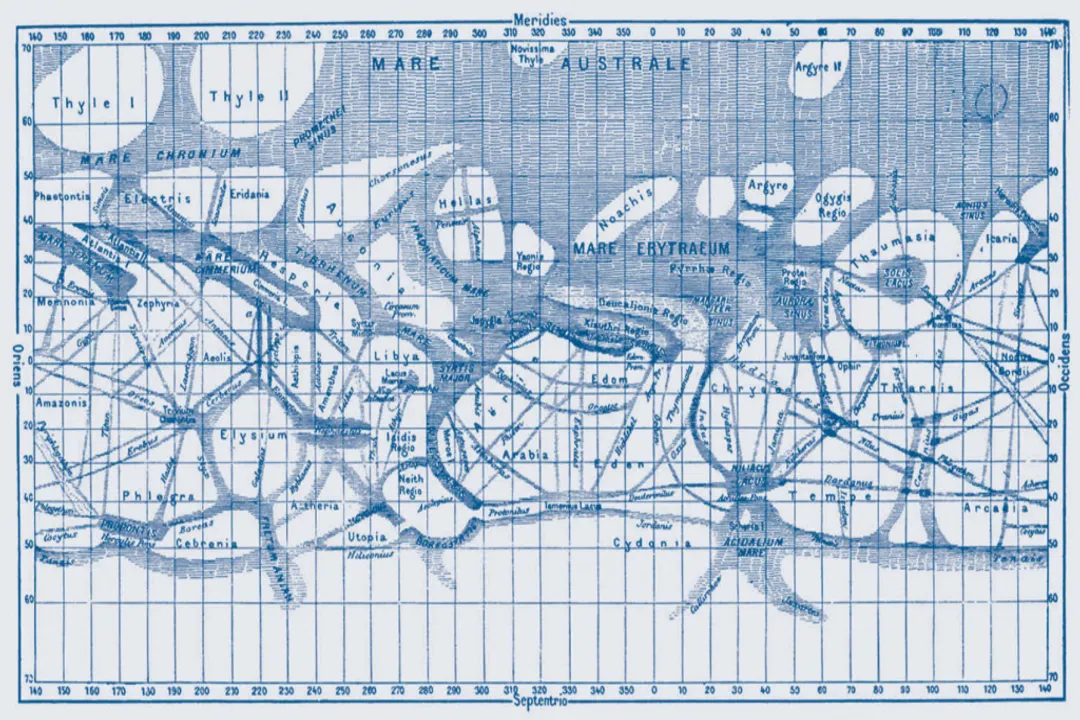
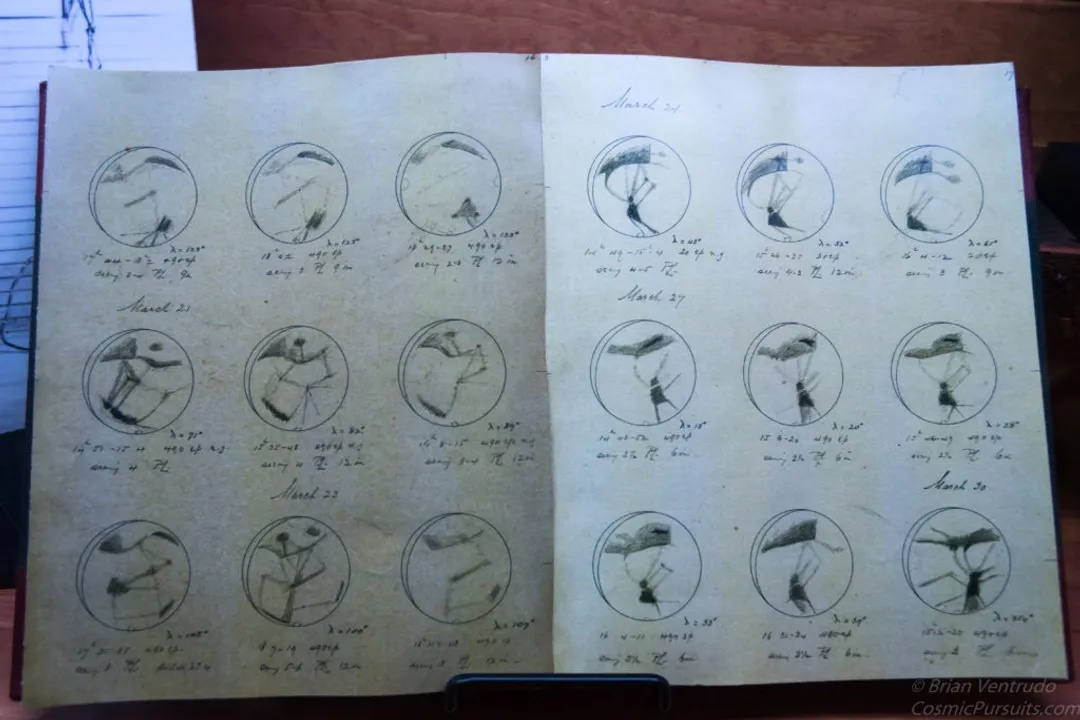
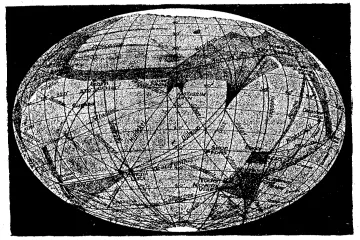
When Lowell began his systematic observations in 1894, he focused on recording these supposed features. [2] He claimed to see a network of linear markings covering the Martian surface. [2] He reported that these features appeared to darken and change over time, suggesting they were dynamic features, perhaps seasonally refilling with water. [2] He meticulously charted thousands of these lines. [2] A fascinating aspect of his reports was the observation that these lines often appeared to connect various dark patches, forming intricate, non-random patterns across the planet's face. [8]
When an observer looks at a faint, complex pattern under difficult viewing conditions, the human brain often attempts to impose order onto the chaos—a phenomenon known as pareidolia. [7] Lowell’s trained eye, combined with the limitations of early telescopic optics and the sheer difficulty of observing Mars, led him to perceive these distinct, interconnected networks. [7] He interpreted the darkening of these lines as evidence of water being transported across the planet. [4]
# Civilization Theory
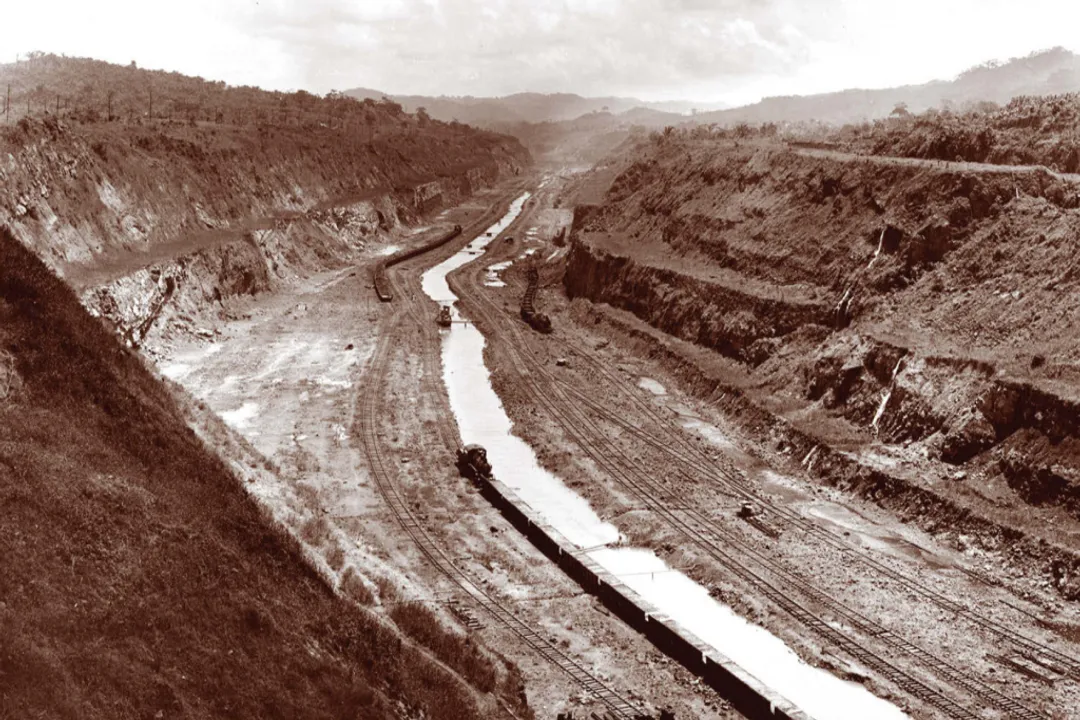
Lowell’s interpretation of the linear features was radical: he concluded they were not natural but artificial structures built by an intelligent, albeit ancient, civilization. [2][4] He reasoned that as Mars aged, its atmosphere thinned and its water supply diminished, forcing its inhabitants to become ingenious engineers. [2][3] Their desperate solution, according to Lowell, was to construct vast, interconnected canals to move the remaining water from the shrinking polar ice caps to the warmer equatorial regions where life could still persist. [2][4]
This theory provided a compelling narrative for the public. Imagine a dying world, not barren, but home to a civilization fighting a losing battle against cosmic entropy, creating planet-spanning engineering works in the process. [3] The scale of this claimed engineering endeavor is staggering to consider. If the reports of long, straight lines stretching across the Martian face were true, the total length of this water-moving network would dwarf any civil engineering project ever attempted on Earth, spanning thousands of miles across continents of an alien world. [2] Given that Mars has a surface gravity about 38% of Earth's and a very thin atmosphere, building such a system would require technological capabilities far surpassing those available on Earth even in Lowell’s time, let alone by a civilization presumably in decline. [1] Lowell saw this not as a sign of superior advancement, but as a desperate, final act of preservation. [3]
# Mapping Mars
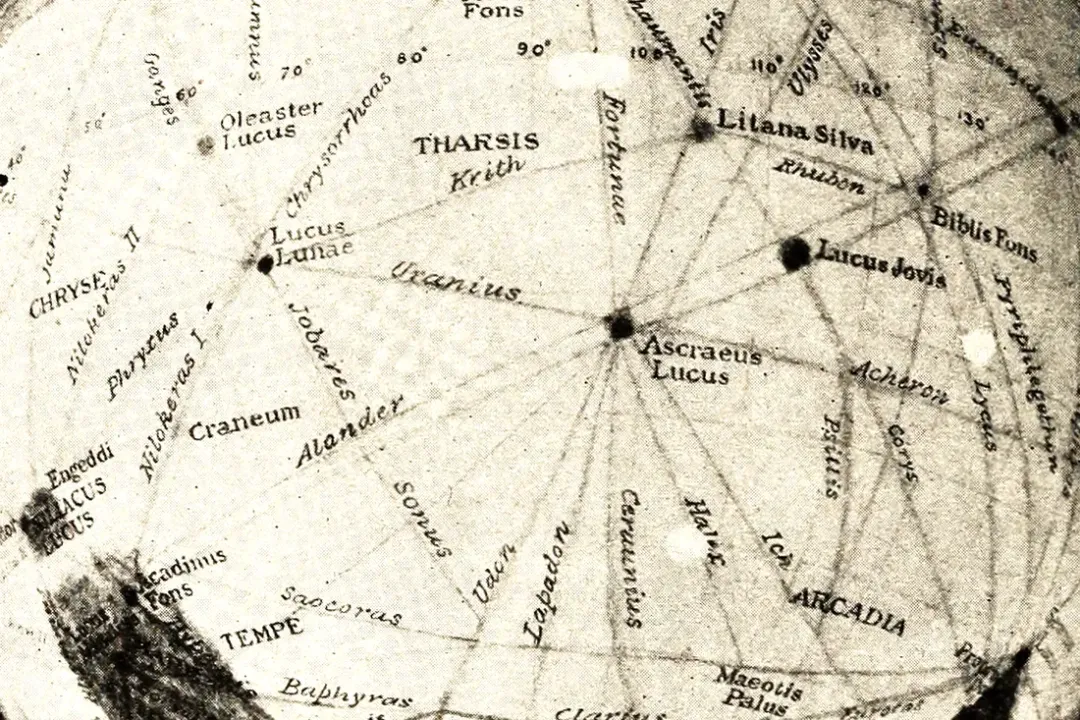
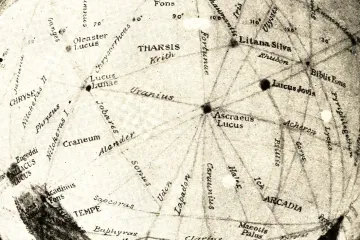
To document his claims, Lowell published a series of influential books and produced numerous maps based on his drawings. [2][6] These publications served to disseminate his view widely, bringing the concept of Martian civilizations into the mainstream. [3] He named many of the canals after famous scientists, scholars, and historical figures, lending an air of academic rigor to his subjective visual evidence. [2][3][6]
| Publication Year | Title | Focus |
|---|---|---|
| 1895 | Mars | Initial report on observations and canals [2] |
| 1906 | Mars and Its Canals | Detailed defense and mapping of the network [2] |
| 1908 | Mars as the Abode of Life | Philosophical argument for extant Martian life [2][3] |
These maps, often reproduced in various forms, became iconic representations of Mars for decades. [6] They were detailed, precise in their relative placements, and reflected the immense effort Lowell put into recording what he saw. [2]
# Skepticism Grows
While Lowell’s work captured the public’s imagination and generated immense interest in planetary science, the scientific community was increasingly divided. [2][4] Many contemporary astronomers using equipment comparable to or better than Lowell’s—such as Edward C. Pickering at the Harvard College Observatory—simply could not verify the existence of the canals. [4][7] Even at his own observatory, later observers struggled to replicate Lowell's results reliably. [2]
The critical turning point came with advances in instrumentation and observation techniques that reduced the role of human subjectivity. [7] As photographic techniques improved, they failed to capture the distinct, sharp lines Lowell described. [4] Later spectral analysis, which could better determine atmospheric composition, suggested Mars lacked the necessary water vapor to support large, surface-level liquid canals. [4] The prevailing scientific consensus eventually settled on the idea that the canals were indeed optical illusions—artifacts created when the human eye tries to connect faint, irregular surface features into recognizable geometric patterns under magnification. [2][7]
Lowell, however, remained steadfast in his belief until his death in 1916. [2][5] He suggested that perhaps observers needed to be visually sharp enough or simply more willing to accept the evidence before them. [7] This tenacity, while ultimately leading him down an erroneous path regarding the nature of the markings, ensured that Mars remained a prominent topic in astronomical discussion for decades. [2]
# Lasting Impact
Although the canals themselves were found to be phantoms of perception, Percival Lowell’s observations inadvertently served a greater purpose for astronomy. [2] His intense, dedicated campaign essentially put Mars on the astronomical map, stimulating intense observation and public engagement in a way few other planetary studies of the era had managed. [3] He galvanized public interest in astrobiology long before the term was coined, fostering a climate where the search for life on other worlds was considered a serious scientific pursuit rather than mere science fiction fodder. [2] The foundation he laid at the Lowell Observatory continued its work long after his passing, contributing to later Martian studies. [2] His legacy is a fascinating study in how dedication, combined with the inherent limitations of human vision, can shape scientific history, leaving behind a fascinating, albeit false, picture of a civilization reaching out across the void. [3][7]
Related Questions
#Citations
Percival Lowell - Wikipedia
Percival Lowell and the Canals of Mars | Skeptical Inquirer
The Man of Mars – Percival Lowell and the Invention of the Red Planet
Lowell and Canals on Mars - Teach Astronomy
Percival Lowell - Linda Hall Library
Alien Aqueducts: The Maps of Martian Canals
Canals on Mars? - Magdalen College
The Planet Mars: A History of Observation and Discovery. Chapter 7
Percival Lowell's Observations of Mars and its Polar Snows