What did Giovanni Schiaparelli observe on Mars?
The Martian opposition of 1877 was a moment of intense focus for astronomers worldwide, bringing the red planet closer to Earth than it had been in nearly two centuries. [1][4] Amidst this rare alignment, the Italian astronomer Giovanni Virginio Schiaparelli made observations that would permanently color humanity’s view of Mars for generations to come. [2] His precise and methodical mapping of surface features laid the groundwork for both serious astrobiology and sensational public myth-making. [6]
# The Observer
Giovanni Virginio Schiaparelli was an established figure in astronomy, recognized for his earlier work, but his reputation became intrinsically linked to his meticulous observations of Mars. [2] Working from the Brera Observatory in Milan, Italy, Schiaparelli brought the best available technology to bear on the problem of Martian geography. [1][4]
He primarily relied on a 38-centimeter refractor telescope, [1] though he had previously used a 22-centimeter Merz refractor in earlier observations. [4] This instrument, state-of-the-art for high-precision planetary detail at the time, allowed him to distinguish finer markings than many of his contemporaries could manage. [4] It is worth pausing to consider the immense scale involved: any feature visible clearly enough to be consistently mapped across the disk of Mars, even when the planet is at its closest approach, must represent a geological structure spanning hundreds or even thousands of kilometers. The clarity Schiaparelli achieved with optics of that era is a testament to both his skill and the instrument’s quality. [1]
# Mapping Features
Schiaparelli was not the first to see dark areas on Mars, which had long been categorized broadly as maria (seas) and continenti (continents). [1][3] He built upon this foundation, but his critical contribution was discerning a new class of structure crisscrossing these established regions. [1]
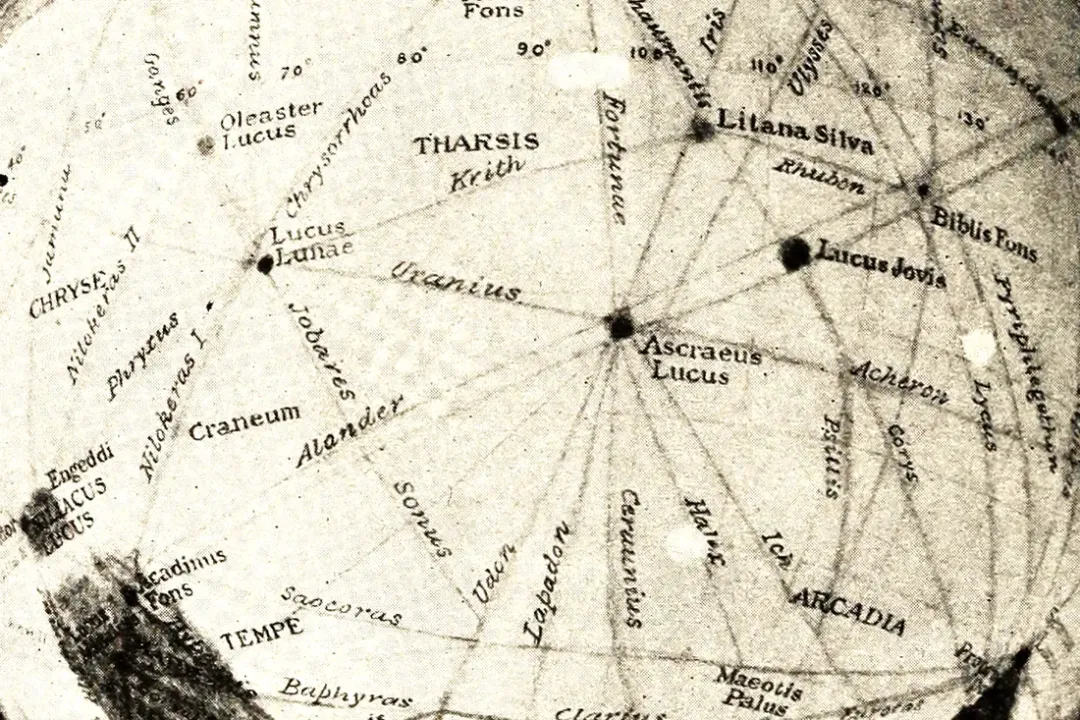
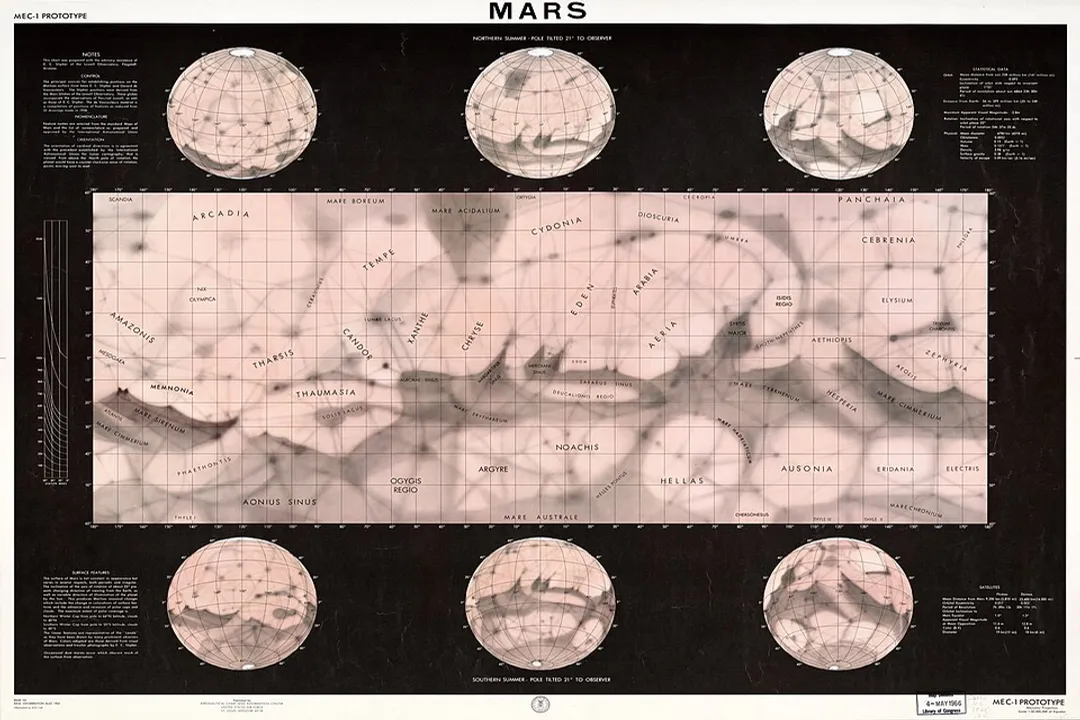
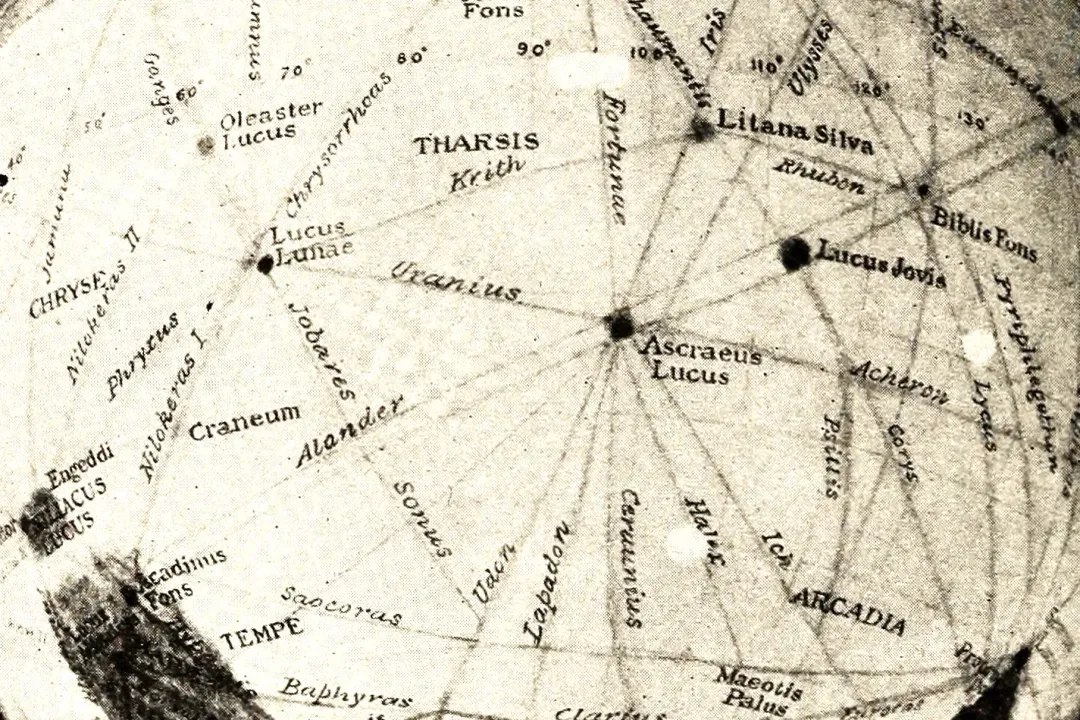
During that key 1877 opposition, Schiaparelli systematically charted the Martian surface. [3] He noted the dark, linear markings that appeared to connect previously identified surface features. [1][4] He meticulously recorded these features, which formed an extensive, almost geometric network spanning the planet’s surface. [1] This level of detail was unprecedented in contemporary Martian cartography. [6]
# The Term Canali
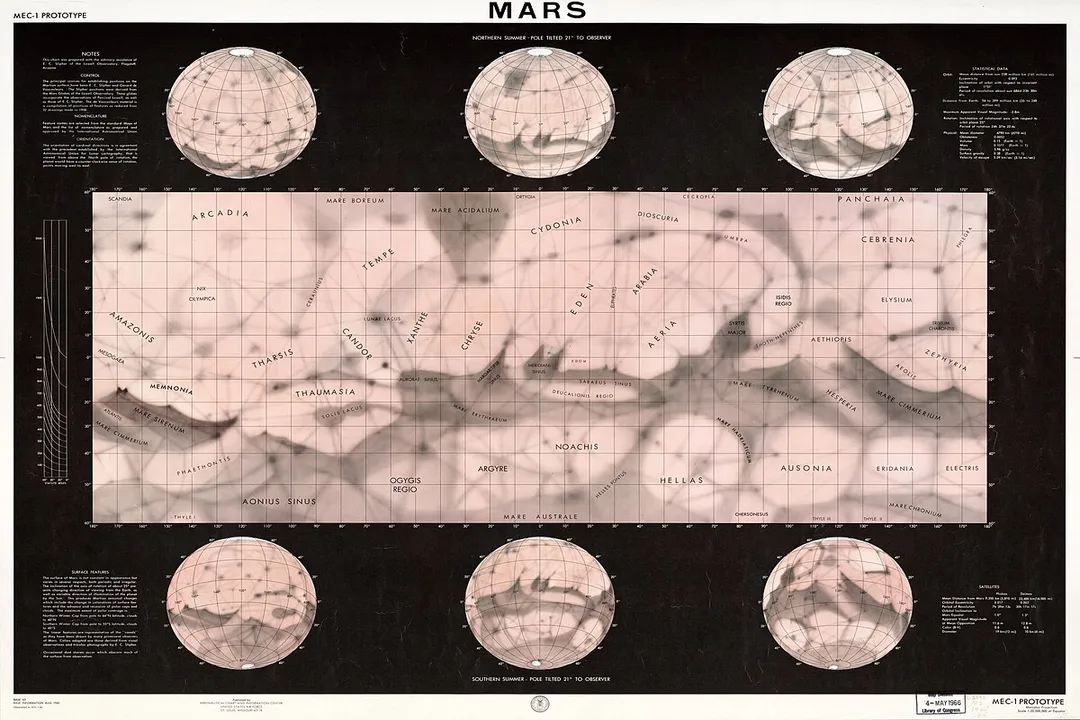
When describing these newly observed linear features, Schiaparelli used the Italian term canali. [2][3] In Italian, canali simply means channels, grooves, or conduits. [1][3] This terminology described a surface feature—perhaps a vast canyon system or an extensive network of dark-floored rift valleys—without inherently implying an artificial origin. [1][4] Schiaparelli’s goal was descriptive cataloging of the planetary geography he observed. [6]
# The Translation Error
The immense sensation that followed was not due to the observation itself, but to a single word choice made when his findings were disseminated to the wider, English-speaking scientific community. [3] The Italian canali was translated into English as canals. [1][4]
This linguistic shift was profound. While a channel can be a natural cut in the earth, a canal carries the distinct connotation of being artificially constructed, engineered, and maintained. [3] This difference is not merely semantic; it fundamentally altered the public interpretation of the discovery. The idea that intelligent, water-dependent life might have engineered massive irrigation systems across a desert planet instantly captured the public imagination, eclipsing the more sober scientific description of "channels". [5] This translation error acted as a psychological accelerant, transforming an observation of planetary morphology into a worldwide debate about extraterrestrial civilization. [7]
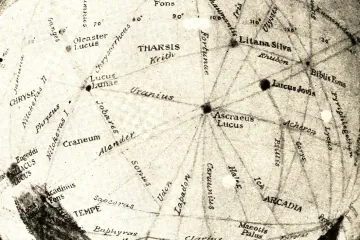
If one looks at the surviving maps from Schiaparelli’s work, the regularity of the lines stands out, which likely contributed to the ambiguity even before the English translation; natural erosion patterns can sometimes mimic geometric regularity, especially when viewed through the atmospheric distortions inherent in telescopic observation. [6] However, the enduring legacy is tied to the assumption of artificiality that the English word imposed upon the observation. [3]
# Systematic Cataloging
Schiaparelli’s work was characterized by its systematic nature, which distinguishes his efforts from more casual sightings. [6] He wasn't just noting a few random lines; he was creating a comprehensive atlas of what he perceived to be the planet’s major surface markings. [1] This effort established a baseline for future planetary observers, providing a shared vocabulary and set of features to verify or dispute. [4] The resulting maps, which documented the continenti and the complex web of canali connecting them, became the standard reference point, demonstrating an expertise in persistent observation that lent authority to his claims despite the eventual scientific misinterpretation. [2][6]
The very act of systematic charting, regardless of the feature's true nature, represented an advancement in planetary science. It moved the study of Mars away from general sketches toward rigorous cartography, a necessary step for any field seeking empirical validation. [6] Even though later missions proved that these specific, vast networks of straight lines connecting features do not exist as he saw them, Schiaparelli established the method for high-resolution surface study that others, like the American astronomer Percival Lowell, would later adopt and amplify—albeit with different interpretations. [5]
# Comparing Observations
The initial reaction to Schiaparelli’s 1877 findings was mixed. While some observers confirmed the presence of elongated features, not everyone could replicate the complexity or extent of the network Schiaparelli mapped. [4] This disparity highlights a key aspect of early planetary observation: the influence of the observer’s visual acuity, the quality of the optics, and the inherent limitations of viewing a body through Earth’s atmosphere. The features were likely genuine—giant, dark geological structures or optical effects caused by atmospheric dust or contrast variations—but their interpretation as interconnected "canals" was the primary source of confusion. [7][9]
The historical record shows a clear divergence: Schiaparelli described canali (channels/grooves); the popular science embraced canals (artificial structures). This contrast demonstrates how easily the public appetite for life elsewhere can override the nuance of scientific terminology. What Schiaparelli observed were specific, dark, linear features visible under certain conditions; what the public believed he observed was evidence of an alien civilization. [5] The challenge for succeeding generations of astronomers was differentiating between natural, albeit large, surface markings and the manufactured artifacts implied by the mistranslation. [3][4] The features were real to Schiaparelli’s eye through his telescope, but their implied meaning was dictated by language, not merely light reflected from space.
Related Questions
#Citations
Mars and Schiaparelli's "canals" - Educational Evidence
Giovanni Virginio Schiaparelli | Mars mapping, crater naming, canals
Martian canals - Wikipedia
Is there life on Mars? Guardian letters, September 1882
Life on Mars? The Search for Signs Goes Back Centuries | HISTORY
Alien Aqueducts: The Maps of Martian Canals
a lot of trouble - Stanford Solar Center
Astronomical images. Technologies, practices and aesthetics (1870 ...
In praise of nothing | Astronomy.com