What kind of scientists work for NASA?

The actual work happening at NASA extends far beyond the highly visible roles of astronauts; it requires a vast and specialized community of researchers, analysts, and theoreticians dedicated to understanding the universe and our place within it. [1][3] These scientists are the engine of discovery, asking the fundamental questions that drive missions from the deepest reaches of space back to the oceans beneath Earth’s surface. [5][9]
# Cosmic Careers
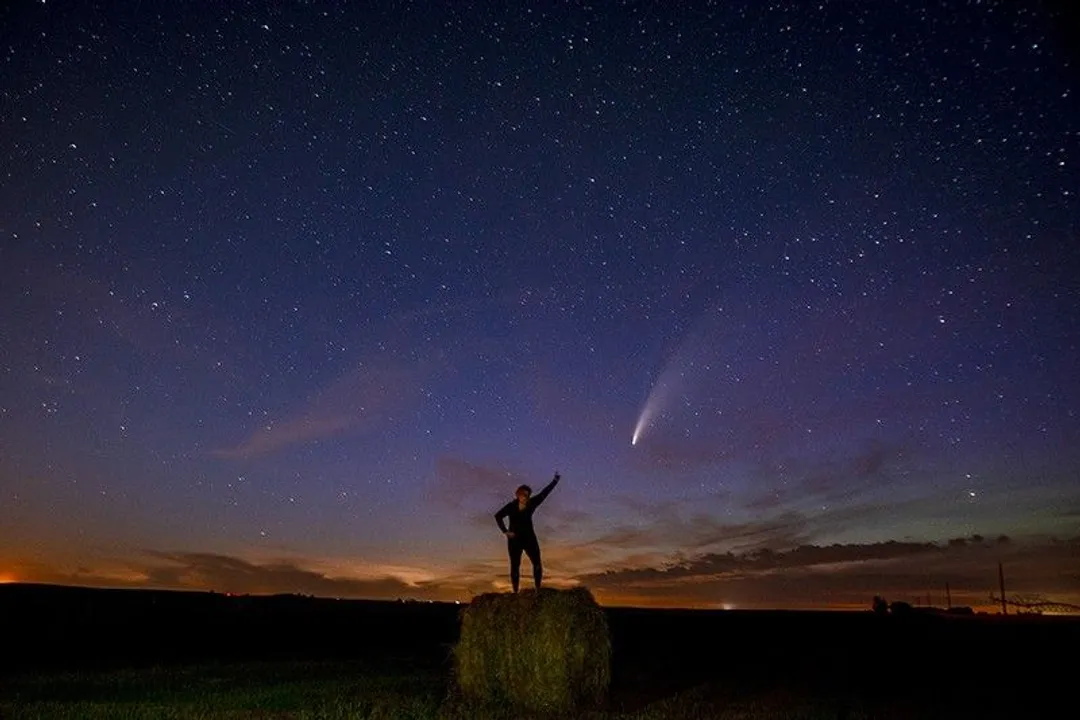
At the forefront are those dedicated to exploring the cosmos. Astrophysicists and astronomers form a substantial part of NASA's scientific workforce, focusing on everything from the mechanics of black holes to the chemical composition of distant nebulae. [5][9] They are the interpreters of light and energy gathered by instruments aboard spacecraft like the Hubble or the James Webb Space Telescope. [5]
Then there are the specialists focused on our immediate neighborhood: the planetary scientists. These researchers study the formation, evolution, and current conditions of other celestial bodies—planets, moons, asteroids, and comets. [5][9] A planetary scientist might be analyzing the mineralogy returned by a Mars rover, modeling the subsurface ocean on Europa, or tracking Near-Earth Objects to assess potential impact risks. [5]
# Planetary Surveyors
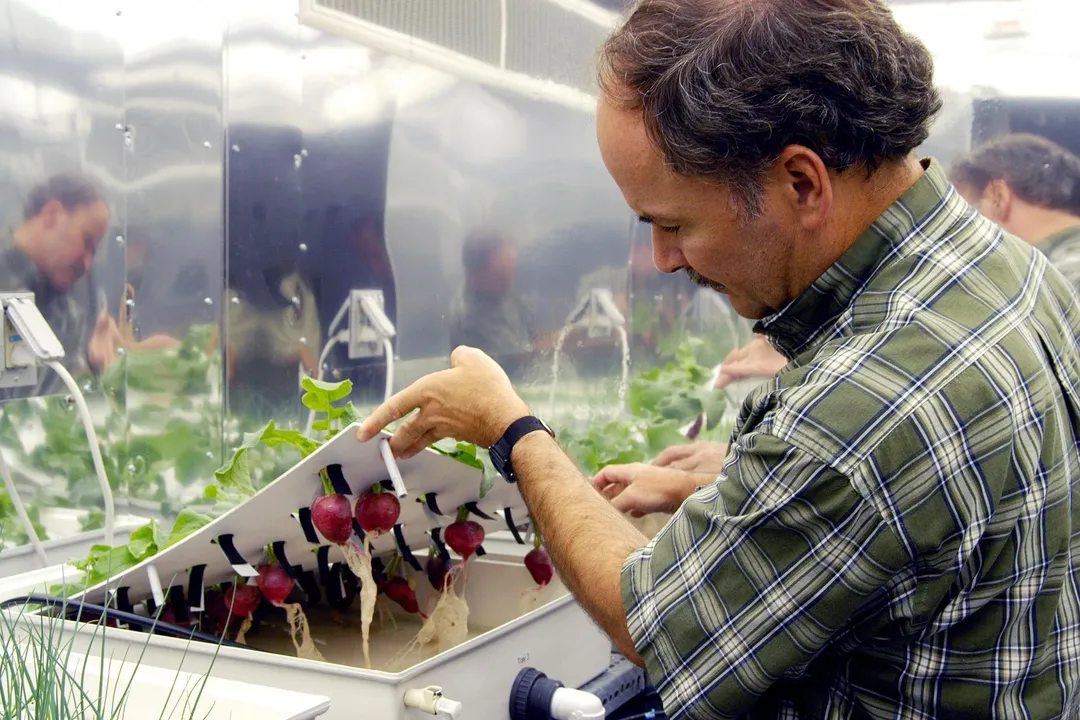
It is a common misconception that all NASA science looks outward; in reality, a huge concentration of scientific effort is aimed directly at our home planet. [5] Earth scientists are crucial to NASA’s mission portfolio, operating instruments on Earth-orbiting satellites that track critical environmental changes. [5][9]
This field is highly segmented. You find atmospheric scientists modeling climate trends and atmospheric chemistry, oceanographers monitoring sea levels and currents, and geologists mapping changes in the Earth’s crust and surface features. [5] These specialists provide the raw data and analysis needed to understand global systems, making their contributions just as vital to long-term human security as any deep-space exploration. [5] It is important to realize that for many scientists at centers like Goddard or JPL, their daily "view" of space is a map of global temperature anomalies or forest cover, not the rings of Saturn. [5]

# Interdisciplinary Specialties
The modern scientific endeavor at NASA rarely fits into a single neat box, leading to many interdisciplinary roles. Scientists often need proficiency in fields that border on engineering or advanced computation. [5] For instance, a physicist designing a new instrument for the Europa Clipper mission must also possess deep expertise in cryogenic engineering and radiation hardening. [1][5]
Furthermore, the sheer volume of data produced by modern sensors necessitates a specialized class of scientists focused on data management and modeling. [5] A modern NASA scientist spends a surprisingly large fraction of their time validating, cleaning, and making accessible the vast archives of data already collected. [5] For example, a single instrument on a modern planetary orbiter can generate terabytes of data annually, meaning expertise in data management and visualization often becomes as critical as the underlying physics knowledge. [5]
# Required Competencies
The academic pathways leading to a scientific career at the agency are demanding, though varied. [7][8] A strong foundation in the physical sciences, mathematics, or engineering is almost always the starting point. [7][8] While many senior research positions are held by individuals with a doctorate (Ph.D.) in their field, the agency employs scientists at many levels, including those with Master's degrees or significant professional experience in lieu of terminal degrees. [1][3]
Beyond the core degree, specific technical proficiencies have become non-negotiable. Skills in advanced programming, statistical analysis, machine learning algorithms, and managing petabyte-scale datasets are now foundational, even for traditional astronomers or geologists. [6] It is not just about having the knowledge; it is about applying that knowledge to solve agency-specific problems. [7]
It's interesting to note that the required soft skills in many science positions often shift based on the project phase. For initial mission concept studies, deep domain knowledge and persuasive presentation skills are key, whereas during active data downlink periods, technical troubleshooting and rapid data interpretation skills take precedence over purely theoretical modeling. [1][2] This means a single scientist might need to adopt several different professional personas throughout a single multi-year mission cycle.
# Entry Paths
Securing a role is competitive, as expected for a premier scientific institution. [3] Many scientists at NASA fall into one of three categories: federal civil servants, university researchers funded through grants, or employees of private contractors who support NASA projects. [3]
For aspiring researchers hoping to transition into a direct NASA center position, the standard route involves completing post-doctoral research appointments following a Ph.D.. [8] These postdocs provide the essential opportunity to publish high-impact work and demonstrate an ability to manage independent research projects, which is a key requirement for agency assessment. [8] It is not always a straight line from university graduation to a permanent desk at a NASA center; often, the path involves moving between academic, industry, and temporary research roles before landing a permanent appointment. [2]
For those who might not have followed the traditional Ph.D. track immediately after undergraduate studies, alternative entry points exist, often through specialized technical roles or contracting positions where expertise in instrumentation or data science is prioritized. [8] The overall goal, regardless of the entry point, remains the same: contributing rigorous, peer-reviewed science that directly informs future exploration and discovery. [1]
Related Questions
#Citations
Careers in Science & Research - NASA
Advice for Becoming a Scientist or Engineer at NASA : r/space - Reddit
What types of NASA jobs are there? - Cool Cosmos
What skills do I need to have to work for NASA? - Quora
NASA Jobs: What They Are and How to Get One - Coursera
[PDF] The NASA Mission - www mercadolaboral pr gov
People of NASA Science