What is the main cause of an aurora?
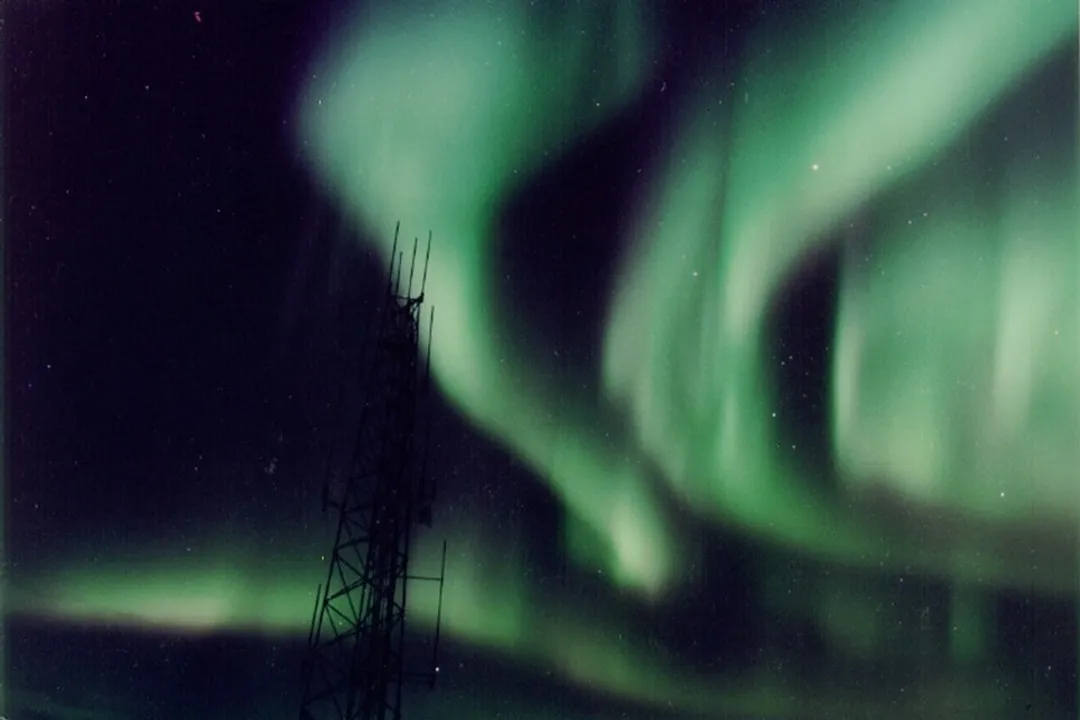
The stunning light displays seen near the Earth's poles originate far away in the Sun. The fundamental reason for the aurora—the Northern and Southern Lights—is the interaction between energetic particles ejected from the Sun and the gases in our upper atmosphere. [1][2][7] This process is not a gentle illumination but a spectacular collision of cosmic forces guided by our planet’s magnetic shield. [6] While the immediate cause of the glow is the collision in the sky, the ultimate driver is solar activity, making the Sun the main source of the entire phenomenon. [8]
# Solar Particles
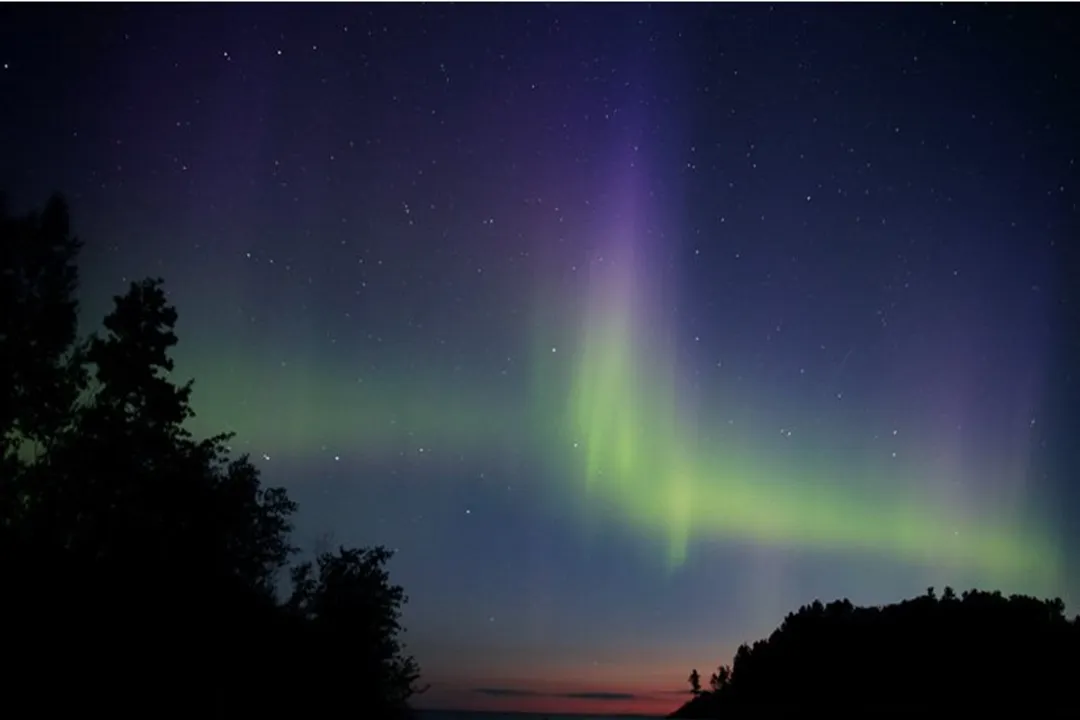
The Sun constantly releases a stream of charged particles, primarily electrons and protons, known as the solar wind. [2][6] This wind travels outward through the solar system at high speeds, sometimes reaching one million miles per hour. [7] This continuous outflow is normal, but the intensity of auroral displays is dramatically increased by discrete, more violent events originating from the Sun's surface. [1]
When the Sun experiences powerful eruptions, such as solar flares or Coronal Mass Ejections (CMEs), massive bubbles of plasma and magnetic field lines are hurled into space. [1][6] If these CMEs are directed toward Earth, they significantly enhance the influx of charged particles reaching our planet. [6] It is the arrival of these high-energy particles, often accelerated by transient solar events, that creates the most intense and widespread auroral curtains we observe. [1]
# Magnetic Funnel
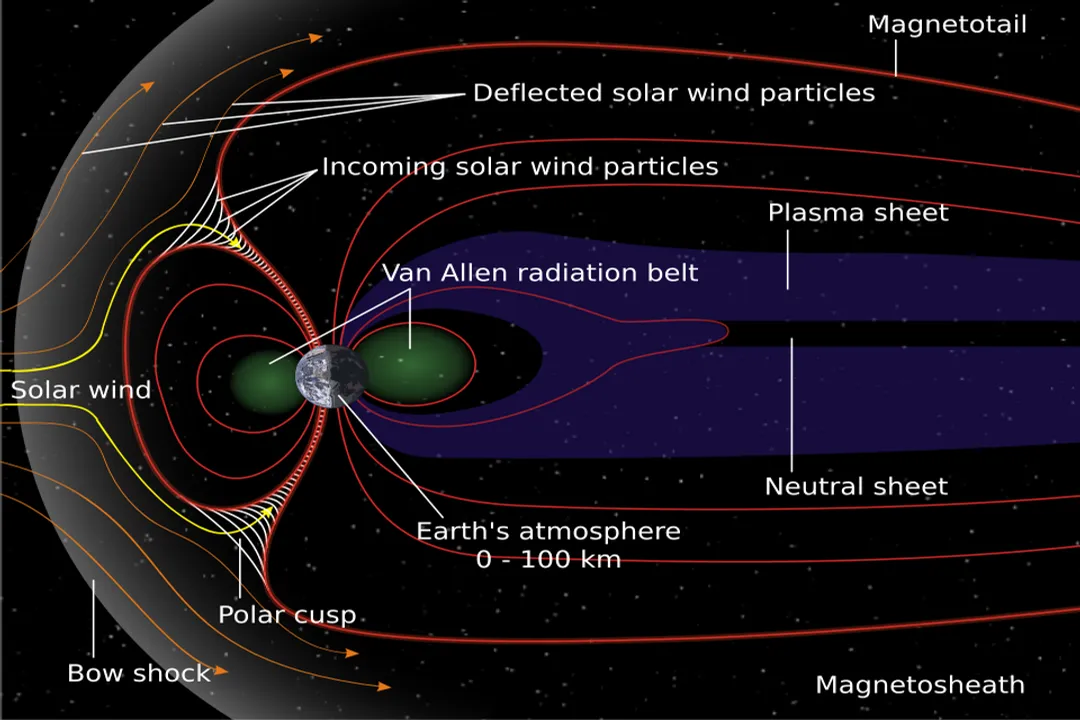
Earth is protected from the worst of the solar wind by its global magnetic field, which creates a protective bubble called the magnetosphere. [6] Most of the charged particles carried by the solar wind are deflected by this magnetic shield, flowing around the planet like water around a rock in a stream. [1][6]
However, the magnetosphere is not perfectly closed. Near the Earth's magnetic poles, the magnetic field lines dip inward toward the surface. [6] These converging lines act like a funnel, capturing some of the solar wind particles and directing them down toward the atmosphere in two specific regions surrounding the geomagnetic poles. [1][6] This channeling effect explains why auroras are concentrated in rings, called the auroral ovals, centered around the North and South magnetic poles. [4][9]
The particles guided down these magnetic field lines are the agents of light. They are accelerated as they enter the magnetosphere, gaining the necessary kinetic energy to cause a visible effect upon impact with atmospheric gases. [7]
# Atmospheric Collision
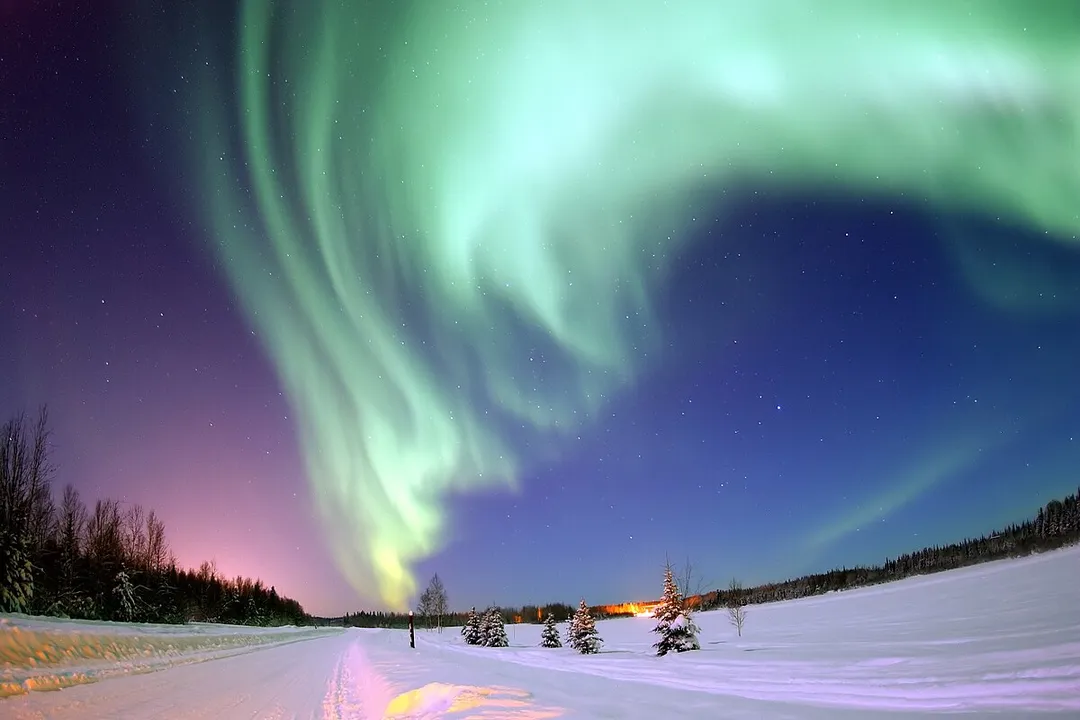
The visible light that constitutes the aurora is generated when these high-speed, charged solar particles collide with atoms and molecules in the Earth's upper atmosphere, primarily oxygen and nitrogen. [2][6][8] This process is fundamentally the same physics that causes a neon sign to glow, though on a vastly larger, natural scale. [9]
When an energetic electron from the Sun strikes an atmospheric gas atom, it transfers energy, temporarily boosting the atom to a higher energy state—it becomes excited. [2][7] This excited state is unstable. To return to its normal, lower energy state, the atom must release that excess energy, which it does by emitting a particle of light, called a photon. [2][7] Billions of these emissions happening simultaneously across a vast volume of the upper atmosphere create the visible light show we call the aurora. [9]
The altitude of the collision dictates how long the particle remains in the atmosphere before being stopped, and crucially, which gas is primarily involved in the excitation, leading directly to the variation in color. [6] The altitude range where this process occurs is typically between 60 and 300 miles (about 100 to 500 kilometers) above the Earth's surface. [2][9]
# Light Colors
The specific color displayed by the aurora depends on two main factors: the type of atmospheric gas being struck and the height at which the collision occurs. [2][6] Different gases emit different wavelengths (colors) of light when they relax from an excited state. [7]
| Color | Atmospheric Gas | Typical Altitude Range | Notes |
|---|---|---|---|
| Green | Oxygen | Lower altitudes (approx. 60 to 150 miles) | The most common color seen by the human eye. [2][6] |
| Red | Oxygen | Higher altitudes (above 150 miles) | Requires more energetic particles or less atmospheric interference. [6][7] |
| Blue/Violet | Nitrogen | Lower altitudes, often at the lower edge of the display | Usually observed during very active, intense solar storms. [2][7] |
While green from oxygen is the signature color, the red emissions from oxygen at higher elevations are fascinating from a physics perspective. For an oxygen atom to emit red light, it must remain in its excited state for a relatively long time (about 100 milliseconds) before releasing a photon. [6] If the particle travels too low into the denser atmosphere, it is more likely to collide with another molecule before it can emit the red light, thus losing the energy through heat instead of visible light. [6] This requirement for a "quiet" transition window explains why deep red is often reserved for the very top edges of the brightest displays.
It is worth noting that while we perceive the brightest auroras as shades of green and red, the energy levels required to excite nitrogen molecules often result in light in the blue and violet spectrum. [2] Because our eyes are significantly less sensitive to blue and violet light than to green, these colors require much stronger solar events to become visually apparent, often appearing as faint fringes at the bottom of the main curtain during significant geomagnetic storms. [7]
# Auroral Ovals
The relationship between the incoming solar particles and the Earth’s magnetic field lines results in the phenomenon being concentrated in two primary areas: the Aurora Borealis in the north and the Aurora Australis in the south. [4][5] These regions are not static points but dynamic rings, the auroral ovals. [9]
The shape and latitude of these ovals shift depending on the current state of the magnetosphere, which is directly influenced by the solar wind's speed and density. [9] During periods of low solar activity, the ovals are generally constricted and sit close to the magnetic poles, making them visible only to those at very high latitudes, such as northern Alaska or inland Scandinavia. [9]
When a powerful CME strikes, it compresses the magnetosphere on the sunlit side and causes a significant rearrangement of the magnetic field lines on the night side. This compression pushes the auroral ovals outward toward the equator. [6] When this happens, locations that normally never see the Northern Lights, such as the northern contiguous United States or central Europe, can experience dazzling displays. [9] For example, an observer in the northern Lower 48 states might see the bright green glow, but the more intense red light, which requires higher altitude or greater particle energy, might be completely invisible from that lower latitude due to the relative positioning of the magnetic field lines and the observer's viewing angle. This difference in observable light based on latitude offers an indirect measure of the storm's intensity.
# Dynamics and Movement
The visual spectacle of the aurora—the shimmering, dancing curtains and rays—is a direct representation of the magnetic field lines along which the charged particles are traveling. [6] As the solar wind buffets the magnetosphere, the field lines are constantly being stretched, compressed, and reconnected, which causes the incoming particles to accelerate and change direction rapidly. [6]
This dynamic activity translates into movement in the sky. A display might begin as a static, faint arc, but during a substorm—a period of intense local magnetic activity—the aurora can become highly structured, forming vertical rays or rapidly moving bands. [6] The speed and shape of the light show are therefore an ongoing readout of the magnetic turbulence occurring millions of miles away and high above our heads.
# Summary of Causation
To consolidate the main cause, we must acknowledge the chain of events:
- Source: The Sun ejects energetic charged particles (solar wind, CMEs). [1][7]
- Conductor: Earth's magnetosphere captures and channels these particles toward the magnetic poles. [6]
- Emitter: Collisions between these particles and atmospheric gases (Oxygen and Nitrogen) excite the gases. [2][8]
- Result: The excited gases release photons, creating the visible light we observe as the aurora. [2][7]
The main cause is thus the influx of solar particles, but the beautiful light itself is manufactured locally in our upper atmosphere through magnetic guidance and atomic excitation. [6] A useful analogy, often used by atmospheric scientists, compares the magnetosphere to a giant, flexible electrical circuit where the incoming solar plasma acts as the power source that drives the final illumination at the Earth's magnetic "terminals" near the poles. [9] Without that initial energy input from the Sun, even the perfect magnetic field lines would have nothing to guide, and the sky would remain dark.
#Videos
What causes the Northern Lights?
Related Questions
#Citations
How Auroras Form
What causes the Northern Lights? Aurora borealis explained
Auroras are lights that appear at Earth's northern and ...
Aurora
What causes the Northern Lights?
Cause of the Aurora
Aurora Tutorial | NOAA / NWS Space Weather Prediction Center
The Science Behind Auroras - How the Northern Lights Are ...
What are the Northern Lights (Aurora Borealis)?