What is the importance of the ecliptic?
When you gaze up at the night sky, it often feels chaotic, a scattered collection of stars and planets. However, there is an invisible, ordered structure underlying this apparent randomness. The ecliptic is the primary reference line for understanding where the Sun, Moon, and planets move across our sky. [3][6] Think of it not just as a line, but as the master plane upon which our solar system is organized. [8]
# Celestial Path
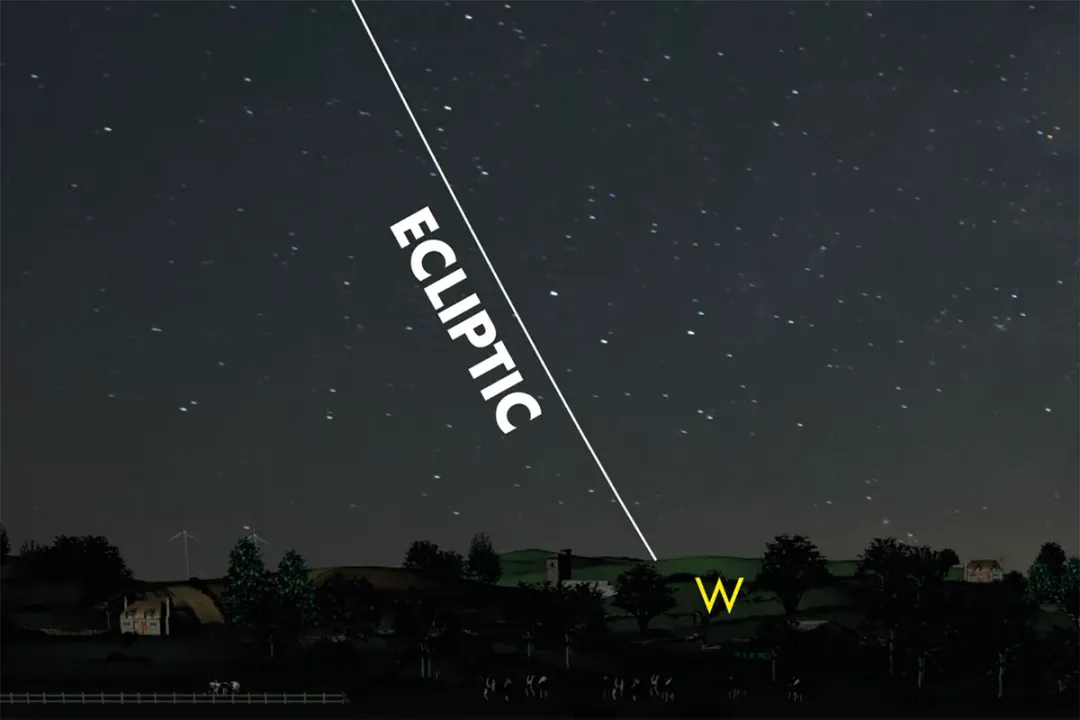
The ecliptic is defined as the apparent path that the Sun traces against the background stars over the course of a year. [3][5] To an observer on Earth, it appears as though the Sun is moving through the constellations. Of course, this is an illusion created by our own movement. [1] Because Earth orbits the Sun, our perspective shifts, making the Sun appear to migrate along a specific track across the celestial sphere. [6][8]
This line is not arbitrary. It represents the projection of Earth’s orbit around the Sun onto the celestial sphere. [3][8] If you were standing on the Sun, looking out at the Earth, you would see our planet following this exact path as it circles you. From our vantage point on the surface, however, we use this imaginary circle to map the locations of other celestial bodies. [6]
# Orbital Mechanics
The structure of our solar system is surprisingly flat. When the solar system formed billions of years ago, gas and dust settled into a rotating disk. [2][7] The planets formed within this disk, which is why their orbits are largely aligned. [8] The ecliptic plane is essentially the reference plane for this flat disk. [9]
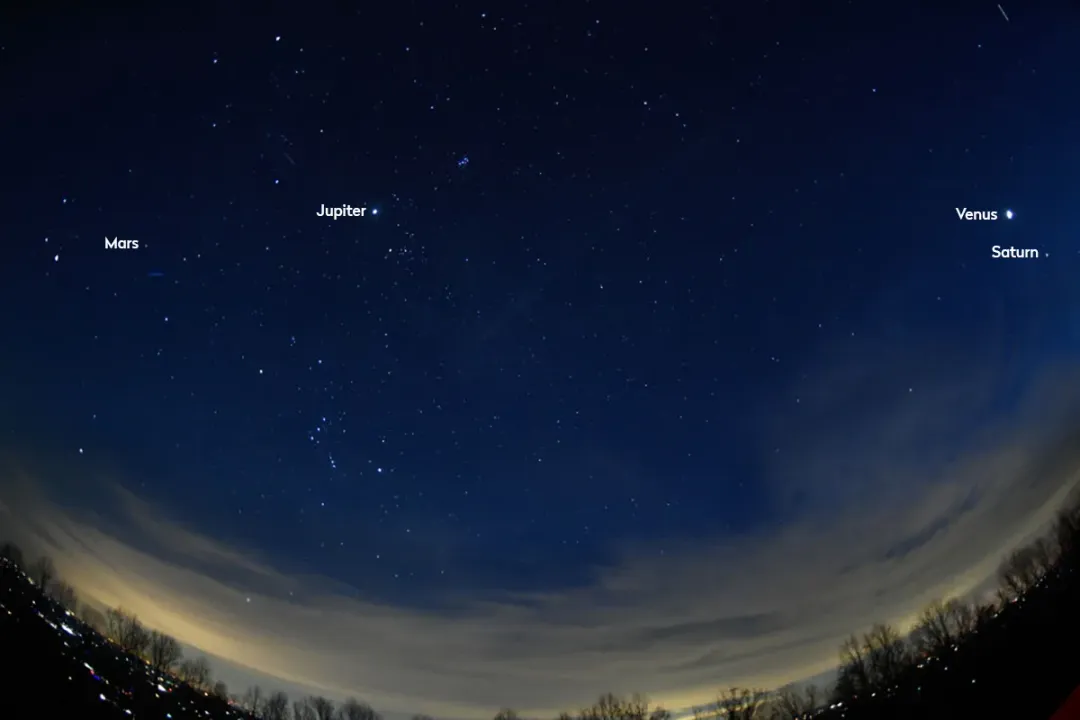
Because the planets, including Earth, orbit within this thin, disc-like structure, they always appear near the ecliptic in our sky. [5][8] If you are looking for Mars, Jupiter, or Saturn, you generally do not need to look near the celestial poles. Instead, you can scan along the ecliptic. This helps astronomers and hobbyists narrow down their search areas significantly. [3]
# Seasonal Tilt
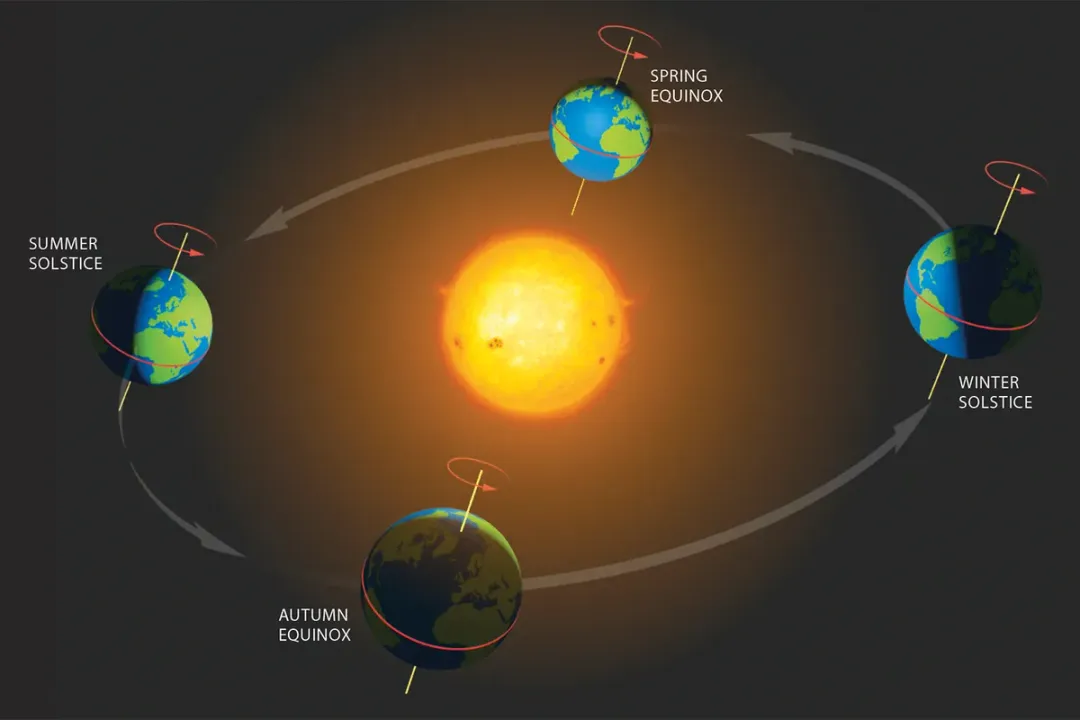
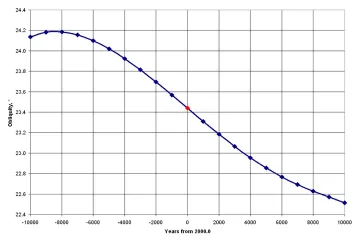
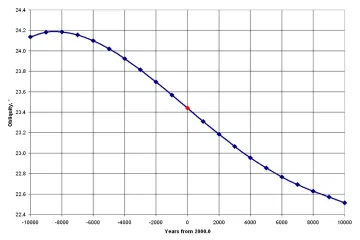
A major reason why the ecliptic matters involves our seasons. Earth’s axis is tilted by approximately 23.5 degrees relative to its orbital plane. [6][8] Because of this, the ecliptic is also tilted by 23.5 degrees relative to the celestial equator—the imaginary line directly above Earth's equator. [3][5]
This intersection between the ecliptic and the celestial equator creates the equinoxes. At the vernal and autumnal equinoxes, the Sun crosses the celestial equator, leading to days and nights of roughly equal length. [6]
| Feature | Ecliptic | Celestial Equator |
|---|---|---|
| Origin | Earth's orbit around the Sun | Projection of Earth's equator |
| Reference | Solar system orbital plane | Earth's rotational plane |
| Tilt | 23.5° relative to equator | 0° (reference) |
| Intersection | Equinoxes | Equinoxes |
This difference is the fundamental engine behind our changing seasons. As Earth moves along the ecliptic, the Northern and Southern Hemispheres alternately tilt toward and away from the Sun, changing the angle of incoming sunlight and the length of the day. [1][6]
# Zodiac Bands
The ecliptic is famously associated with the zodiac, a band of twelve constellations. [5] As the Sun moves along the ecliptic throughout the year, it passes through these specific star groups. [3] Historically, this was essential for timekeeping. Early civilizations monitored the Sun's position against these constellations to track the changing seasons, which was necessary for agriculture and survival. [1]
While modern astronomy has moved toward more precise coordinate systems, the zodiac remains a convenient way to divide the sky into manageable segments. It provides a quick reference for where the Sun will be at any given time of the year. [5]
# Observing Tips
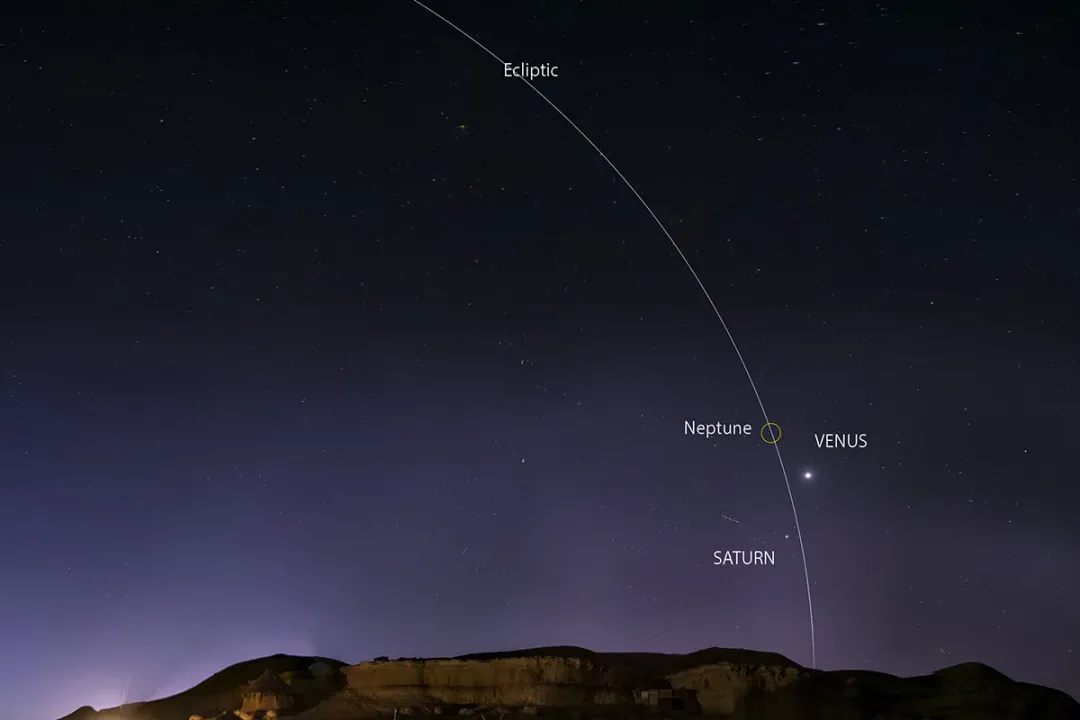
Identifying the ecliptic without specialized equipment is possible if you know what to look for. One of the best ways to visualize it is to track the Moon and the planets. [8] Since the Moon orbits Earth in a plane slightly inclined to the ecliptic, it spends its time oscillating just above or below this path. [3][8]
If you connect the positions of the Moon and the visible planets over several weeks, you will see a clear, curved arc across the sky. This arc is the ecliptic. [3] For those in the Northern Hemisphere, if you face south during the evening, the arc will generally curve toward the southern horizon. [8]
Another practical method involves using the stars themselves. Since the zodiac constellations are fixed, learning a few "anchor" constellations—such as Leo, Scorpius, or Taurus—allows you to trace the ecliptic line mentally across the night sky. [3][5] Once you master this mental map, identifying where to look for planetary conjunctions becomes much easier.
# Coordinate Systems
In professional astronomy, the ecliptic serves as the foundation for the ecliptic coordinate system. [6][9] Just as we use latitude and longitude on Earth to pinpoint a city, astronomers use ecliptic longitude and latitude to pinpoint the position of celestial objects. [9]
This system is particularly useful for solar system studies. Because most asteroids, planets, and comets stay near the ecliptic plane, using this coordinate system keeps the math manageable. [8] Trying to plot the orbit of a planet using the celestial equator, which is tilted, introduces unnecessary complexity. By aligning the coordinate system with the orbital plane, calculations regarding planetary motion become more straightforward. [6]
# Gravitational Influence
It is important to note that the ecliptic is not a perfectly rigid, unchanging line. While the planets generally stay near this plane, they do exert gravitational influences on one another. [2] Over vast timescales, these interactions can cause the Earth’s orbital plane—and thus the ecliptic—to shift slightly. [6]
Furthermore, the Moon's orbit is tilted by about 5 degrees relative to the ecliptic. [3] This is why we do not have a solar eclipse every time the Moon passes between the Earth and the Sun. An eclipse only occurs when the Moon crosses the ecliptic plane at the same time it is at the correct phase. [3][8] Understanding the nodes, or the points where the Moon's orbit intersects the ecliptic, is the only way to predict eclipses accurately. [6]
# Determining Position
If you are trying to locate a specific planet or asteroid, you are essentially trying to find its position relative to the ecliptic. [9] Most stargazing apps and star charts overlay this line to help users orient themselves. If you are ever lost while stargazing, finding the ecliptic is a high-value skill because it acts as the primary "road" for everything interesting in the solar system. [3][8]
Understanding the ecliptic changes how you perceive the night sky. It transforms the view from a static dome of lights into a dynamic, moving system. Every time you spot a bright "star" that does not twinkle, you are looking at a planet, and you are looking near the ecliptic. It is the invisible thread that connects our seasonal experience on Earth to the broader mechanics of our neighborhood in space. [1][4]
#Videos
The Ecliptic: Crash Course Kids #37.2 - YouTube
What is the Ecliptic in Astronomy? Discover Its Celestial Significance
Related Questions
#Citations
Understanding the Ecliptic: The Sun's Yearly Journey Across the Sky
The Ecliptic: Crash Course Kids #37.2 - YouTube
What Is the Ecliptic? - Sky & Telescope Magazine
The Ecliptic: The Invisible Line That Shapes the Sky - Leonardo Frigo
Ecliptic in astronomy - BBC Sky at Night Magazine
Ecliptic | Definition, Facts, Obliquity, & Zodiac - Britannica
The ecliptic is the path of the sun - EarthSky
Ecliptic Definition | GIS Dictionary - Esri Support