What is known as the red giant?
Stars are not permanent fixtures; they exist in a state of delicate balance between the inward pull of gravity and the outward pressure of nuclear fusion. [2][5] When a star like our Sun exhausts the hydrogen fuel in its core, this balance is disrupted, initiating a transformation that leads to a phase known as the red giant. [1][3] This stage represents the twilight years of a star's existence, a dramatic period of expansion and cooling that fundamentally changes the character of the celestial object. [4]
# Stellar Evolution
Every star begins its life on the main sequence, a long, stable period where it generates energy by fusing hydrogen atoms into helium. [3][7] This phase can last billions of years for stars similar to our Sun. [8] However, fuel is finite. Once the hydrogen in the core is depleted, the internal pressure generated by nuclear fusion decreases. [2][6] Gravity, which has been held in check for eons, begins to dominate, causing the core to contract and heat up. [5]
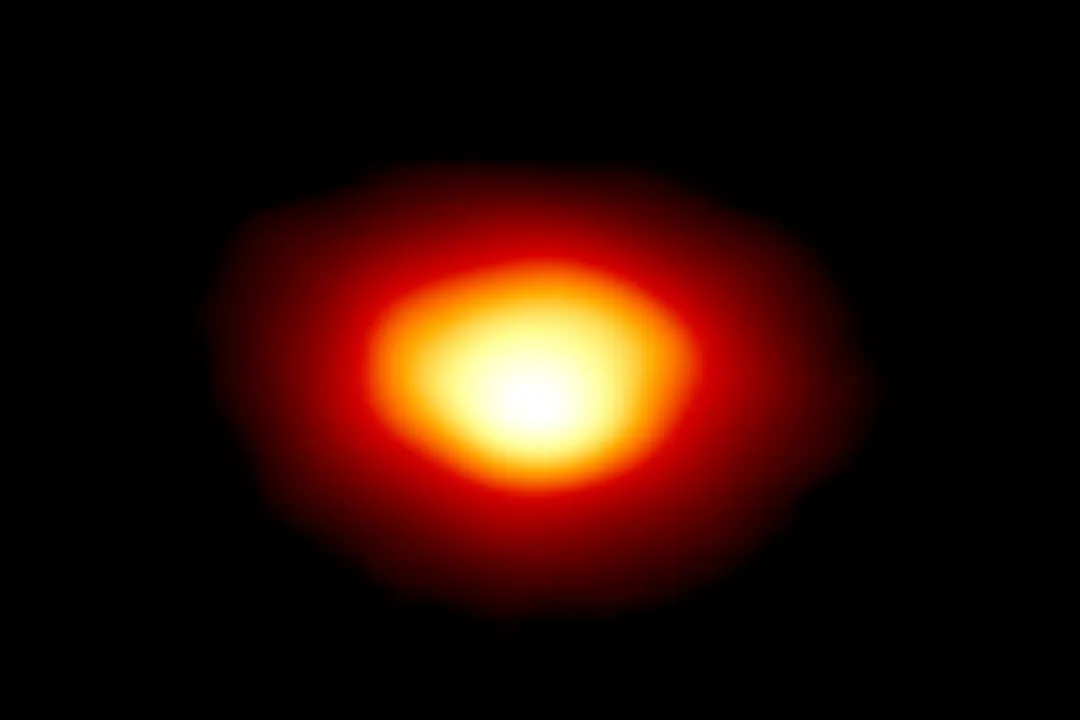
While the core shrinks, the outer layers of the star react in an opposite manner. The intense heat generated by the contracting core pushes outward, causing the star's envelope to swell dramatically. [2][5] As this outer layer expands, the energy from the core is spread over a much larger surface area, leading to a significant drop in surface temperature. [4] This drop in temperature shifts the star's light toward the red end of the visible spectrum, which explains the namesake appearance of red giants. [1][7]
# Visual Characteristics
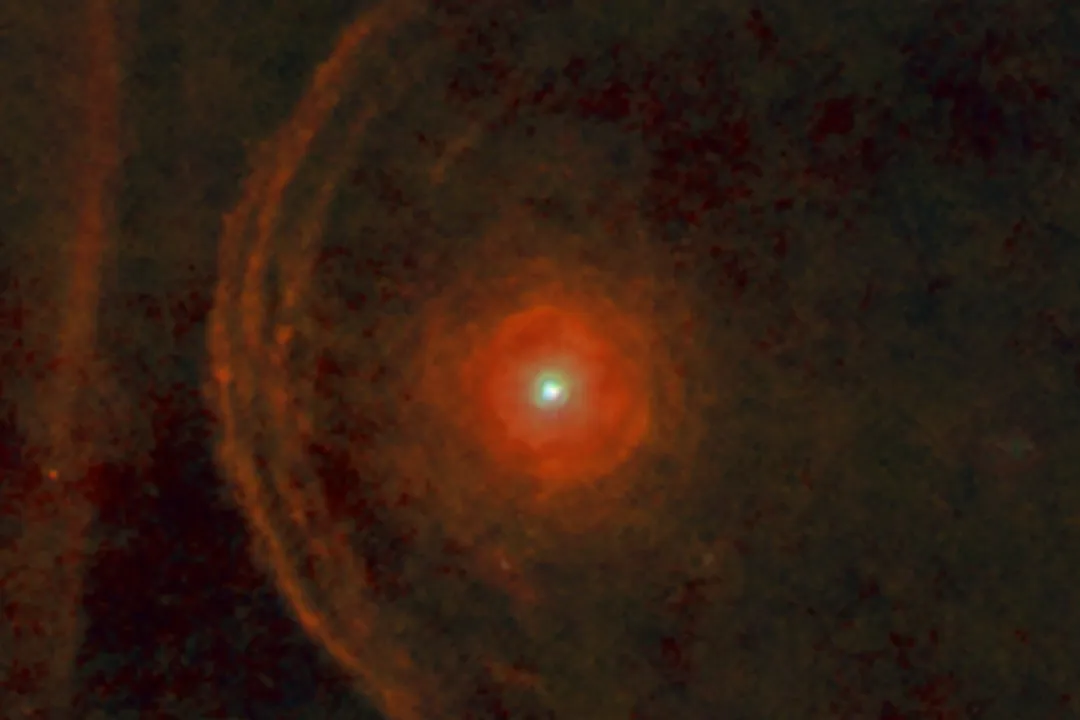
Red giants are easily identifiable by their distinct color and size. Because their surface temperatures are lower—typically between 3,000 and 4,000 Kelvin—they emit light that appears orange or red to human eyes. [4] In contrast, hotter stars on the main sequence appear blue or white. [8]
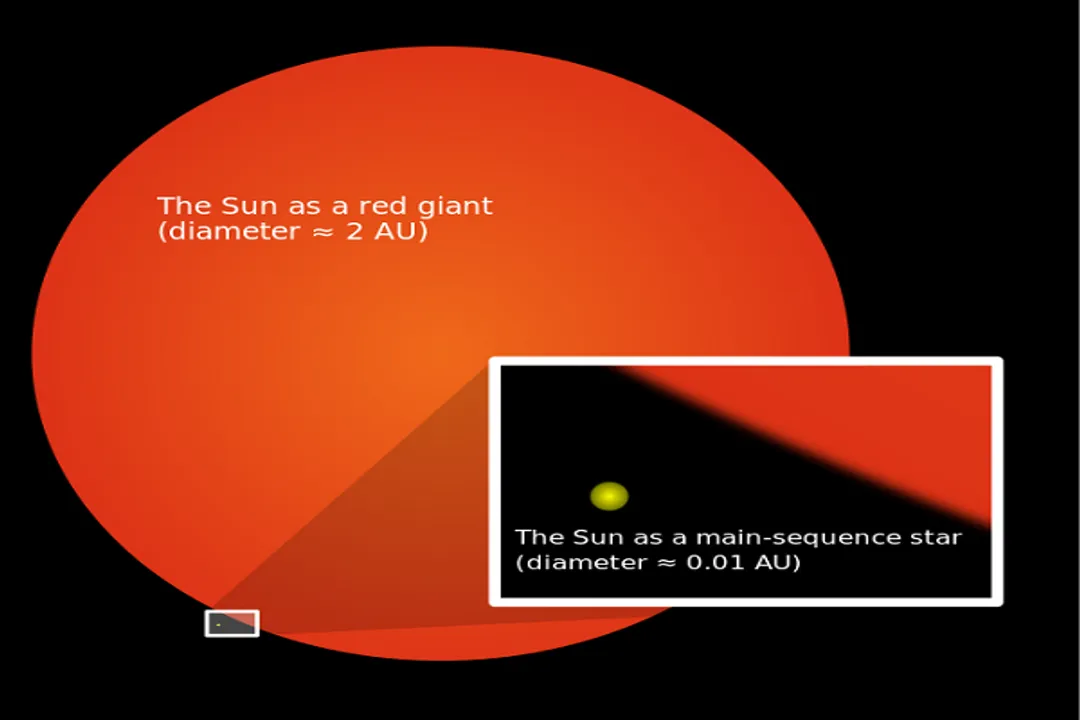
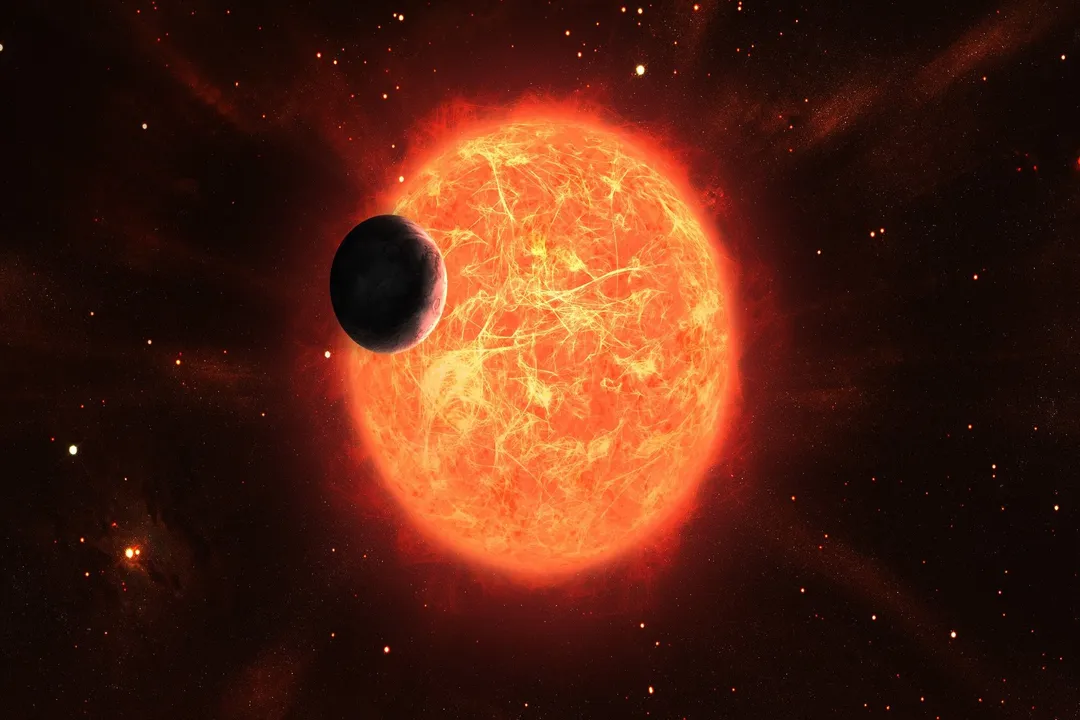
Their physical dimensions are equally striking. As the star expands, it becomes significantly larger than it was during its main sequence phase. [6] While the exact size varies depending on the star's initial mass, a red giant can grow to be 100 to 1,000 times the diameter of its original size. [2] If our Sun were to become a red giant, it would expand enough to engulf the inner planets, extending its outer atmosphere past the orbit of Mercury and Venus, and perhaps reaching toward Earth. [2][8]
# Comparison Table
To better understand the shift from a main sequence star to a red giant, we can compare their physical and chemical attributes:
| Attribute | Main Sequence Star | Red Giant Phase |
|---|---|---|
| Primary Fuel | Hydrogen (Core) | Helium (Core) / Hydrogen (Shell) |
| Core State | Stable Fusion | Contracting and Heating |
| Outer Layers | Compact/Stable | Highly Expanded/Swollen |
| Temperature | Hotter (White/Blue/Yellow) | Cooler (Orange/Red) |
| Luminosity | Steady | Very High |
# Internal Dynamics
The physics behind this expansion is driven by a process known as shell burning. [6] Once the core hydrogen is consumed, the star does not immediately die. Instead, the area surrounding the core—the shell—begins to fuse its remaining hydrogen. [2] This shell burning produces enough energy to expand the star's outer layers to immense proportions. [5]
Eventually, the core becomes hot enough to ignite helium fusion, a process often referred to as the "helium flash" in stars of a certain mass. [2] During this time, the star may contract slightly from its maximum red giant size before expanding again. [6] The internal structure becomes increasingly complex, with layers of different elements being fused in various shells surrounding the core. [5]
# The End
The red giant phase is not the final state of a star, but a precursor to its eventual demise. Once a star has exhausted its helium fuel, it can no longer generate the outward pressure required to support its own mass. [3][7] The outer layers of the star are cast off into space, creating a beautiful and complex structure known as a planetary nebula. [2][8]
What remains at the center is the core, which collapses into a compact, incredibly dense object called a white dwarf. [1][3] A white dwarf is roughly the size of Earth but contains a significant fraction of the star's original mass, leading to extreme density. [5] Over billions of years, the white dwarf will slowly radiate its remaining heat into the void, eventually fading away. [7]
# Scale Visualization
To conceptualize the size difference between a typical star and its red giant phase, consider a simple scaling model. If we represent our current Sun as a standard marble with a diameter of roughly 1.5 centimeters, the Earth would be a microscopic speck of dust about 1.6 meters away.
When this "marble" Sun enters the red giant phase, its radius would increase by roughly 100 times. In this model, the Sun would grow to be about 3 meters in diameter. It would fill a small room from floor to ceiling. This illustrates why the inner solar system is physically threatened when a star enters this phase; the star quite literally dominates the space where the planets once orbited.
# Why Red Giants Matter
Studying red giants provides critical insight into the lifecycle of the universe. [1] Because these stars are luminous, they are visible at great distances, allowing astronomers to use them as standard candles to measure the distances to galaxies. [3] They also serve as the primary "cosmic factories" where heavy elements are created and dispersed into the interstellar medium during the planetary nebula phase. [5] These ejected materials eventually coalesce to form new stars, planets, and potentially the building blocks for life. [7]
While the term "red giant" describes a dying star, it is ironically a period of creation. The fusion processes inside these stars synthesize elements heavier than helium, such as carbon, nitrogen, and oxygen, which are later scattered into space. [2][6] Without the red giant phase, the chemical diversity required for rocky planets and biological entities would be significantly limited in the universe. [3][5] The red giant phase is therefore a necessary bridge in the recycling process of the cosmos.
#Videos
What Are Red Giant Stars? - YouTube
Related Questions
#Citations
Red Giant - ESA/Hubble
Red giant stars: Facts, definition & the future of the sun - Space
What Are Red Giant Stars? - YouTube
Red Giant Star | Definition, Temperature & End - Study.com
Star Types - NASA Science
What are red giants? Our sun will become one! - EarthSky
Lecture 15: Red Giants
Red giant stars | COSMOS
What is a red giant star? - Sten's Space Blog - The Astronomy Cafe