What is Hubble's greatest discovery?
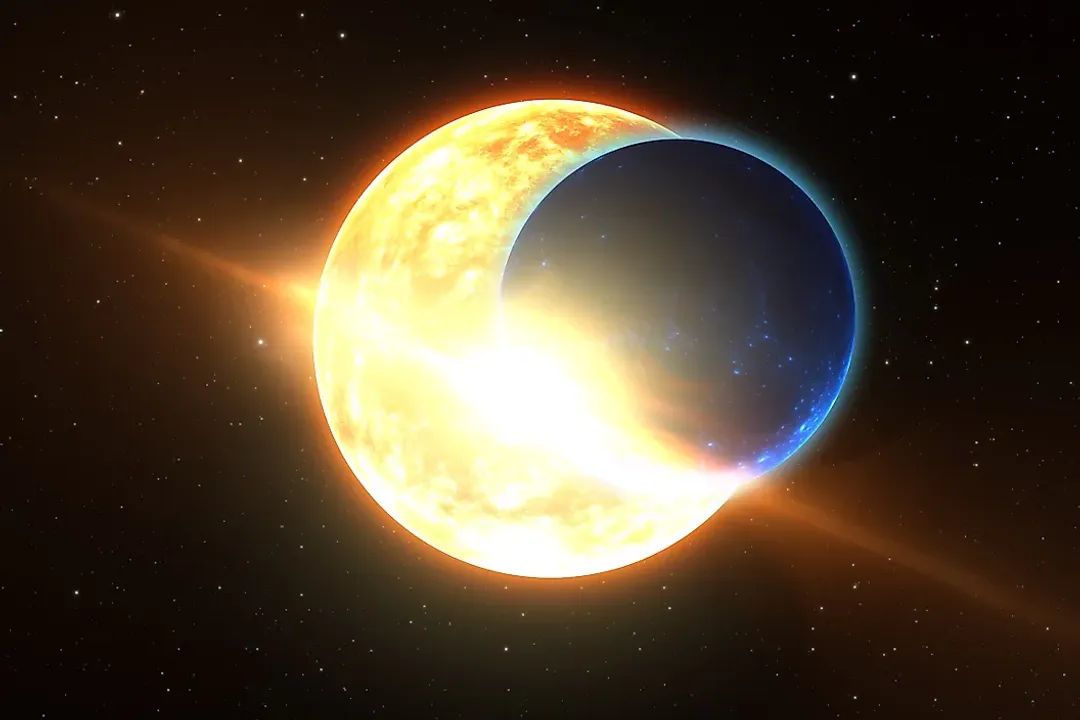
Pinpointing a single greatest discovery from the Hubble Space Telescope is a task that challenges even seasoned astronomers. Because the observatory has functioned for over three decades, its contributions span everything from the physics of distant galaxies to the chemical composition of planets in our own cosmic backyard. [1][3] However, when historians and scientists discuss the specific finding that fundamentally altered our understanding of the cosmos, the rapid acceleration of the universe stands out as the most dramatic and unexpected breakthrough. [2][4]
# Universe Expansion
Before the Hubble Space Telescope reached orbit, cosmologists struggled with a significant measurement problem. While Edwin Hubble had discovered in the 1920s that the universe was expanding, astronomers disagreed on the exact rate of this expansion, known as the Hubble constant. [8][9] Some estimates suggested the universe was as young as 10 billion years, while others argued it was 20 billion years old. [3] This created a logical paradox where the universe appeared younger than the oldest stars within it.
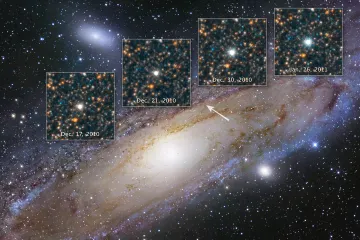
Hubble resolved this by observing Cepheid variable stars in distant galaxies. [2] These stars act as cosmic lighthouses; because they pulse with a predictable brightness, astronomers can calculate their distance with high accuracy. [1][6] By pinning down these distances, the telescope provided a definitive measurement for the expansion rate, narrowing the age of the universe to approximately 13.8 billion years. [2][7] This measurement stabilized cosmology, giving scientists a reliable timeline for the evolution of everything from atoms to galaxy clusters. [3]
# Dark Energy
While the expansion rate measurement was a triumph of precision, the most shocking discovery occurred in 1998. [4] Two independent teams of astronomers used Hubble to observe distant Type Ia supernovae—stellar explosions that serve as "standard candles" because they always release the same amount of light. [10] The researchers expected to find that the expansion of the universe was slowing down due to the mutual gravitational pull of all matter. [4]
Instead, the data revealed the opposite. The distant supernovae were dimmer than they should have been if the expansion were decelerating. [3][6] The only explanation was that the expansion of the universe is actually accelerating. [2][7] This phenomenon, attributed to an invisible force dubbed "dark energy," now sits at the center of modern astrophysics. [4][10] It accounts for roughly 68 percent of the total energy and matter in the universe, meaning the stuff we can see—stars, planets, and people—makes up only a tiny fraction of reality. [1][4]
# Galactic Centers
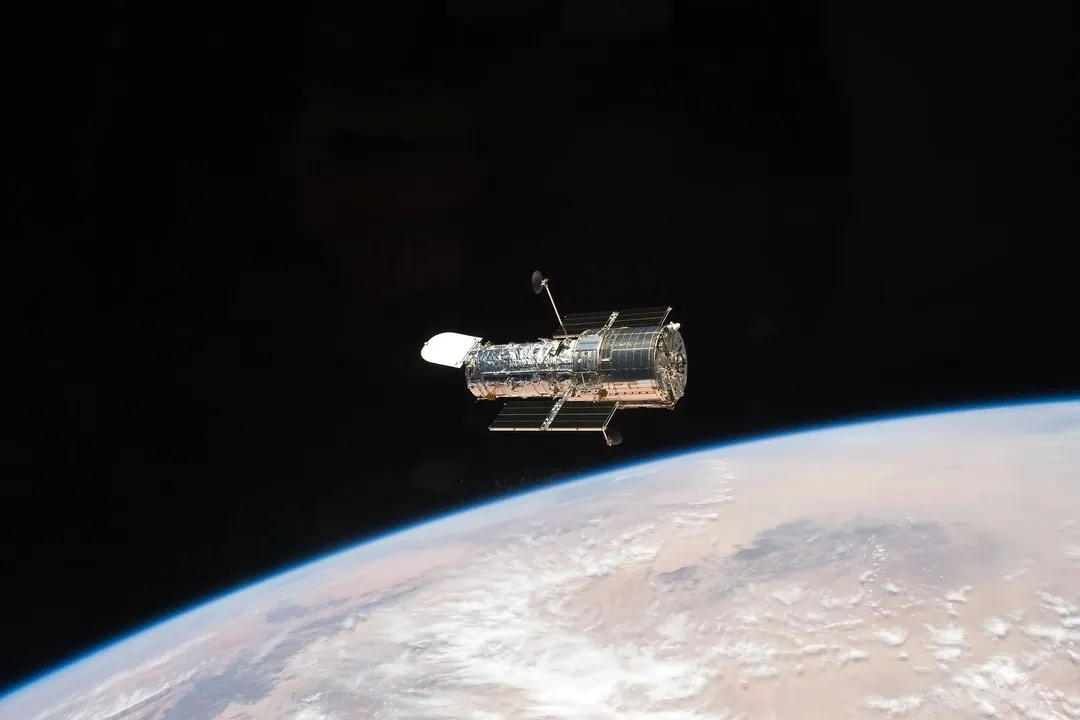
Before Hubble, the idea that supermassive black holes resided in the heart of most galaxies was a theoretical hypothesis rather than a confirmed fact. [7] Because of the telescope’s high-resolution optics, it could see directly into the glowing cores of galaxies, where ground-based telescopes saw only a blur. [3]
Hubble provided the evidence that supermassive black holes are not rare anomalies but are instead a standard feature of galactic structure. [7] By measuring the speed of gas disks swirling near the center of galaxies like M87, astronomers could calculate the mass of the invisible object at the center. [3][6] The values were often millions or even billions of times the mass of the Sun. This changed the model of galaxy evolution, proving that these black holes grow alongside their host galaxies, influencing star formation and the shape of the galaxy itself. [2][4]
# Deep Fields
Perhaps the most visually iconic contribution from the telescope is the series of "Deep Field" images. [4] In 1995, astronomers took a massive risk: they pointed Hubble at a patch of sky that appeared to be completely empty—a dark void near the Big Dipper. [6] They left the shutter open for ten days, collecting photons from light that had traveled for billions of years. [4]
The resulting image was not empty. It revealed thousands of galaxies in a tiny slice of space, stretching back to the early days of the universe. [6] This process was repeated with the Ultra Deep Field and the eXtreme Deep Field, pushing further into the history of the cosmos. [1][4] These images provided a time machine, allowing astronomers to see how galaxies looked when they were infants, compared to the mature galaxies observed in our local neighborhood. [3] This visual data confirmed that the universe has changed drastically over time, evolving from a chaotic collection of small, irregular proto-galaxies into the grand spirals and ellipticals seen today. [7]

# Stellar Life
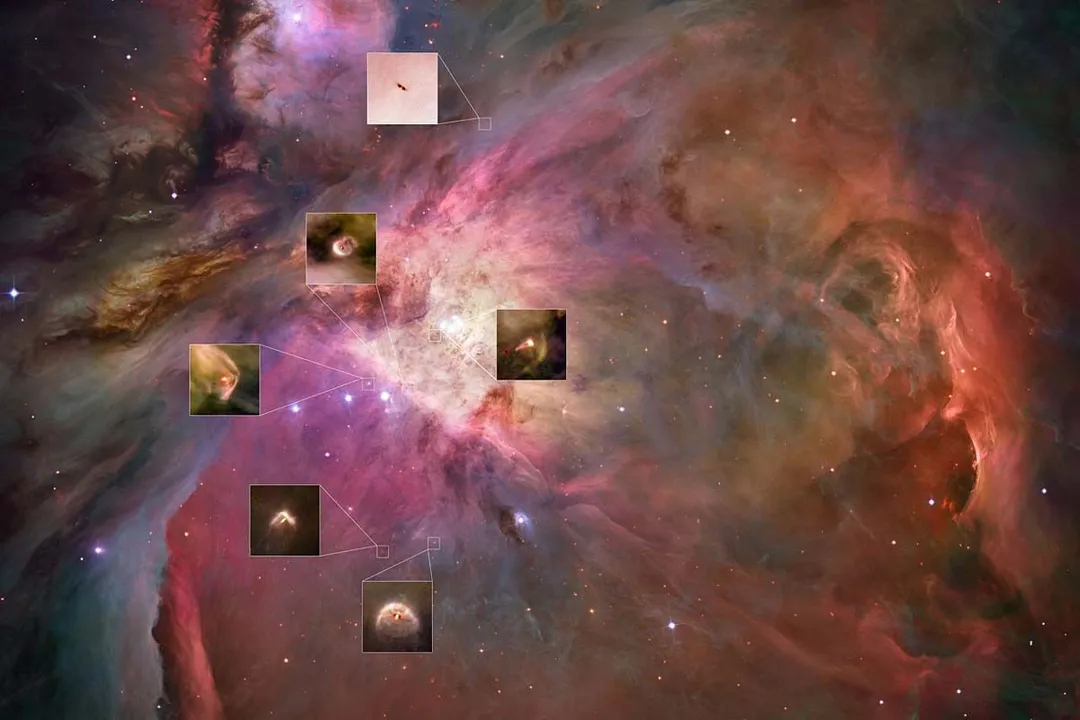
While the big-picture discoveries dominate headlines, Hubble also revolutionized our understanding of how stars live and die. [1] The telescope captured the detail of nebulae—clouds of gas and dust—with unprecedented clarity, revealing the intricate processes of star birth. [2] It showed us proto-planetary disks around young stars, providing direct evidence that solar systems like our own are common throughout the galaxy. [1][10]
On the other end of the spectrum, Hubble provided detailed looks at planetary nebulae—the final gasps of dying stars. [6] These images revealed complex, symmetrical shapes that challenge simple models of how a star sheds its outer layers. [3] By observing the life cycle of stars in different stages, Hubble allowed astronomers to create a coherent story of stellar evolution, from the cold, dark clouds of gas to the brilliant explosions of supernovae and the remnants they leave behind. [7]
# Data Comparison
To better understand why these discoveries represent such a jump in knowledge, it is helpful to contrast the state of astronomy before and after the mission.
| Discovery Field | Pre-Hubble Understanding | Post-Hubble Impact |
|---|---|---|
| Age of Universe | 10–20 billion years (high uncertainty) | 13.8 billion years (precise) |
| Universe Expansion | Assumed deceleration | Acceleration (Dark Energy) |
| Black Holes | Theoretical/Rare | Proven as standard galactic cores |
| Galaxy Evolution | Sparse observational data | Direct visual history of galaxy growth |
| Exoplanets | Speculative/Few detections | Direct imaging of disks and atmospheres |
This data highlights a transition from theoretical physics to observational science. Before this mission, many of these concepts were mathematical constructs; after, they became physical realities that could be measured, photographed, and analyzed. [1][2]
# Technical Evolution
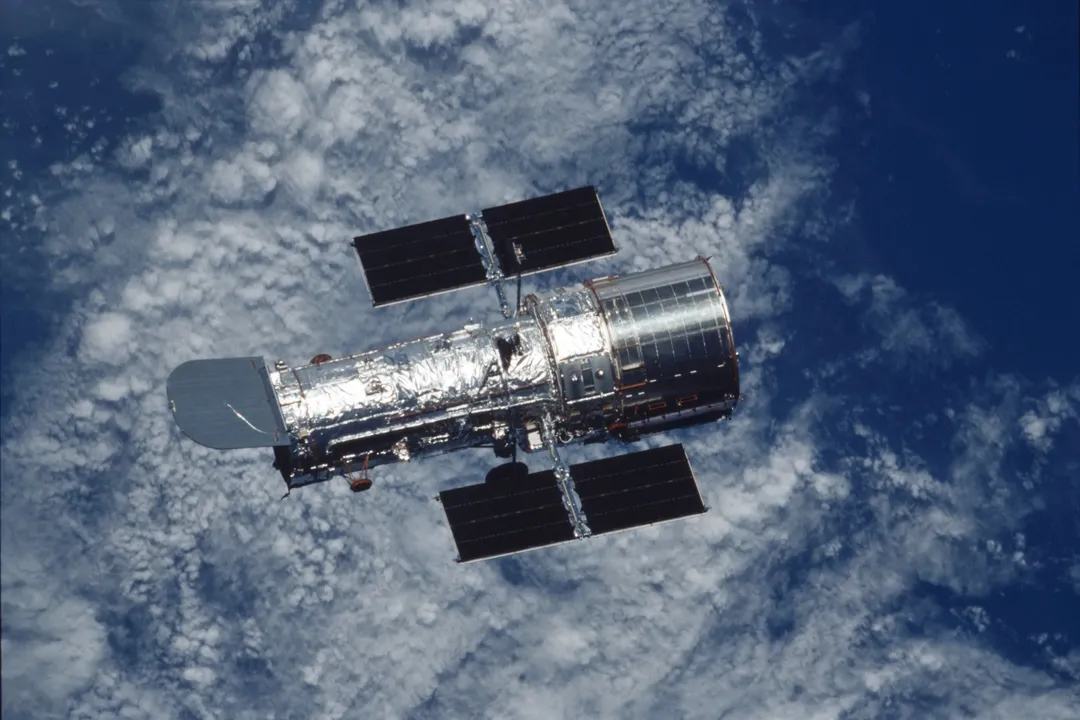
A critical, often overlooked aspect of the telescope's success is how it changed the relationship between humans and space infrastructure. When the telescope launched in 1990, it had a flawed mirror, which turned into a public relations crisis. [3] However, the subsequent repair missions changed everything. They proved that humans could service, repair, and upgrade sophisticated scientific instruments in orbit. [4]
This capability essentially gave the telescope five separate lives. Each time astronauts installed new instruments, such as the Advanced Camera for Surveys or the Wide Field Camera 3, the telescope became a more sensitive machine than it was at launch. [1] This adaptability is an unwritten discovery in itself: the realization that space telescopes are not static, one-and-done missions, but systems that can grow alongside our changing scientific questions. [2] This operational philosophy paved the way for future observatories, influencing the way we design modular components for space hardware today.
# Scientific Synergy
One consistent trend across all these discoveries is how they linked disparate fields of science. The study of the expanding universe is not just about measuring distances; it is about particle physics and the fundamental nature of energy. The study of black holes is not just about gravity; it is about the evolution of the matter that surrounds them.
The telescope essentially forced astronomers to look at the universe as a connected system rather than a series of isolated events. [6] For example, the discovery of dark energy required combining the study of supernovae (stellar death) with the study of cosmological expansion (large-scale structure). [4] This cross-disciplinary approach has become the standard for modern astrophysics. By breaking down the barriers between stellar astronomers, galactic astronomers, and cosmologists, the mission created a unified community of researchers working to solve the same set of questions. [2]
# Future Context
While successor telescopes like the James Webb Space Telescope are now operating, they are largely standing on the foundation that Hubble built. [5] Hubble provided the maps and the targets; the new generation of instruments is now adding detail and context to those original findings. [1]
The "greatest" discovery might not be one single number or image, but rather the creation of a baseline for what a galaxy looks like, what a star does, and how the universe behaves. [3][7] By providing this consistent, high-resolution view of the cosmos, Hubble allowed us to move from asking "what is that?" to "how does that work?" It shifted our position from passive observers of the night sky to active detectives, deciphering the rules that govern the existence of matter and energy across the vastness of space. [4] Whether the ultimate legacy is the proof of dark energy or the mapping of the early universe, the telescope succeeded in its goal to render the invisible visible, forever changing the human perspective on our place in time and space. [6][10]
#Videos
Hubble Telescope's Greatest Discoveries [4K] - YouTube
Related Questions
#Citations
Hubble Science Highlights
[PDF] Hubble Top Ten Greatest Achievements_web.pdf
What has the Hubble Space Telescope discovered?
The Most Amazing Hubble Space Telescope Discoveries
Hubble Telescope's Greatest Discoveries [4K] - YouTube
Great Discoveries of the Hubble Space Telescope
Hubble's 10 Most Significant Discoveries - World Atlas
The universe: Historical discoveries from Edwin Hubble and others
greatest discoveries - ESA Science & Technology - Hubble