What is Earth's closest exoplanet?
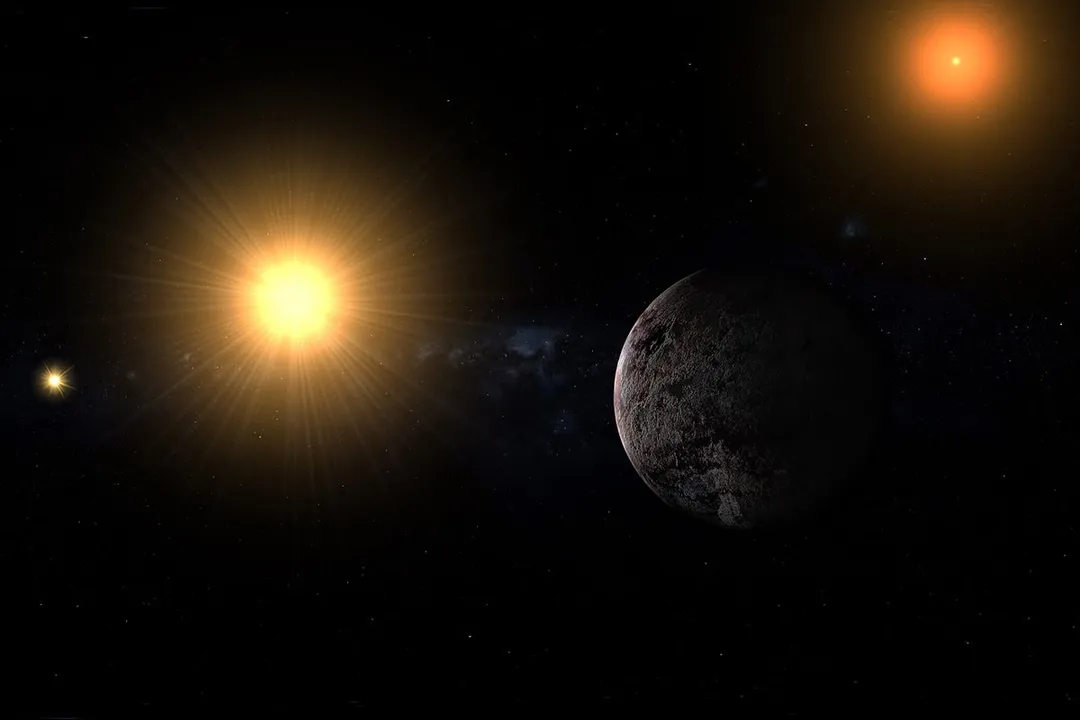
When we gaze at the night sky, it is natural to wonder which of the distant pinpoints of light might harbor a world similar to our own. For years, astronomers sought to identify the closest exoplanet to our solar system, hoping to find a neighbor that could potentially support life. That search led to the identification of Proxima Centauri b, a planet orbiting the star closest to our Sun. [3][9] Situated just over four light-years away, this world stands as our nearest extraterrestrial destination. [5]
# Proxima Centauri

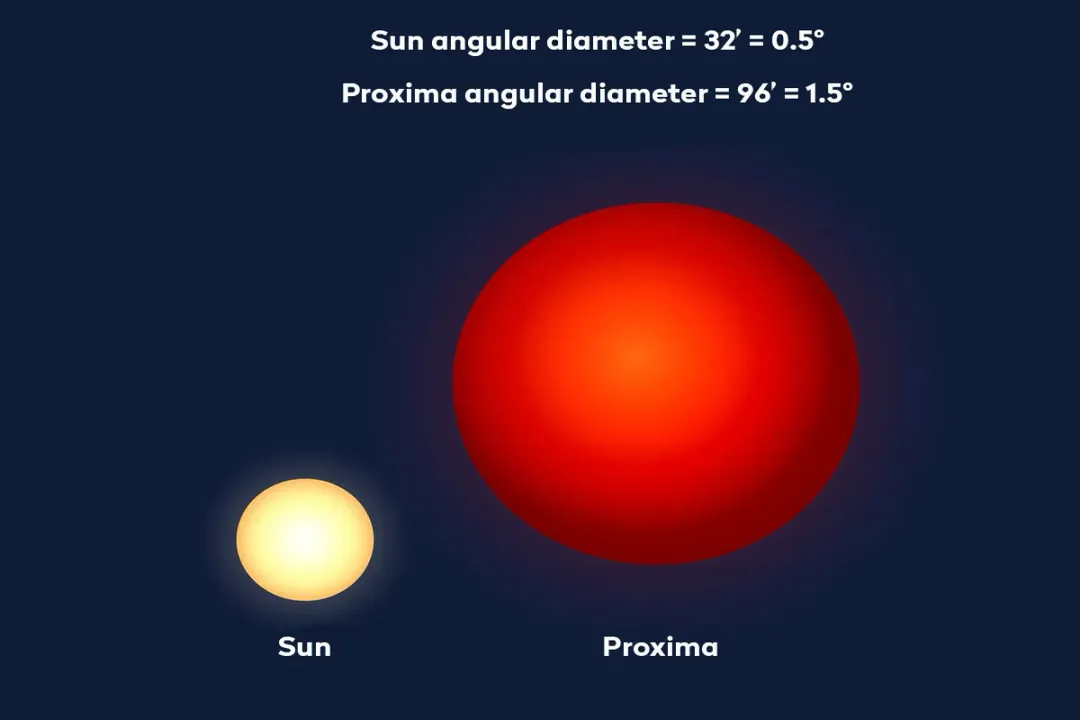
To understand this planet, we must first understand its host star. Proxima Centauri is a red dwarf, a type of star significantly smaller, cooler, and dimmer than our Sun. [9] Because red dwarfs are so faint, they are not visible to the naked eye from Earth, even though they are our closest stellar neighbors. [5] Despite its low luminosity, Proxima Centauri is an active star, frequently emitting bursts of radiation and stellar flares that affect the environment of any orbiting bodies. [5]
The proximity of this system—roughly 4.2 light-years away—makes it an essential target for research. [9] In astronomical terms, this is practically next door. If humanity were to send a probe, even at a fraction of the speed of light, it would be the first realistic target for interstellar study. [7] However, the reality of the distance remains a significant barrier; with current propulsion technology, a physical visit would take tens of thousands of years. [3]
# Orbital Characteristics
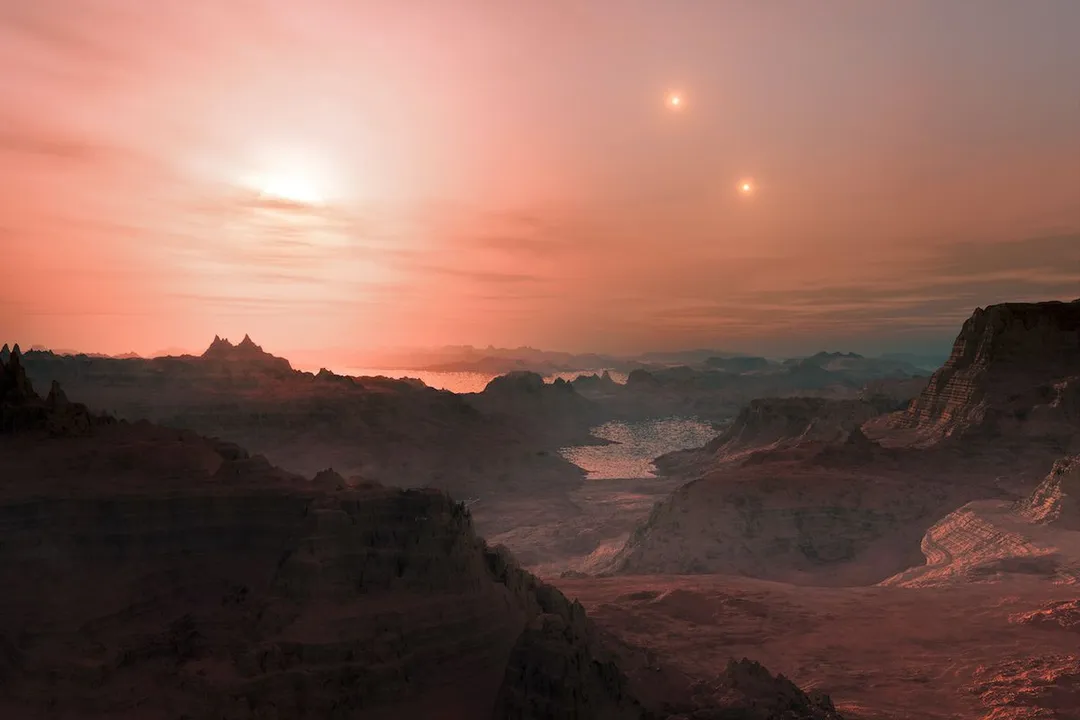
Proxima Centauri b does not orbit like the planets in our solar system. Instead of taking hundreds of days to complete a loop around its star, it finishes a full orbit in just 11.2 days. [9] This proximity is necessary for the planet to maintain surface temperatures capable of supporting liquid water, as its host star provides much less heat than the Sun. [5]
Because it orbits so close to its parent star, scientists believe the planet is likely tidally locked. [5][7] This means one side of the planet perpetually faces the star, experiencing eternal daylight, while the other side faces away, trapped in permanent darkness. This creates a strange climate scenario where, theoretically, the only temperate zone might exist along the "terminator line"—the twilight strip between the day and night sides.
# Habitability Analysis
The designation "habitable" in astronomy does not guarantee life; it simply refers to a planet's location within the "Goldilocks zone," where temperatures might allow liquid water to pool. [6] While Proxima b fits this criteria, other factors complicate the picture.
The primary challenge is the host star's temperament. Red dwarfs are notorious for high levels of magnetic activity. [9] Frequent solar flares and intense high-energy radiation could strip a planet's atmosphere away, leaving the surface exposed and barren. [5] Without a thick atmosphere or a strong magnetic field to protect it, any water on the surface would likely evaporate into space, or the surface would be sterilized by radiation. [7]
# Nearest Neighbors
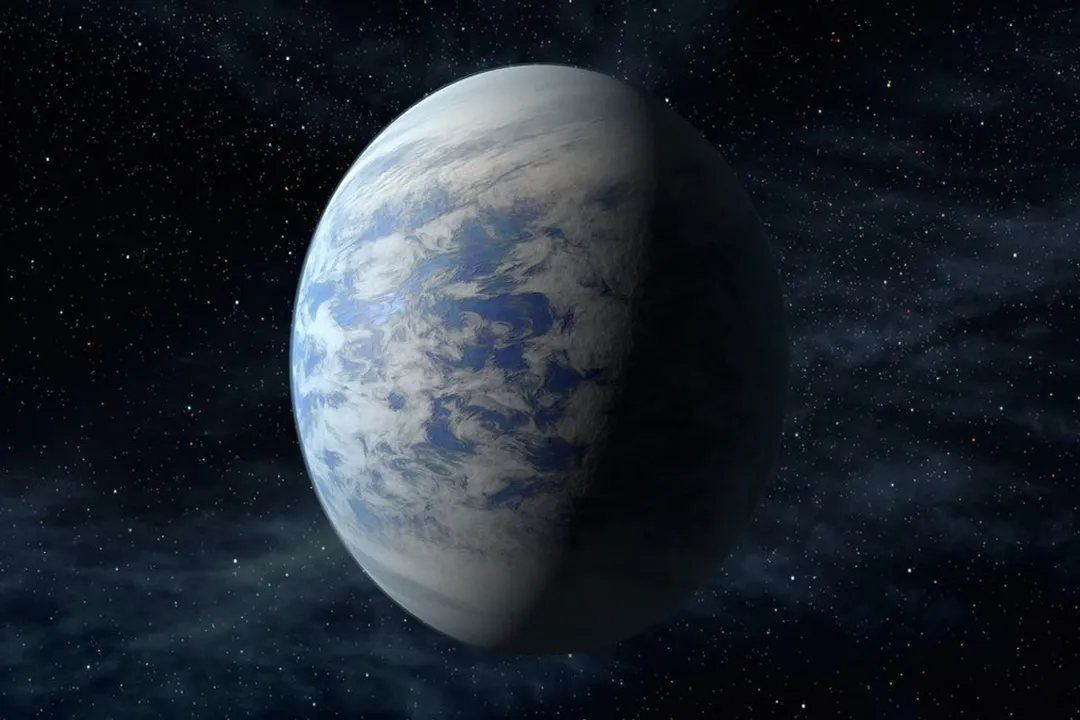
When comparing Proxima b to other nearby exoplanets, we begin to see where it fits in the local galactic map. While Proxima b holds the title for distance, other systems offer different characteristics that scientists continue to monitor.
| Planet | Distance (Light Years) | Host Star Type |
|---|---|---|
| Proxima Centauri b | 4.2 | Red Dwarf |
| Barnard's Star b | 6.0 | Red Dwarf |
| Wolf 1061c | 13.8 | Red Dwarf |
| Gliese 667Cc | 23.6 | Red Dwarf |
This table illustrates a clear trend: most of our closest neighbors orbit red dwarf stars. This is partly because red dwarfs are the most common type of star in the galaxy, making them more likely to be found in our immediate vicinity. [3]
# Scientific Perspective
It is worth considering the scale of the challenge regarding these worlds. Even at 4.2 light-years, Proxima b is nearly 25 trillion miles away. To place this in perspective, the Voyager 1 probe, one of the fastest objects humans have ever built, travels at about 38,000 miles per hour. Even at that high velocity, it would take roughly 75,000 years to reach the Proxima Centauri system. This gap underscores that while we can detect these worlds, visiting them requires breakthroughs in physics and propulsion that remain theoretical. [3][7]
Furthermore, detecting these planets relies on indirect methods. We do not take photos of them in the way we photograph planets in our own solar system. Instead, astronomers track the slight "wobble" of a star caused by the gravitational pull of an orbiting planet. [5][9] This radial velocity method confirmed the existence of Proxima b, and while newer technology allows for better 3D modeling and visual representations, these are simulations based on data rather than actual photographic evidence. [2]
# Atmospheric Uncertainty
One of the most persistent questions regarding Proxima b is the state of its atmosphere. Even if the planet survived the intense radiation of its youth, the composition of its atmosphere remains a mystery. If it retains an atmosphere, it could have complex weather patterns driven by the permanent heat of the star on one hemisphere. If it lacks an atmosphere entirely, it is likely a cratered, rocky husk not unlike our Moon.
Some researchers suggest that if the planet has a strong enough magnetic field, it might retain an atmosphere against the stellar wind. However, a tidally locked planet might have a weak magnetic field due to slow rotation, which would make atmospheric retention difficult. [5] This remains a subject of active study. Until we can capture light spectra directly from the planet—filtering out the overwhelming glare of the host star—we will continue to rely on models rather than direct observations to estimate its climate.

# Continued Research
As telescopes and detection methods improve, we are likely to find more planets in our immediate vicinity. The list of the nearest exoplanets is not static; it grows as surveys become more sensitive. [3] While Proxima b currently holds the top spot, its discovery proved that we do not have to look to the far edges of the galaxy to find planetary systems.
The focus of the scientific community is shifting from merely finding these worlds to characterizing them. By studying the light that filters through or reflects off these planets, we aim to detect signatures of gases like oxygen, methane, or carbon dioxide. These biosignatures would provide the first real evidence of whether the closest exoplanet to Earth is a dead rock or a world with a dynamic, possibly biological, chemistry. [6] For now, Proxima Centauri b serves as the premier case study for understanding how rocky planets evolve around the most common stars in the universe.
#Videos
What If You Landed on Proxima Centauri b? - YouTube
Related Questions
#Citations
This is Proxima b, the closest exoplanet to Earth being 4 light years ...
Proxima b 3D Model - NASA Science
List of nearest exoplanets - Wikipedia
What If You Landed on Proxima Centauri b? - YouTube
Meet the closest Earth-like exoplanet to our Solar System - Proxima b
The 10 most Earth-like exoplanets - Space
Touring Proxima Centauri B – Earth's Closest Exoplanet! - Facebook
The most Earth-like exoplanets | The Planetary Society
Proxima Centauri: The closest exoplanet to Earth