What characteristic determines how stars differ?
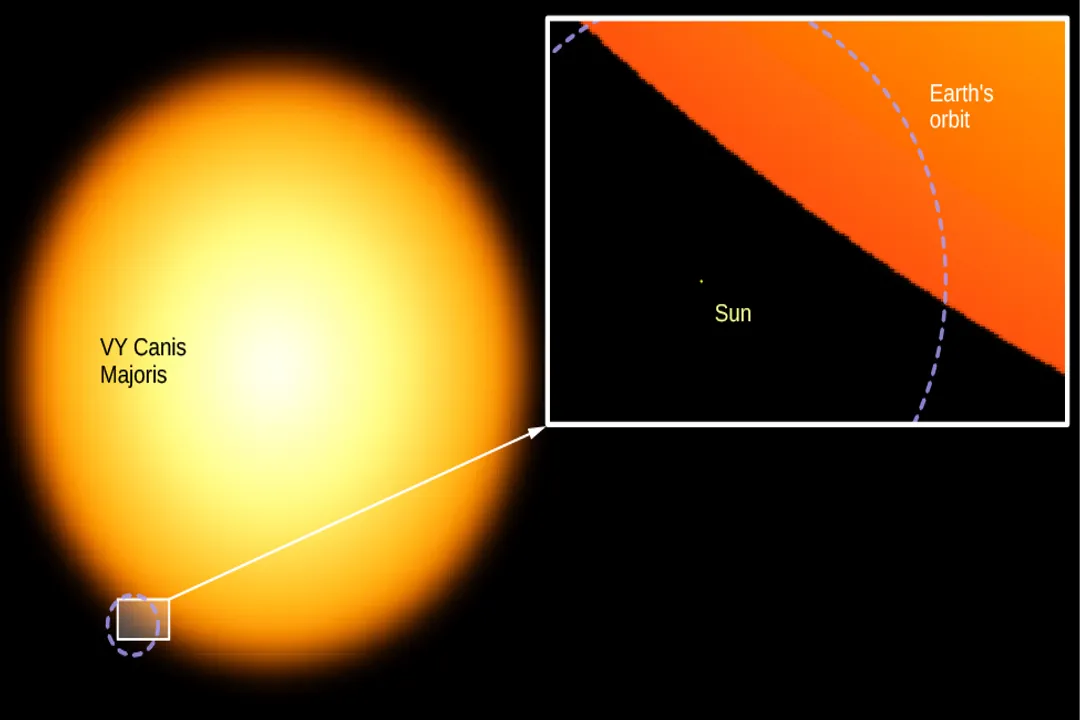
The sheer variety of stars visible in the night sky—from faint, dim pinpricks to brilliant, blue-white beacons—can make one wonder what fundamental physical mechanism is responsible for these dramatic differences. While superficial differences like apparent brightness certainly exist, the true variations in a star’s nature—its color, size, energy output, and eventual fate—are determined by a surprisingly small number of intrinsic characteristics, chief among them being its mass.
Stars are not static entities; they are cosmic engines undergoing constant transformation. To classify them, astronomers developed systems based on observable properties like their light spectrum, which correlates directly with surface temperature, and their inferred size, which relates to their energy output, or luminosity.[1] These observations, when plotted together on the Hertzsprung-Russell (H-R) diagram, reveal clear groupings that correspond to different physical states in a star’s life cycle.
# Mass Prime Determinant
If we had to choose one single physical property that dictates nearly everything about a star's entire existence, it would be its initial mass. The amount of material a star begins with sets its gravitational pressure, which in turn determines the core temperature, the rate of nuclear fusion, and, consequently, its luminosity and surface temperature while it resides on the main sequence.
The range of masses that qualify as a "true star" is tightly constrained. Objects less massive than about $0.08$ times the mass of our Sun () lack the necessary gravitational squeeze to ignite sustained hydrogen fusion and are categorized as brown dwarfs, or substellar objects. [1] On the other side of the scale, stars exceeding roughly $100$ times the Sun's mass () generate energy so furiously that their resulting stellar winds become too extreme, leading to instability and very rapid burnout. [1]
For the vast majority of stars—those fusing hydrogen in their core, known as main-sequence stars—their location on the H-R diagram is a direct map of their mass. More massive stars sit at the upper-left of the main sequence, meaning they are hotter and far more luminous. Conversely, the least massive main-sequence stars are the coolest and dimmest, occupying the lower-right region.
# Temperature and Spectra
The most immediate observable characteristic that distinguishes stars is their color, which is a proxy for their surface temperature. This led to the development of the Harvard spectral classification system, which uses letters to group stars from hottest to coolest: . [1] A convenient mnemonic for remembering this sequence from hottest to coolest is "Oh, Be A Fine Girl/Guy, Kiss Me". [1]
stars are extremely hot, blue stars, sometimes boasting temperatures exceeding , while the coolest stars hover between $2,000$ and . [1] Our own Sun is designated as a star, specifically , with a surface temperature around . [1] While these classes denote temperature, the underlying physics revealed by Cecilia Payne established that this sequence is fundamentally related to temperature because the ionization state of elements in the star’s atmosphere changes predictably with heat. [1]
The life cycle of a star is tragically tied to this initial temperature rating. The most massive stars, the types, burn through their core hydrogen fuel incredibly quickly. A star $40$ times the Sun’s mass might only last about $10$ million years. [1] Compare this to our Sun, a star with a lifespan estimated around $10$ billion years. [1] Even a low-mass star, a red dwarf, can persist for an estimated $100$ billion years. [1] It is quite interesting to realize that if we look at the ratio of fuel supply (mass) to fuel consumption (luminosity), the result is startling: while the most massive stars possess perhaps $100$ times the fuel of the Sun, they burn it at a rate $100,000$ to $1,000,000$ times faster, resulting in a lifetime thousands of times shorter. This scaling of fuel efficiency versus fuel availability is what separates the stellar lifespans by such enormous factors.
# Size Luminosity Link
Surface temperature alone does not tell the whole story of a star's appearance or energy output. A star’s total luminosity—its actual intrinsic brightness—is determined by its temperature and its surface area (radius). This relationship is vital for understanding stars that have left the main sequence.
Stars occupying the upper-right region of the H-R diagram are cool (red) but highly luminous. The only way for a star with a relatively low energy output per square meter to achieve high total luminosity is by having a tremendous surface area; these are the giants and supergiants. For instance, some red supergiants like Betelgeuse are class stars but can be so large that if placed at the center of our Solar System, their surface would extend past Mars’s orbit. [1]
Conversely, stars in the lower-left corner are hot (blue-white) yet dim. High surface temperature means much energy per square meter, so to achieve low overall luminosity, the star must possess a very small surface area. These are the white dwarfs. Sirius B, the companion to the brightest star in our sky, is a textbook example: it is very hot but tiny, resulting in a faint visible light output. [1]
# Classification Two Dimensions
To precisely categorize these varied states, astronomers use the Morgan-Keenan () system, which combines temperature and luminosity information into a single code. [1] The first part is the Harvard spectral type ( through ), which fixes the temperature, often subdivided numerically from $0$ (hottest) to $9$ (coolest). [1] The second part is the luminosity class, denoted by a Roman numeral, which relates to the star's evolutionary stage and size. [1]
| Luminosity Class | Description | Evolutionary State |
|---|---|---|
| or | Hypergiants | Most Luminous |
| Supergiants | Very Large | |
| Giants | Expanded | |
| Main Sequence (Dwarfs) | Hydrogen Fusing | |
| or | White Dwarfs | Stellar Remnant |
Our Sun is officially classified as . [1] This means it is a main-sequence star () whose surface temperature places it in the subclass, slightly cooler than a perfect star. [1] The difference between a main-sequence star () and a giant () of the exact same spectral type (temperature) is purely size, resulting in vastly different luminosities. [1]
It is compelling to compare the physical states of stars across the luminosity spectrum. Consider a star with the mass of the Sun () that has reached the white dwarf phase. Its mass remains similar, but its radius shrinks drastically, perhaps to the size of Earth. If we then consider a main-sequence star of that same mass, it is much larger and less dense. The key difference that determines the density contrast is not the mass itself, but the physical state governed by the star's life stage. A white dwarf packs solar mass into Earth-sized volume, reaching densities so extreme that a teaspoon of its material would weigh over a ton. A main-sequence star, even one of comparable mass, is supported by thermal pressure from fusion and thus has a much larger, less compressed structure. This stark density difference shows how dramatically the internal physics changes once the primary energy source (hydrogen fusion) shuts down, forcing the star into a new, highly compact state.
# The Star's Story
Stars spend about $90%$ of their active lives on that main sequence, steadily fusing hydrogen into helium. Once the core hydrogen is exhausted, the star’s structure changes, its energy source shifts, and it moves off the main sequence on the H-R diagram. This transition sends it into one of the other regions—becoming a giant, a supergiant, or, for lower-mass stars, eventually cooling as a white dwarf.
Because these post-main-sequence phases are relatively short compared to the long hydrogen-burning phase, we observe far fewer evolved stars; only about $10%$ are white dwarfs, and fewer than $1%$ are giants or supergiants in our local stellar census. Thus, the star's initial mass not only determines its observable characteristics now (temperature, luminosity) but also dictates the entire script of its life—how long it will shine, how large it will swell, and what dense stellar corpse it will ultimately become.
The classification system, combined with Roman numerals ( through ), is a powerful shorthand, allowing astronomers to deduce a star's temperature, its stage of evolution, and, critically, its mass, which remains the underlying characteristic that determines how all the others relate.[1]
Related Questions
#Citations
Stellar classification - Wikipedia
Chapter 18 Section 18.4: The H-R Diagram – Survey of Astronomy
HR Diagram