What causes the bar to form in a spiral galaxy?
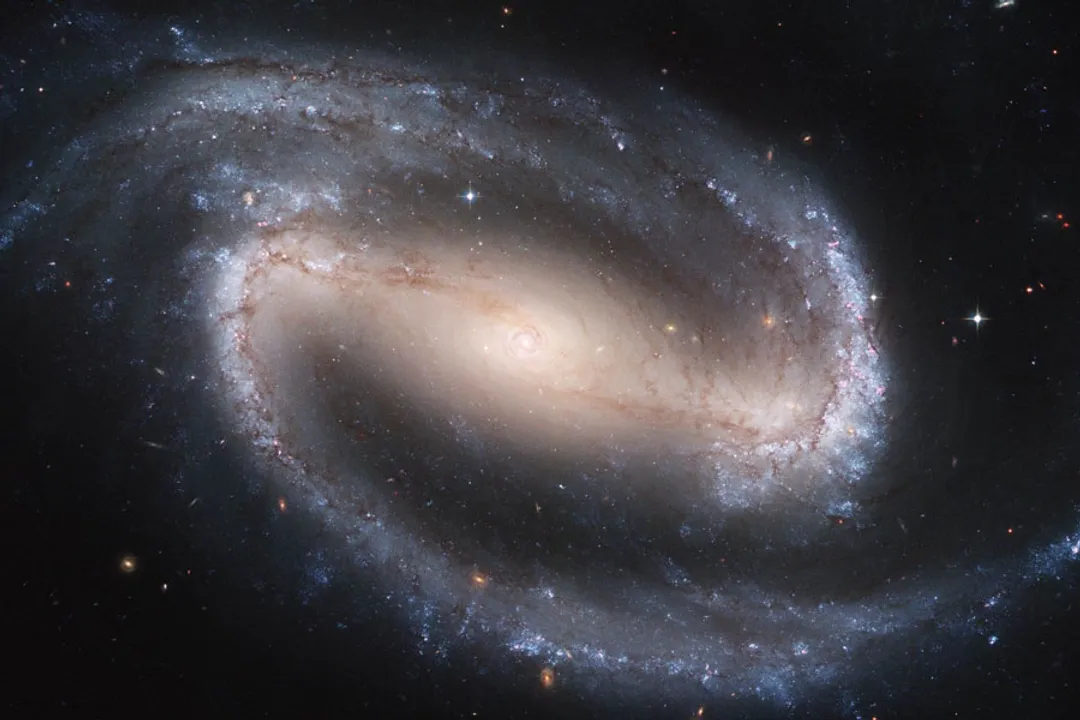
Spiral galaxies often appear as majestic, swirling pinwheels of stars and gas, but a closer look reveals that many of them harbor a stark, straight line cutting through their centers. This feature, known as a galactic bar, is present in roughly two-thirds of all spiral galaxies, including our own Milky Way. [1][9] Far from being a static or unchanging structure, the bar is a dynamic, evolving phenomenon that significantly shapes the life of the galaxy it inhabits. It acts as a massive engine for change, moving matter around and influencing where new stars are born. [5] Understanding why these bars form requires looking into the delicate balance of gravity, angular momentum, and the collective behavior of billions of stars.
# Disk Instability
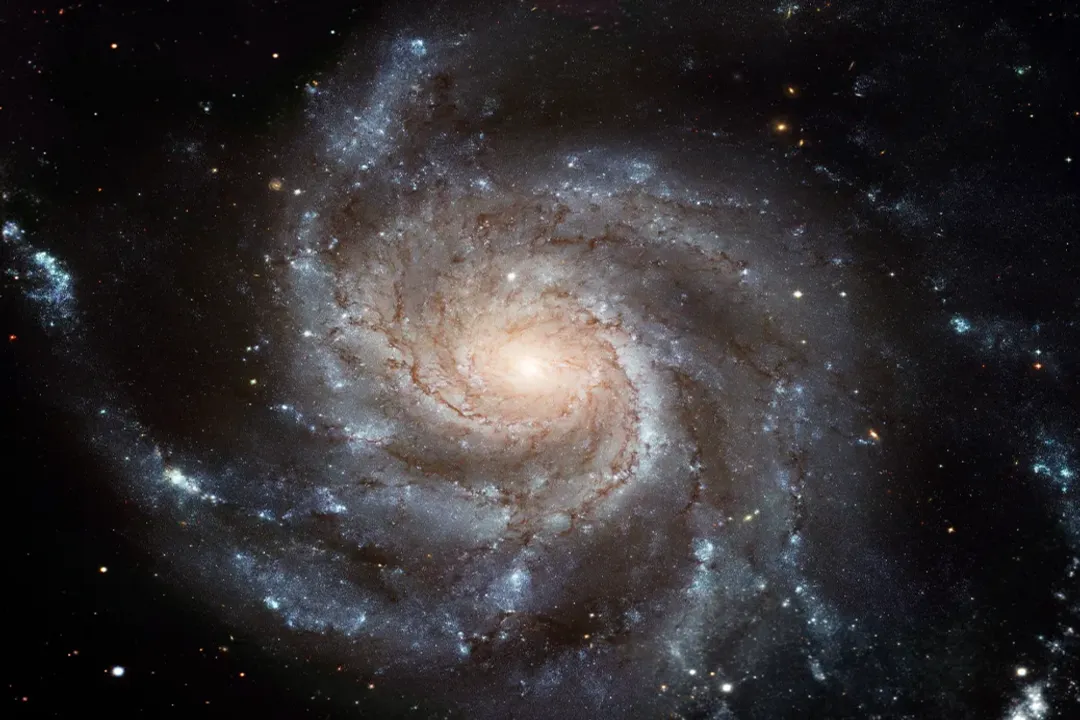
The primary reason galaxies form bars is a concept astronomers call "disk instability." A rotating galactic disk is not necessarily a stable structure. When you have a massive, flat, rotating system of stars and gas, small irregularities can trigger a cascading effect. [2] Imagine a small, random clustering of stars occurring in the disk. Because gravity is an attractive force, this slightly denser region pulls in nearby stars, increasing its own gravitational mass. This, in turn, draws in even more material. [2][8]
In a perfectly symmetrical disk, stars would move in mostly circular orbits. However, when this gravitational clump becomes significant, it begins to exert a torque—a twisting force—on the orbits of surrounding stars. Instead of continuing on their circular paths, stars begin to settle into elongated, oval-shaped orbits. These orbits align with one another, reinforcing the density of the clump and stretching it into the distinct rod-like structure we recognize as a bar. [6] This process is somewhat self-perpetuating. The bar forms because the disk is inherently susceptible to this "bar-mode" instability, where the gravitational energy of the rotating disk prefers a non-axisymmetric shape over a perfectly round one. [2][9]
# Orbital Mechanics
While the formation begins with an instability, the longevity of a bar depends on orbital resonance. If the stars within the bar were not moving in organized paths, the bar would quickly dissolve into chaos. Instead, the bar acts as a container for specific families of orbits. [3] The stars do not simply stay in one place; they travel along long, thin paths that extend along the length of the bar.
The crucial mechanism here is resonance with the galaxy's rotation. There are specific distances from the galactic center where stars can maintain a stable relationship with the bar's rotating pattern. For instance, the "corotation resonance" is the region where stars orbit the galaxy at the same speed as the bar itself. [6] Within the bar, stars populate orbits—often referred to as "x1" orbits—that are elongated parallel to the bar's major axis. By staying in these specific, stretched orbits, the stars effectively build the scaffolding of the bar, ensuring that the structure persists over billions of years rather than simply washing away with the rotation of the disk. [3][6]

# Molecular Inflow
One of the most important consequences of a bar is its ability to manipulate the distribution of gas. In an unbarred galaxy, gas tends to orbit the center in fairly steady, circular motions. However, the presence of a bar breaks this symmetry, creating strong gravitational disturbances that force the gas to lose angular momentum. [5]
When gas loses angular momentum, it cannot maintain its original orbit and begins to drift inward toward the center of the galaxy. This phenomenon is known as "secular evolution" because it happens gradually over time, rather than through violent collisions with other galaxies. [3] The bar acts like a cosmic funnel, driving vast amounts of molecular gas from the outer regions of the disk into the central regions, often within the inner kiloparsec of the galaxy. [5]
| Feature | Unbarred Spiral | Barred Spiral |
|---|---|---|
| Gas Motion | Primarily circular | Radially inward |
| Star Formation | Spread throughout arms | Concentrated in center/rings |
| Galactic Core | Generally steady | Often active (AGN fueling) |
| Longevity | Stable configuration | Can evolve or dissolve |
This influx of gas has profound implications. As the gas collects in the center, it becomes highly compressed, often triggering intense bursts of star formation. Furthermore, if the galaxy has a supermassive black hole at its center, this influx of gas provides the fuel necessary to power an active galactic nucleus, making the core shine brightly across the electromagnetic spectrum. [5]
# Environmental Triggers
While many bars form due to internal disk instabilities, external factors can also influence their creation. Galaxy interactions, such as near-misses with other galaxies or even tidal forces from smaller satellite galaxies, can shake a galactic disk, providing the "kick" needed to tip it into a bar-forming instability. [8] Even if a galaxy is relatively isolated, the gradual accretion of dark matter or the slow settling of the galaxy can alter the gravitational potential enough to trigger the formation of a bar. [7]
It is helpful to visualize this as a traffic jam. In a fluid, if you have cars (stars) moving in a circle, a slight slowing of one car creates a ripple effect. In a highway, the jam eventually clears, but in a galaxy, the "cars" are tied together by gravity. The jam does not dissipate; it becomes a structural feature. Once the "traffic jam" of stars is established in the bar, it forces the rest of the galactic traffic to adjust their paths, turning the bar into a permanent fixture of the galaxy's architecture until the gas supply is exhausted or the orbital resonances are disrupted. [3][8]
# Evolutionary Lifecycle
A vital insight often overlooked is that bars are not necessarily permanent. They represent a phase in a galaxy's life. A galaxy might be a simple spiral for billions of years before its disk becomes unstable enough to spawn a bar. Alternatively, a galaxy that has possessed a bar for ages might eventually see that bar weaken or dissolve. [9]
This dissolution can happen if the central mass concentration becomes too high, which can disrupt the specific orbital resonances that keep the bar stable. If the bar feeds the central black hole and accumulates a massive amount of stars and gas in the core, that dense center can eventually "break" the bar's structure, causing it to fade away. [3] Consequently, observing a barred spiral galaxy gives astronomers a snapshot of a specific evolutionary stage. It tells us that the galaxy is currently in a phase of significant internal redistribution of matter.
# Internal Dynamics
The bar also plays a role in defining the spiral arms attached to it. In many galaxies, the spiral arms do not start from the center of the galaxy but rather emerge from the ends of the bar. [6] This suggests that the bar is the driver for the spiral structure. As the bar rotates, it creates density waves—regions of higher gravity—that move through the galactic disk. When gas clouds encounter these density waves, they are compressed, which stimulates the formation of new, bright, blue stars. [8]
This creates a distinct look where the bar and the spiral arms work in tandem. The bar acts as the distributor, moving gas toward the center, while the spiral arms act as the manufacturing plants for stars in the outer disk. This synergy is why barred spirals are often some of the most vibrant and star-forming galaxies in the universe. [5]
# Observational Challenges
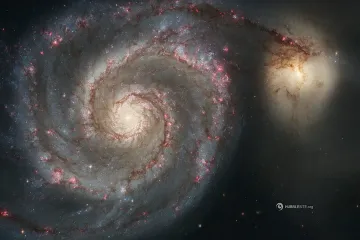
Studying these structures is not without difficulty. Because we are inside the Milky Way, we cannot get an "outside" view of our own galaxy's bar, which makes determining its exact size and mass a complex task involving precise infrared mapping of stellar motions. [1] When we look at distant galaxies, the orientation matters immensely. If a galaxy is oriented face-on, the bar is obvious. If it is tilted or edge-on, the bar can be hidden or appear distorted, leading to observational biases where we might misclassify barred galaxies as unbarred. [9]
To mitigate this, researchers rely on detailed simulations. By creating digital galaxies and letting them evolve over simulated billions of years, astronomers can observe the formation of bars from start to finish. These models consistently show that the transition from a smooth, circular disk to a barred structure is a natural outcome of gravitational physics. [2][4] The simulations confirm that as long as a galaxy has a cool, rotating disk of gas and stars, the development of a bar is almost an inevitability, occurring whenever the disk's self-gravity outweighs the stabilizing influence of the galaxy's dark matter halo or internal velocity dispersion. [2]
# Galactic Consequences
Ultimately, the bar is a mechanism for efficiency. It is the galaxy's way of reorganizing its mass to reach a lower energy state. By moving gas inward and shuffling star orbits, the bar fundamentally alters the galaxy's profile. A galaxy with a bar will look significantly different from a galaxy without one, not just in shape, but in its chemical composition and star formation rate. [5]
The bar essentially bridges the gap between the chaotic, large-scale structures of the cosmos and the smaller, localized phenomena of star birth and black hole accretion. Without the bar, galaxies would evolve much more slowly, and the distribution of stars and gas would remain far more uniform. Instead, the bar introduces variety and complexity, ensuring that the galaxy remains an active, changing environment throughout its long life. Whether it is triggering a burst of new stars in the center or simply reconfiguring the orbital paths of billions of stars, the bar is the defining structural element that gives many spiral galaxies their unique, recognizable character.
#Videos
What Are Barred Spiral Galaxies? - YouTube
Related Questions
#Citations
What causes the central bar in some spiral galaxies? | Astronomy.com
How do bars form in barred spiral galaxies?
Lecture 2: BARRED AND SPIRAL GALAXIES
What Are Barred Spiral Galaxies? - YouTube
A Barred Galaxy's Massive Molecular Inflow - Harvard CfA
spiral_arms_bars.html - UNLV Physics
What causes spiral galaxies to be spiral, not evenly distributed like a ...
Spiral Arm and Galactic Bar Formation Mechanisms
What's all the fuss about bars in galaxies?