Is there life in the Jezero Crater?
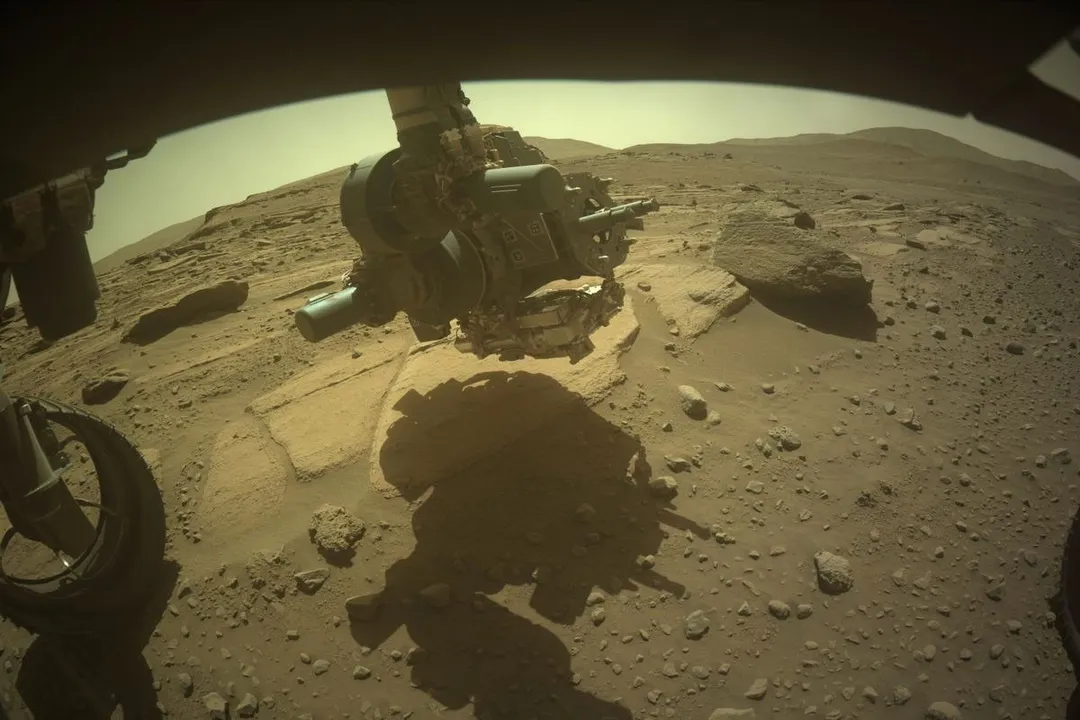
The Perseverance rover, which touched down in February 2021, arrived at the Jezero Crater with a singular purpose: to hunt for signs of ancient life. [9] This crater, situated on the western edge of the Isidis Planitia, was selected because of its history as an impact basin that once hosted a large lake. [5] For planetary scientists, the site offers a geological record spanning billions of years, providing the most promising environment on Mars to investigate whether the planet ever supported biological activity. [2]
# Geological Context
Jezero Crater is about 45 kilometers wide. [5] What makes it a top priority for astrobiologists is the clear evidence of a former river delta. [6] When a river enters a standing body of water, it slows down and deposits sediment, creating a fan-shaped structure. This delta is visible from orbit and contains distinct layers of sedimentary rock, which act as a history book for the crater’s environment. [6]
The rocks analyzed by the rover contain signs of water, confirming that liquid water was present for long periods. [1] These ancient materials predate the appearance of life on Earth, offering a unique opportunity to study conditions that existed on a planet that was arguably more similar to our own billions of years ago. [1]
# Water History
Water is the primary requirement for life as we know it, and Jezero Crater has an abundance of evidence showing its presence. [1][6] The crater floor consists of igneous rocks that have been altered by water, and the delta is rich in clays and carbonates. [2] These minerals are important because they are excellent at trapping and preserving potential biosignatures—traces of organic material that might have been left behind by ancient organisms. [2]
However, the presence of water does not guarantee the existence of life. While the ingredients for life were present, the specific timeline of that water matters greatly. Recent research from Rice University suggests the crater did not experience a single, steady lake environment. [4] Instead, the area went through multiple cycles of water flow, creating a dynamic environment that may have been habitable at some times and hostile at others. [4]
# Habitability Episodes
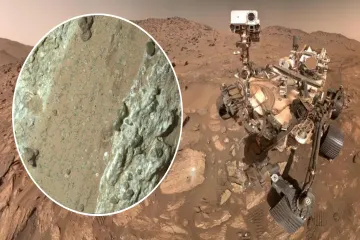
It is helpful to distinguish between "habitable" and "inhabited." A location can be habitable if it has water, the right chemistry, and an energy source, but it does not mean life necessarily took hold there. The findings at Jezero show that the crater environment was not a stagnant pool but a changing landscape. [4]
This distinction is important because it changes how scientists approach their data. If water came and went in short, rapid bursts, life might not have had the time or stability to develop. [4] If the water remained for long durations, the probability of life appearing increases. The evidence collected so far points to recurring episodes of wet conditions, giving researchers a complex timeline to piece together. [4]
# Organic Signatures
Perseverance has identified organic molecules within the rocks of the crater floor and the delta. [7] These molecules are carbon-based and serve as the building blocks of life. [8] Finding them is a success, but it does not equate to finding life itself. There is a clear tension in the scientific community regarding how to interpret these findings. [8]
Organic matter can be produced by non-biological, or abiotic, processes. For instance, chemistry occurring in volcanic environments or the bombardment of the Martian surface by meteorites can create organic molecules. [8] The challenge for the mission team is to determine if these specific molecules came from biological activity or from natural geological processes.
# Interpreting Findings
The difficulty in confirming life lies in the ambiguity of the signals. Scientists often create hypothetical models to distinguish between these possibilities. The following table illustrates the challenge of interpreting findings found on the surface of Mars.
| Observation | Biological Interpretation | Abiotic Interpretation |
|---|---|---|
| Organic Molecules | Remnants of ancient microbes | Meteoritic or volcanic deposition |
| Carbonate Minerals | Precipitated by bacterial mats | Non-living chemical reactions |
| Layered Sediments | Seasonal biological growth | Changing fluid flow and sedimentation |
| Methane Spikes | Microbial metabolic waste | Subsurface mineral alteration |
This table highlights why scientists remain cautious. Each discovery requires a rigorous process of elimination to rule out geological causes before considering biological ones. [8]

# Scientific Caution
The narrative surrounding the discovery of life is often simplified in media, but the actual scientific process is slow and incremental. When the rover detects something unusual, the team does not immediately declare it life. [8] Instead, they document the location, take multiple measurements, and analyze the context of the surrounding minerals. [9]
This caution is necessary because the history of Mars research is filled with early claims that were later disproven or found to have natural explanations. The goal of the Perseverance mission is not to make a headline-grabbing announcement, but to build a body of evidence that can be scrutinized by the global scientific community for decades. [2]
# Sample Return
The most important step in this search is not happening on Mars, but is being planned for Earth. Perseverance is collecting and sealing samples of rock and soil that are considered the most likely candidates to contain biosignatures. [9] These tubes are being left in a cache on the surface for a future mission to retrieve and bring back to Earth. [9]
Only when these samples are in laboratories equipped with the most powerful microscopes and chemical analyzers will scientists be able to provide a more definitive answer. [9] Until then, we are limited to the data the rover can analyze in situ. While this has provided significant insights into the geological past of Jezero, it cannot replicate the deep, multi-layered analysis that a terrestrial laboratory provides. [9]
# Current Standing
The question of whether there is life in the Jezero Crater remains open. We know that the crater had the necessary ingredients to host life: water, chemical energy, and stable environments. [2][4] We have confirmed the presence of organic molecules. [7] What remains missing is the smoking gun—a pattern, structure, or isotopic ratio that is impossible to explain through chemistry and physics alone. [8]
The work happening now is creating the foundation for future discoveries. By mapping the crater and characterizing its diverse environments, the mission team is narrowing down where life might have been most likely to persist. [2] Even if the result is that no life ever existed there, the scientific knowledge gained about Mars’s climate, water cycle, and geological history provides an invaluable update to our understanding of the solar system. The search continues, driven by evidence rather than assumption, as the rover continues its survey of the ancient lake bed.
#Videos
New Paper Finds Signs of Ancient Life on Mars ... - YouTube
Related Questions
#Citations
Study: Rocks from Mars' Jezero Crater, which likely predate life on ...
New research shows Mars' Jezero crater was repeatedly habitable
New Paper Finds Signs of Ancient Life on Mars ... - YouTube
New Mars research reveals multiple episodes of habitability in ...
Jezero (crater) - Wikipedia
Jezero crater through the eyes of Mars Express - ESA
NASA's Perseverance rover may have found the clearest signs of ...
Did NASA's Perseverance rover find evidence of ancient life on Mars ...
Perseverance Science