Is the Sun plasma or gas?
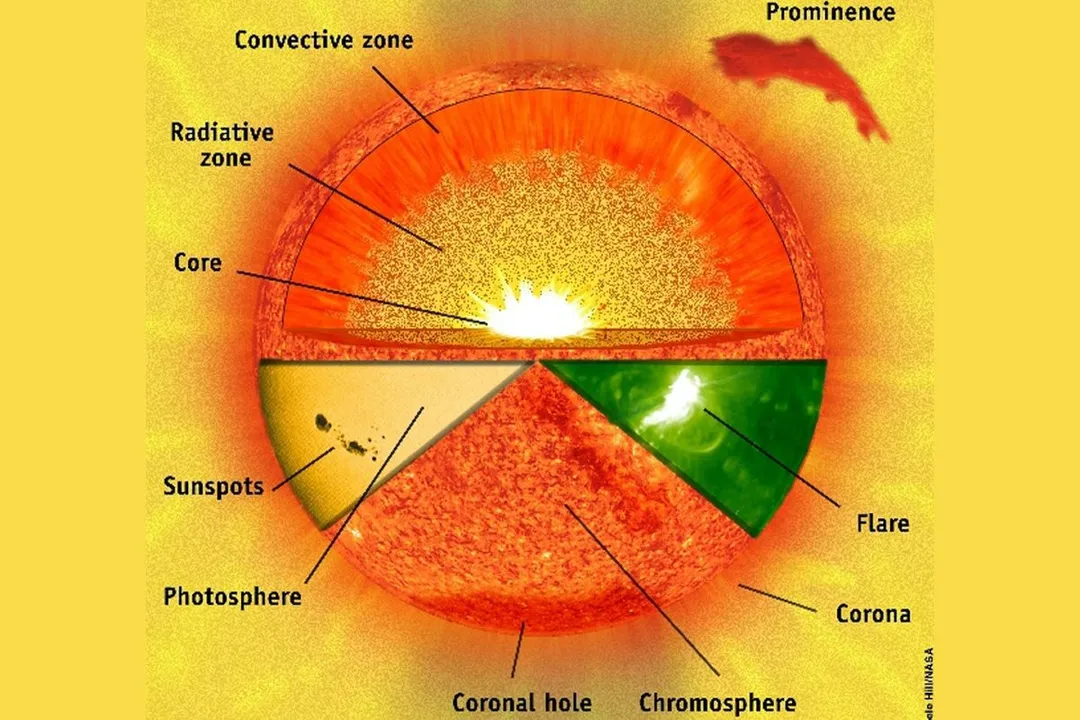
The Sun, that massive, luminous object dominating our sky, presents an interesting classification puzzle when we try to define its physical state. While we often hear it described simply as a giant ball of gas, a more accurate, though perhaps less intuitive, answer is that the Sun exists almost entirely as plasma. [4][6] The confusion arises because the ingredients that make up the Sun—primarily hydrogen and helium—are what we typically associate with the gaseous state here on Earth.
# Core Elements
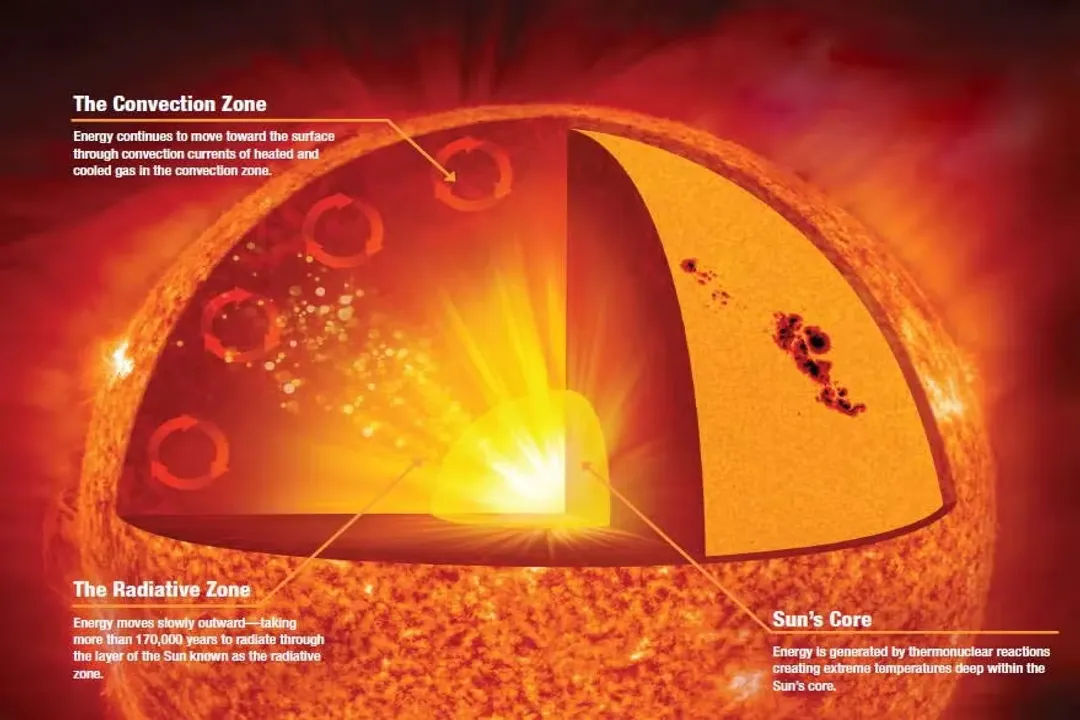
To understand the state of matter, we must first look at the material itself. The Sun is overwhelmingly composed of the two lightest elements in the universe: roughly seventy-three percent hydrogen and twenty-five percent helium by mass. [2] The remaining small fraction includes trace amounts of heavier elements like oxygen, carbon, neon, and iron. [2] In terms of elemental building blocks, the Sun is indeed a massive collection of gas atoms. [4] However, the physical state of these atoms is radically different from the air we breathe or the steam rising from a kettle.
# States of Matter
On Earth, we are very familiar with the three classical states of matter: solid, liquid, and gas. [6] In a standard gas, atoms or molecules are not chemically bound and move around freely, but they remain electrically neutral; there are no free-floating charged particles. [7] Plasma, however, is often termed the fourth state of matter. [6] It forms when a gas is subjected to such intense heat or energy that the atoms become ionized. [6][7] Ionization occurs when the energy is high enough to strip electrons away from the atomic nuclei. [6]
The result is a superheated, electrically charged soup consisting of positive ions (the nuclei) and free-moving negative electrons. [6][7] This fundamental difference—the presence of free charges—is what separates plasma from neutral gas. [6] A simple way to picture it is that neutral gas resists electric fields until it’s heated enough to become conductive; plasma is inherently conductive. [6]

# Solar Environment
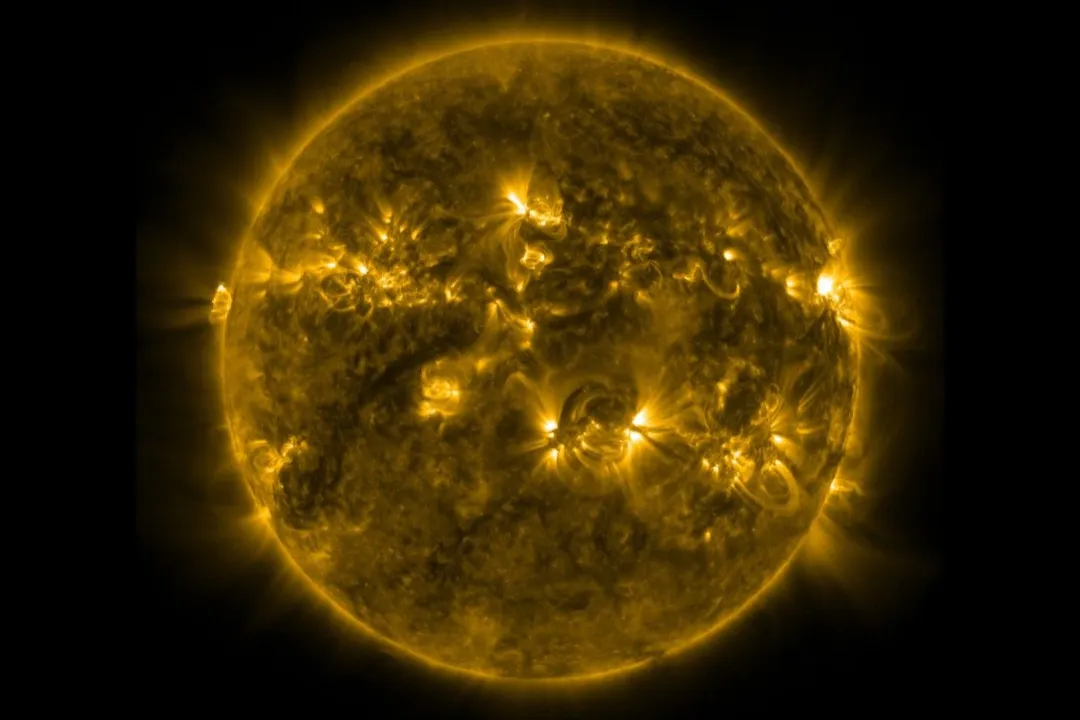
The crucial factor determining whether the Sun is gas or plasma is its immense internal environment. The Sun’s core, where nuclear fusion occurs, reaches temperatures exceeding 15 million degrees Celsius. [10] Even the layers further out are incredibly hot; the visible surface, the photosphere, is about Celsius. [2]
For comparison, water boils into steam (a gas) at Celsius at standard atmospheric pressure. [7] At the Sun's surface temperatures, any hydrogen or helium atoms are stripped of their electrons almost instantaneously. [10] This extreme thermal energy ensures that the overwhelming majority of the Sun’s mass exists in the ionized state characteristic of plasma. [4][6]
While some common descriptions might colloquially refer to the visible "surface" as gas because it's the layer from which light is emitted, even the photosphere is hot enough for most of its atoms to be ionized. [1] If you were observing the Sun from space, what you are seeing is the transition zone where the state hovers between highly ionized plasma and something that resembles a less-ionized gas, but scientifically, the entire star is treated as plasma. [1] A key difference from laboratory plasmas is that the Sun is incredibly dense; it is not an extremely rarefied gas, but a dense, superheated fluid of charged particles. [5]
# The Fourth State
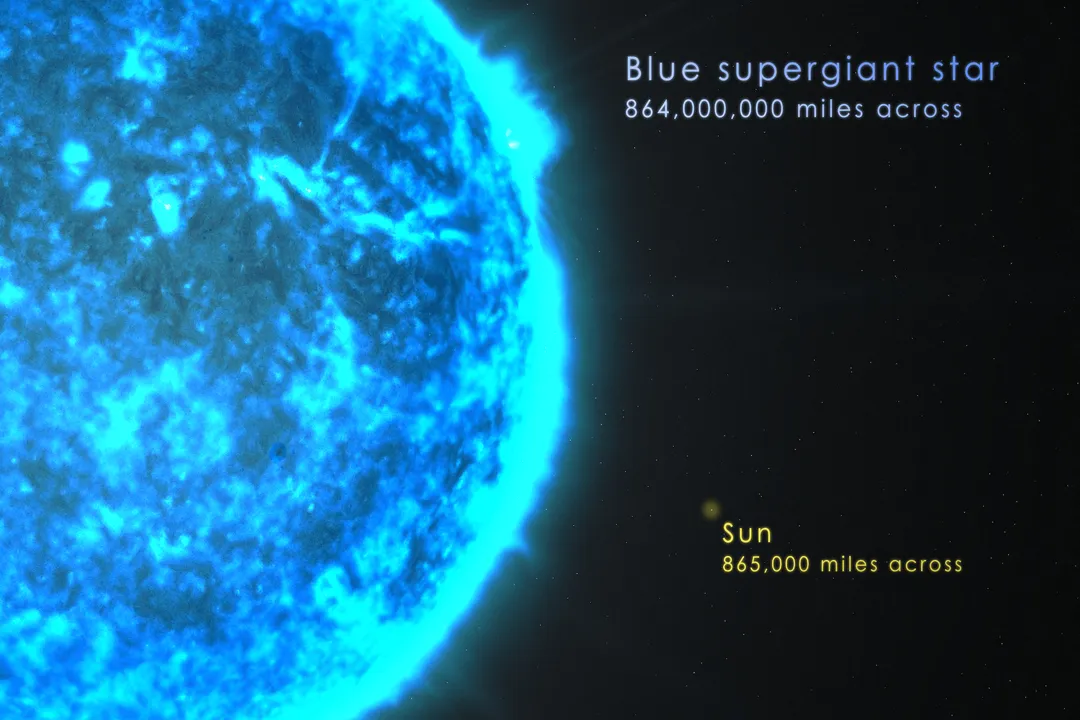
Because the Sun is plasma, it behaves very differently than a container of neutral gas would under similar conditions. The presence of charged particles means that the solar material is intimately connected to magnetic fields. [6][7] These fields are generated by the motion of this electrically conducting fluid deep within the Sun. [7]
This magnetic connectivity explains nearly all the dynamic phenomena we observe in space weather. Phenomena like sunspots, solar flares, and coronal mass ejections (CMEs) are not merely atmospheric storms in a neutral gas; they are massive rearrangements of magnetic field lines interacting with the charged plasma. [7] The sunspots themselves are regions where magnetic fields are so strong they suppress the convection of heat, causing those areas to appear momentarily cooler and darker than their surroundings. [2]
When we consider the degree of ionization, we see a natural gradient across the star. In the extreme pressure and heat of the core, the ionization is virtually 100%—every atom has been stripped bare. [10] As you move outward, say toward the chromosphere or the very wispy corona, the temperature drops slightly, and the degree of ionization might decrease slightly, but the material remains firmly in the plasma regime. [1][7] If we were to approximate the entire volume of the Sun, we would find that perhaps $99.9%$ or more of it exists as ionized plasma. [5] For scientists studying the Sun's activity, treating it as a neutral gas simply doesn't allow them to model the observed behavior involving magnetic field lines or electrical currents. [6]
# Surface Appearance
Why does the common description of "gas" persist? Part of the reason lies in how we measure and observe the outermost layers. When astronomers talk about the composition ratios of hydrogen and helium, they are speaking about the atoms present before they are stripped of their electrons. Furthermore, if we were to hypothetically cool a small parcel of the Sun’s outer layer down to Earth-normal pressures while maintaining the temperature, it would behave very much like a gas—it would simply be a superheated, highly energetic gas. [1]
Imagine taking a tiny sample from the photosphere and instantly cooling it dramatically, removing the energy driving the ionization. The freed electrons would immediately recombine with the nuclei, returning the sample to a neutral gas composed of H and He atoms. [7] This suggests that the material originated as gas, but the condition it currently exists in is plasma. Think of it like this: if you take a copper wire (a conductor) and heat it until it melts into a liquid, it's still copper, but its state has changed from solid to liquid. When the Sun heats its hydrogen and helium to millions of degrees, it changes the state from neutral gas to ionized plasma. [6]
# Density Context
Another factor that helps clarify the state is density, which is often overlooked when discussing the plasma/gas dichotomy. While the Sun is roughly a million times less dense than water at its surface, the core is about 150 times denser than water. [2] This high density, even at the surface layers, contributes to the massive ionization. If the Sun were merely a very hot, very low-pressure gas, it might not sustain the intense magnetic fields we see. Instead, the dense sea of charged particles allows for complex, long-range interactions driven by magnetohydrodynamics (MHD)—the physics of electrically conducting fluids. [5]
When considering the sheer scale of the Sun, where pressure and temperature constantly battle to maintain equilibrium, the resulting plasma state is necessary to explain its stability and radiative output. The energy generated in the core via fusion—the transformation of hydrogen into helium—is transported outward through these ionized layers. [10] Understanding that this material is plasma is not just a semantic preference; it’s a requirement for accurately describing energy transport, magnetic dynamics, and the very nature of the stellar object itself. [6] The Sun is, therefore, a massive, gravitationally bound sphere of hydrogen and helium existing in the plasma state due to extreme temperature and pressure. [4]
Related Questions
#Citations
Eli5 is the sun made of gas? : r/explainlikeimfive - Reddit
Our Sun: Facts - NASA Science
Sun - Wikipedia
What Is the Sun Made Of? | Space
Is the Sun solid, liquid or gas? - Quora
About Plasmas and Fusion - Princeton Plasma Physics Laboratory
What is the state of matter of the sun? - Facebook
The Sun | Natural History Museum
Inside the Sun - UCAR Center for Science Education