How many clusters are there in the universe?
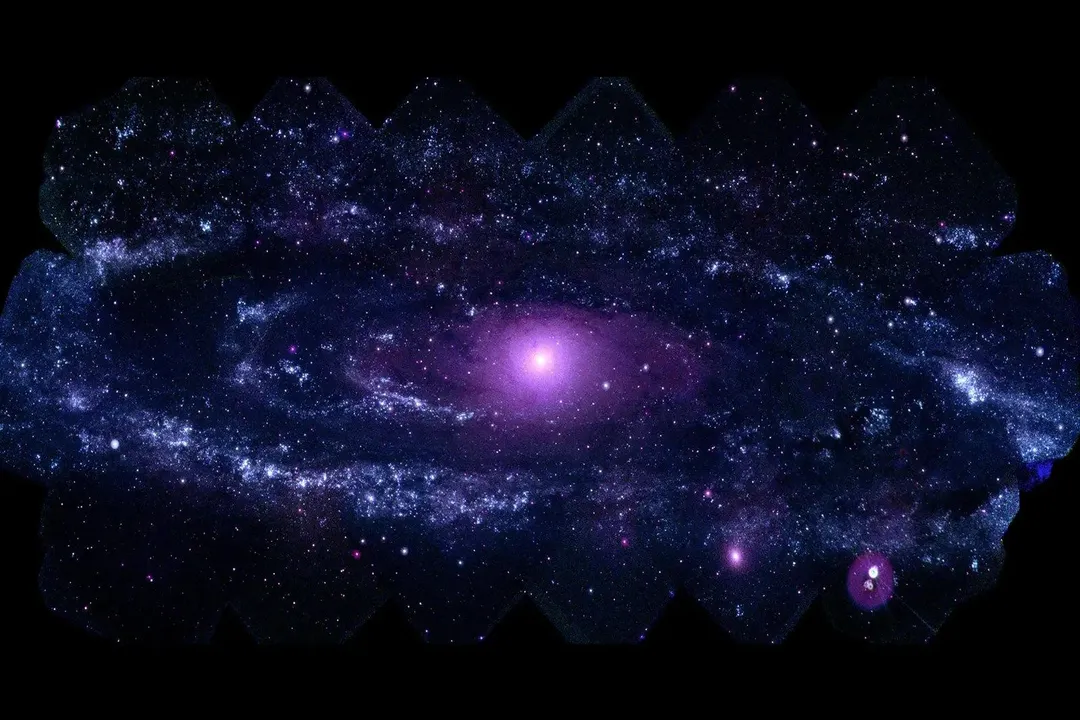
The sheer scale of the cosmos presents an immediate challenge when asking how many clusters exist in the universe. Before we can approach a number, we must first clarify what kind of "cluster" we are discussing, as astronomy uses this term for structures ranging vastly in size and composition: the relatively small collections of stars and the colossal groupings of entire galaxies. [1][2] The ultimate census of the entire universe remains impossible, as we can only estimate based on the observable portion that light has had time to reach us from. [9]
# Two Cluster Types
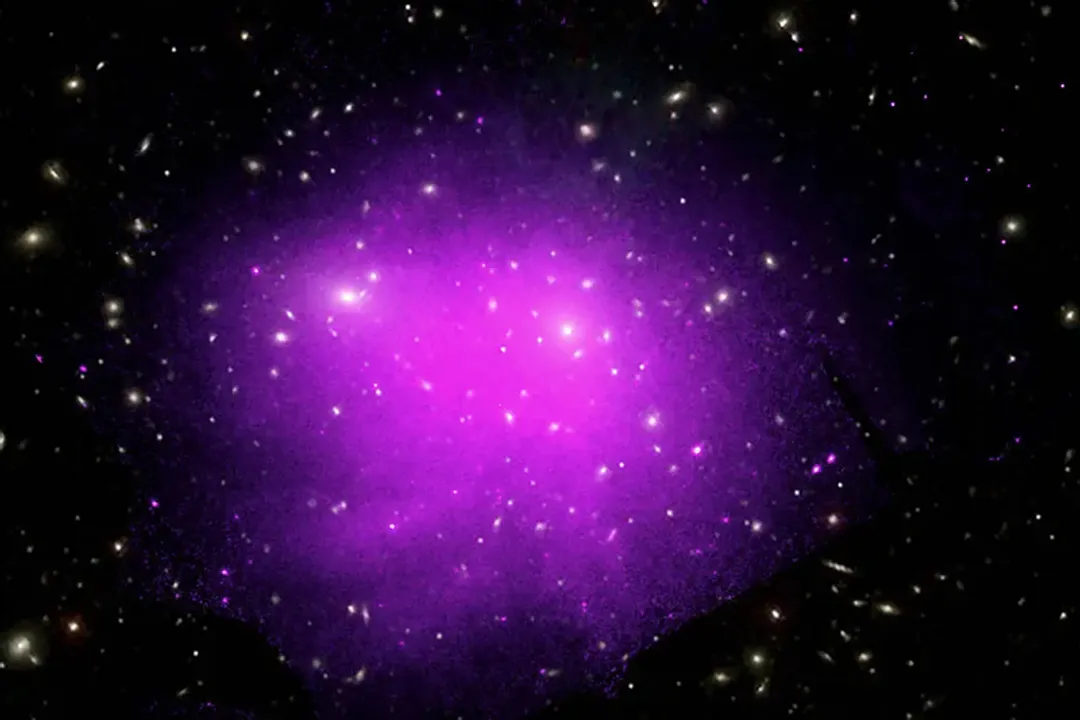
The distinction between stellar and galactic groupings is crucial. Star clusters are systems of stars gravitationally bound together, existing inside individual galaxies. [1][7] Conversely, galaxy clusters are the largest gravitationally bound structures known in the universe, containing hundreds or even thousands of galaxies themselves, along with enormous quantities of hot gas and dark matter. [2][4] When astronomers discuss the large-scale structure of the cosmos, they are almost exclusively referring to these massive galaxy clusters. [5]
# Galaxy Groupings
Galaxy clusters represent the peaks of structure formation in the universe. [8] A typical cluster is not just a loose collection of galaxies; it is a dynamic, bound system where these massive components orbit a common center of mass. [2] They house anywhere from a few hundred to several thousand galaxies, interspersed with a superheated plasma, known as the intracluster medium, which glows brightly in X-rays. [2][4] Because these structures take so long to form and assemble, studying them offers profound insights into the evolution of the universe itself. [8]
# Stellar Nurseries
On a much smaller scale, star clusters orbit within the spiral arms or halos of galaxies like our own Milky Way. [1] These groupings are essential environments for stellar life cycles. They come in two primary varieties: open clusters, which are younger and loosely associated, and globular clusters, which are ancient, dense, spherical collections containing tens of thousands up to a million stars. [1][7] While vital to galaxy dynamics, these star clusters do not contribute to the large-scale architecture of the universe in the way that galaxy clusters do.
# Scale Disparity
The difference in mass and extent between these two cluster types is staggering. A dense globular cluster might contain $10^6$ stars. [1] Contrast that with a large galaxy cluster, which might contain $10^3$ galaxies. [2] If we assume an average galaxy, like the Milky Way, contains roughly stars, a single galaxy cluster could contain an organization of matter equivalent to stars, all bound together, plus the mass contributed by dark matter and the hot gas filling the space between them. [2][4] This comparison illustrates why counting stars within clusters is fundamentally different from counting the massive knots that define the universe’s structure.
# Observable Count
Since the universe extends far beyond the reach of our current observation, asking how many clusters there are in the universe is an ill-defined question. The realistic astronomical inquiry focuses on the observable universe—the spherical volume centered on Earth from which light has had time to travel to us. [9] Scientists attempt to quantify the number of galaxy clusters within this sphere by mapping the density of these structures in deep-field surveys. [5] The process relies on observing a representative sample volume, determining the average number of clusters per cubic unit (like a cubic megaparsec), and then extrapolating that density across the total known volume of the observable cosmos. [9][10]
# Estimating Prevalence
The greatest difficulty in deriving a precise count is defining what constitutes a cluster versus a mere group, and accurately detecting the fainter, less massive structures hiding in the background. [9] Early surveys provided a rough census, but modern instruments allow for much deeper mappings, revealing a far more complex distribution. [4] Determining the actual mass of a structure is essential, as mass dictates whether something is truly a cluster or just a transient grouping that will eventually dissolve or merge. [8] If astronomers find that the average density is, say, one massive cluster per $10^7$ cubic megaparsecs within the observed depth, they must then calculate the total volume enclosed by the observable limit (which extends about 46.5 billion light-years in radius) to get their final estimate for that visible sphere. [9] Considering the sheer volume, even a relatively low estimated density yields an astonishing figure, likely numbering in the hundreds of thousands or millions of major clusters within our visible horizon alone.
# Cosmic Web
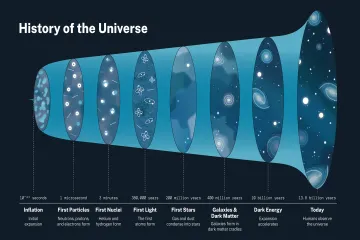
These galaxy clusters are not randomly scattered; they are the most massive nodes in the entire cosmic infrastructure, often referred to as the cosmic web. [5][6] This web is an immense network composed of long, thread-like filaments of galaxies and gas, which connect the major clusters. [5] Surrounding these filaments and clusters are the voids—vast, nearly empty regions where matter density is extremely low. [5] Our own Milky Way galaxy resides within a structure called the Laniakea Supercluster, which itself is part of this larger web structure, connecting it to other major conglomerations of galaxies. [2][6] This hierarchical arrangement, where galaxy groups merge into superclusters, which then assemble into the largest clusters, defines the universe's architecture on scales larger than about 100 million light-years. [10]
# Methods of Detection
To build these estimates, various techniques are employed. One effective way to identify galaxy clusters is by looking for the spectral signature of the hot intracluster gas, which emits strongly in the X-ray band. [4] Another method involves mapping the gravitational lensing effect—the way massive clusters bend the light from even more distant background galaxies—allowing scientists to map the total mass, including the unseen dark matter component. [4] Furthermore, redshift surveys map the three-dimensional distribution of galaxies, allowing researchers to identify dense concentrations that represent these clusters. [5] For instance, missions designed to survey the sky deeply help establish statistical parameters for cluster formation rates, which feeds into the calculation for the observable total. [8] It is worth noting that as our instruments improve, the minimum size of what we classify as a "cluster" tends to shrink, meaning historical counts are often lower than modern estimates for the same volume of space, reflecting improved detection rather than genuine creation. [9] This means that any total number provided for the observable universe is a dynamic figure, constantly being updated as our technological "net" casts wider and deeper into space.
#Videos
How Many Galaxy Clusters Are There? - Physics Frontier - YouTube
Related Questions
#Citations
Star Clusters: Inside the Universe's Stellar Collections - NASA Science
Galaxy cluster - Wikipedia
How Many Galaxy Clusters Are There? - Physics Frontier - YouTube
Galaxy Clusters
Learn about galaxy clusters, superclusters, and the Local Group
Star Clusters | Center for Astrophysics | Harvard & Smithsonian
Testing the Evolution of the Universe with Galaxy Clusters
How do scientists come up with the numbers for measuring massive ...
Lecture 34: Clusters and Superclusters