Have we ever been on the surface of Venus?
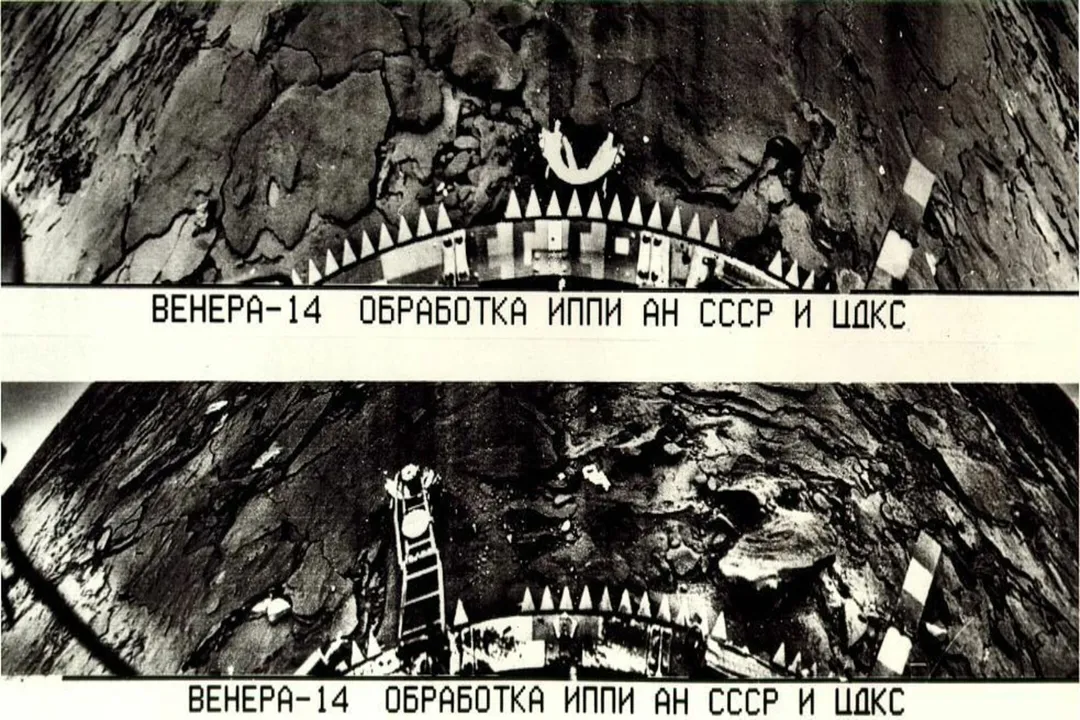
Human beings have never set foot on Venus. The environment there is essentially apocalyptic, with temperatures high enough to melt lead and atmospheric pressure ninety times heavier than what we experience on Earth. [8] However, while human footsteps remain absent, our robotic emissaries have successfully braved this environment. We have sent landers to touch that scorched soil and transmit data back to Earth. [1][8]
# Soviet Success
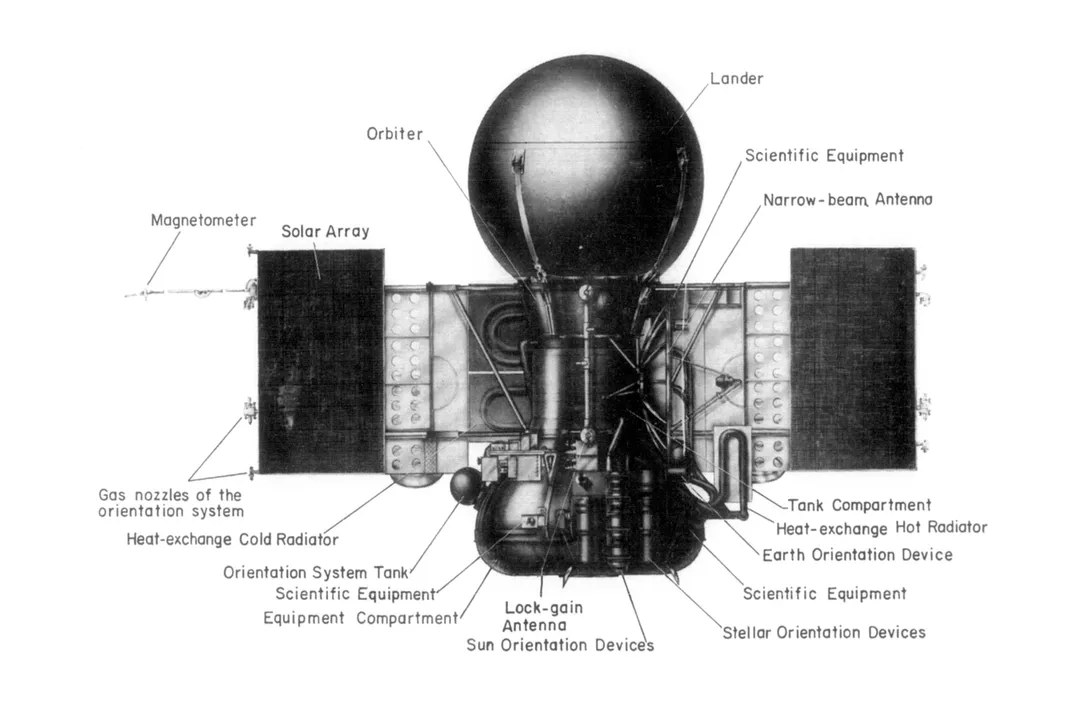
The Soviet Union was the clear pioneer in this area. During the 1960s, 70s, and 80s, their Venera program sent a series of probes to the planet. Venera 7, which arrived in 1970, achieved the first successful soft landing on the surface of another planet. [6][8] It sent back signals for about 23 minutes before succumbing to the heat and pressure.
While early missions struggled with the harsh conditions, the program evolved quickly. Venera 9 and 10, arriving in 1975, provided the first images of the surface. [6] These were not just flashes of light or crude data points; they were the first true visual representations of an alien world. The cameras on these landers used a slow scanning method, building an image line by line as the mechanical shutter rotated.
# Surface Conditions
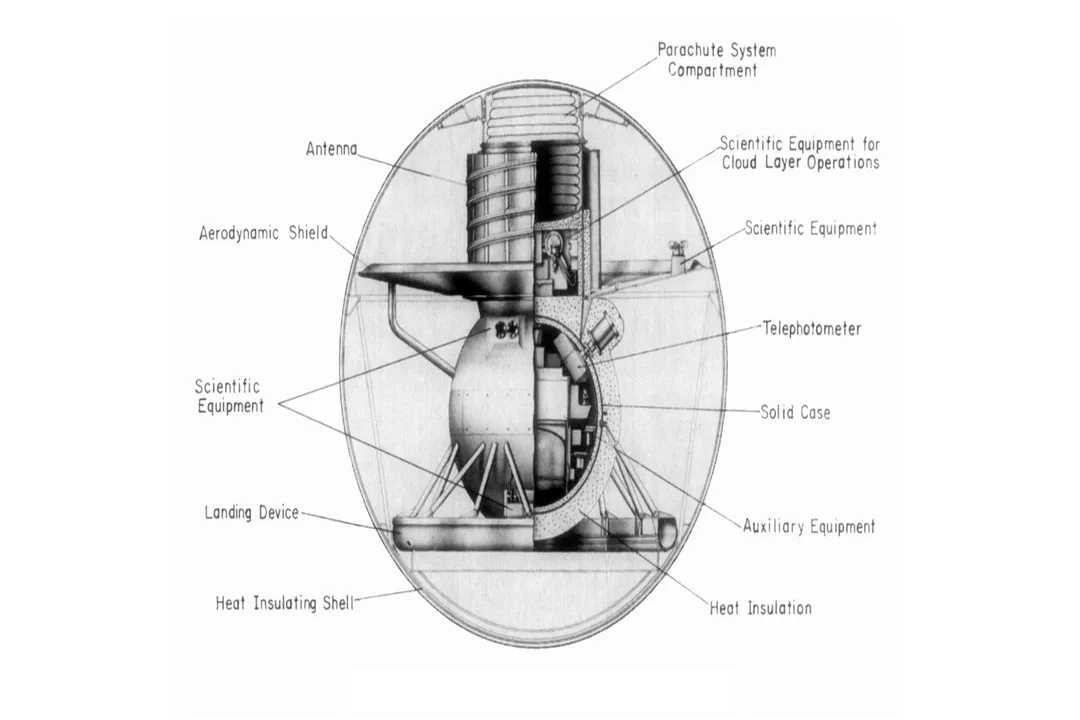
Venus is often described as Earth's twin due to its similar size and density, but that is where the resemblance ends. The surface is a hellscape where the temperature averages around 475 degrees Celsius (roughly 900 degrees Fahrenheit). [7] This heat is constant, day and night, caused by a runaway greenhouse effect that traps heat in the dense, carbon-dioxide-rich atmosphere.
The pressure is the other main antagonist for any machine we send there. Standing on the surface of Venus feels like being about one kilometer deep in the Earth's ocean. Designing electronics to function in this environment is a monumental engineering headache. Any probe landing there has to be built like a tank, with heavy shielding and cooling systems that only buy it a handful of minutes or hours before internal components fail.
# Photographic Evidence
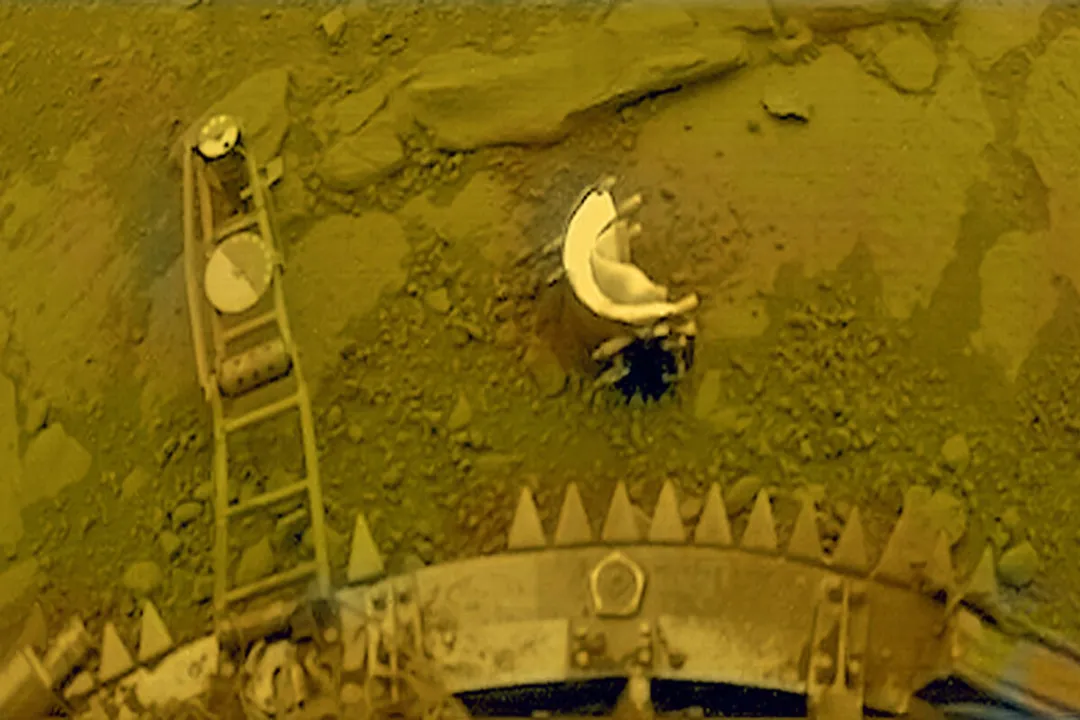
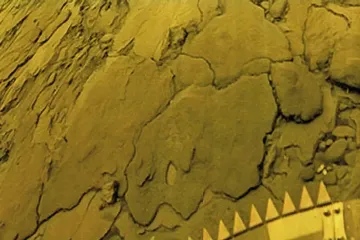
The images sent back by the Venera landers are grainy and surreal, yet they remain some of the most striking pictures in the history of space flight. [1] When looking at these photographs, you see a landscape that feels oddly familiar yet undeniably hostile. The ground is covered in flat, slab-like rocks, likely volcanic basalt, sitting under a thick, hazy atmosphere.
In 1982, Venera 13 and 14 took the first color images from the surface. [1] These photos revealed a world of orange and brownish hues, illuminated by a sun that is perpetually dimmed by dense cloud cover. The color balance was difficult to capture because the thick atmosphere scatters light in specific ways, filtering out blue and violet wavelengths. The raw data transmitted back required significant processing to create the color images we see today, but the visual record is undeniable proof that we have been there. [3]
Below is a brief timeline of the most significant surface missions that changed our understanding of the planet:
| Mission | Year | Key Achievement |
|---|---|---|
| Venera 7 | 1970 | First soft landing |
| Venera 9 | 1975 | First black/white surface images |
| Venera 13 | 1982 | First color images transmitted |
| Venera 14 | 1982 | High-resolution panoramic shots |
# Modern Perspectives
While no landers have returned to the surface in several decades, we have not stopped looking at Venus. Modern technology allows us to peer through the clouds without needing to land. The Venus Express mission, launched by the European Space Agency, spent years orbiting the planet and used infrared mapping to see through the dense sulfuric acid clouds. [7] It created a topographic map of the surface, showing us mountain ranges and volcanic plains that we could only guess at previously.
Recently, NASA’s Parker Solar Probe provided a surprising twist. While its main task is to study the Sun, it used its Wide-field Imager (WISPR) to capture visible light images of Venus during flybys. [2] These images showed the night side of the planet, revealing the thermal glow of the surface itself. This was a significant feat because, in visible light, the clouds of Venus usually obscure everything. The ability to see the surface from orbit without landing demonstrates how far our sensor technology has advanced.

# Data Interpretation
It is important to distinguish between "being on the surface" and "seeing the surface." The Venera landers provided a direct, tactile interaction with the planet's regolith. They conducted soil analysis, measured wind speeds, and even recorded the ambient sound of the atmosphere. This type of data is impossible to replicate with orbiters.
The primary limitation of landing on Venus is the short window of operation. Because we lack cooling technologies that can last for days or weeks in such extreme heat, these missions were essentially high-stakes, short-term experiments. This trade-off between the depth of data and the survival of the hardware is why we have relied on orbital mapping for so long. Orbiters provide long-term, global context, whereas landers provide a single, detailed snapshot of a very small area.
When you analyze the history of these missions, a pattern emerges. Early efforts were focused on the raw challenge of surviving the landing. Once that was proven, the focus shifted to transmitting visual and chemical data. Today, the focus has moved toward global mapping and understanding the planet's atmospheric dynamics, which helps us interpret why the surface is the way it is. We have the technology to go back, but the justification for a lander requires a specific scientific question—like searching for evidence of past oceans—that warrants the immense cost and engineering effort of surviving the heat.
#Videos
The First and Only Photos From Venus - What Did We See? (4K)
The Surface of Venus - Our Only Images - YouTube
Related Questions
#Citations
Every picture from Venus' surface, ever | The Planetary Society
Parker Solar Probe Captures its First Images of Venus' Surface in ...
Every picture from Venus' surface, ever. There are six. - Reddit
The First and Only Photos From Venus - What Did We See? (4K)
NASA Just Released First-Ever Images Of Venus' Surface Taken ...
Fifty Years Ago: The First Images from the Surface of Another Planet
ESA - Venus's surface - European Space Agency
Has a spacecraft ever landed on Venus? | Cool Cosmos