What specific directional requirement must an astronaut meet during orbital night passes to view the Milky Way clearly?
Looking away from the Earth's glowing edge
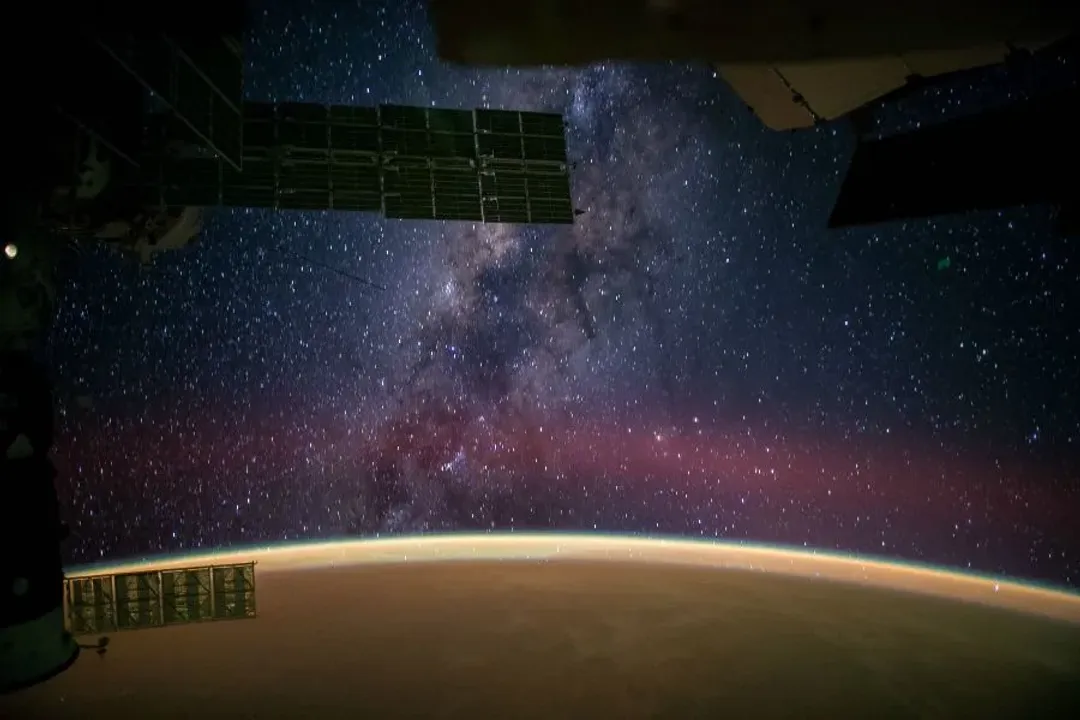
The environment in orbit introduces a constraint entirely foreign to ground-based stargazing: the need for precise spatial orientation relative to the Earth. Because the sunlit side of the planet creates an overwhelming glare, known as the bright limb, this light pollution effectively dominates the visual field during half the orbit. To maximize the chances of seeing the Milky Way during the brief orbital night passes, an astronaut must deliberately orient themselves to look in the direction opposite to this intensely glowing sphere. This necessary 'look away' strategy ensures that the contrast between the black void and the galactic light is preserved, making direction as crucial as timing.
#Videos
Milky Way Galaxy as seen from SPACE (4K) - YouTube