Approximately how often does the International Space Station (ISS) complete one orbit around Earth?
Answer
Roughly every 90 minutes
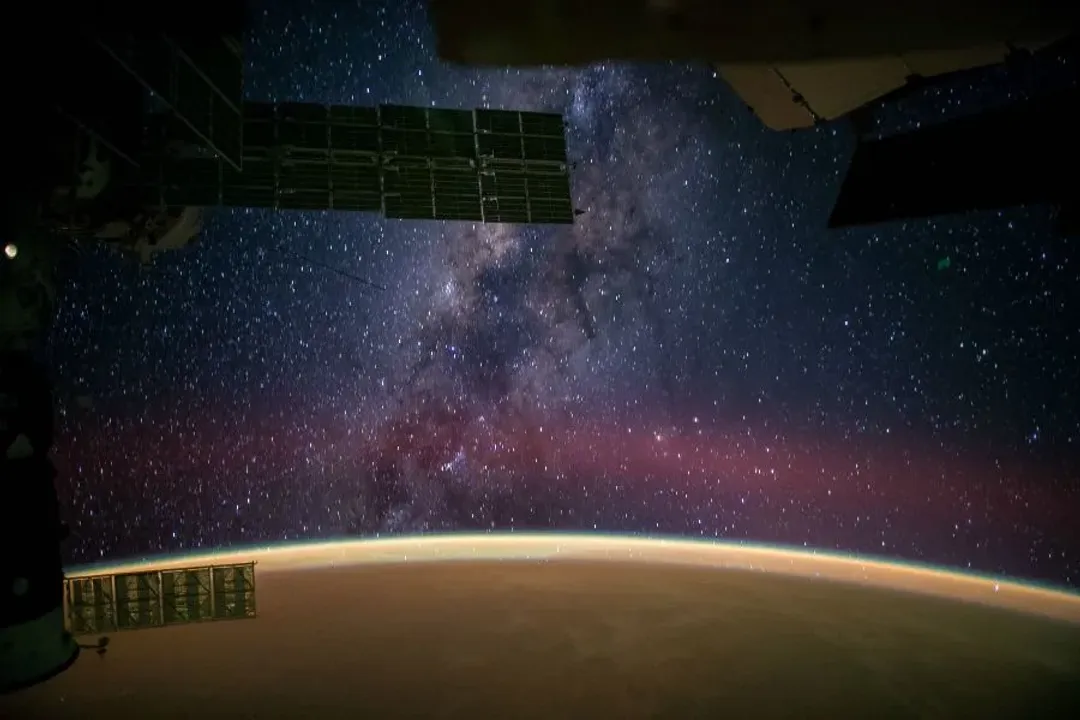
The orbital mechanics of the International Space Station (ISS) dictate the viewing schedule for the Milky Way. The station travels at a velocity that causes it to complete a full circuit around the Earth in approximately 90 minutes. This rapid orbital period results in astronauts experiencing a phenomenon equivalent to about 16 sunrises and 16 sunsets within a standard 24-hour period. This rapid cycle means that extended periods of deep night, which are necessary for optimal Milky Way viewing, are frequently interrupted by periods dominated by daylight or twilight conditions, significantly constraining the total observation time available.
#Videos
Milky Way Galaxy as seen from SPACE (4K) - YouTube
Related Questions
What fundamental element's absence allows astronauts to see the Milky Way better than Earth observers?What phenomenon does the Earth's atmosphere cause by scattering sunlight during the day?How does the visual observation of the Milky Way by astronauts compare to ground-based astronomers?How is the central core of the Milky Way described when viewed from the International Space Station (ISS)?Approximately how often does the International Space Station (ISS) complete one orbit around Earth?What acts as the biggest competitor to seeing the Milky Way from the ISS, overriding even the Sun?What specific directional requirement must an astronaut meet during orbital night passes to view the Milky Way clearly?What trade-off defines the astronaut's naked-eye experience of the galaxy compared to professional observation techniques?What dramatic visual effect illustrates the importance of blocking the Earth's glow for an astronaut?Besides city lights, what natural phenomenon caused by the atmosphere dims faint light from distant stars on Earth?What specific detail can a professional observatory capture using long exposures that an astronaut bypasses for basic structure?