Beyond collisions within the asteroid belt, what other celestial bodies have been identified as potential sources for some recovered meteorites?
Answer
The Moon or Mars
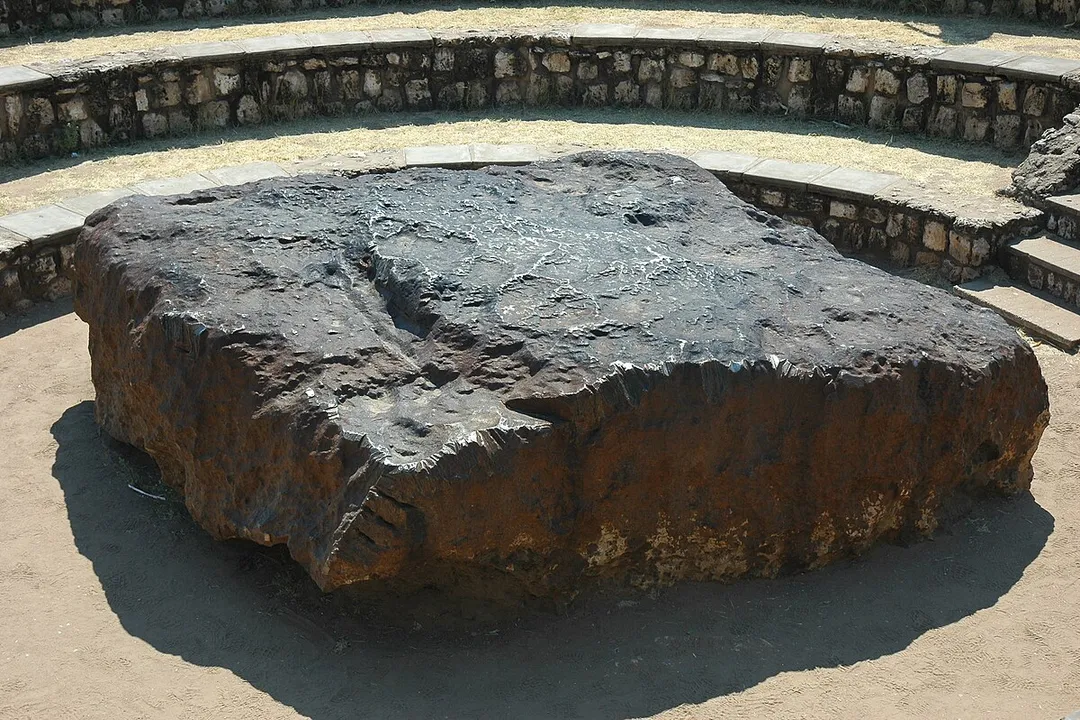
While the overwhelming majority of meteorites originate as fragments from asteroids within the main belt, some rarer samples have been definitively linked to impacts occurring on other planetary bodies. Massive, high-energy collisions on the surfaces of terrestrial planets or large moons can generate enough force to eject rock material entirely out of that body's gravitational influence, sending it adrift through space. If such ejected material eventually lands on Earth, it is classified as a meteorite. Specific analysis has confirmed that some specimens have been sourced from planetary bodies like the Moon and Mars.
#Videos
Space Rocks - YouTube
Related Questions
What designation applies to a solid piece of debris from an asteroid that successfully lands on the Earth's surface?What physical process causes the bright streak of light commonly recognized as a shooting star?Where is the vast majority of the large bodies known as asteroids primarily located in orbit around the Sun?What is the defining size range used to categorize space debris as a meteoroid while it is still traveling through space?What is the term for the thin, dark, glassy rind that forms on a meteorite's surface due to rapid melting during atmospheric passage?What elements primarily constitute the composition of Iron Meteorites according to rock classification?What fundamental insight do scientists gain from studying meteorites regarding the age of the solar system?What surface feature on a recovered space rock is described as looking like thumbprints pressed into clay, caused by uneven melting?Why does a field test involving a magnet often indicate a genuine meteorite when testing for internal clues?Beyond collisions within the asteroid belt, what other celestial bodies have been identified as potential sources for some recovered meteorites?